
Sauces & Condiments
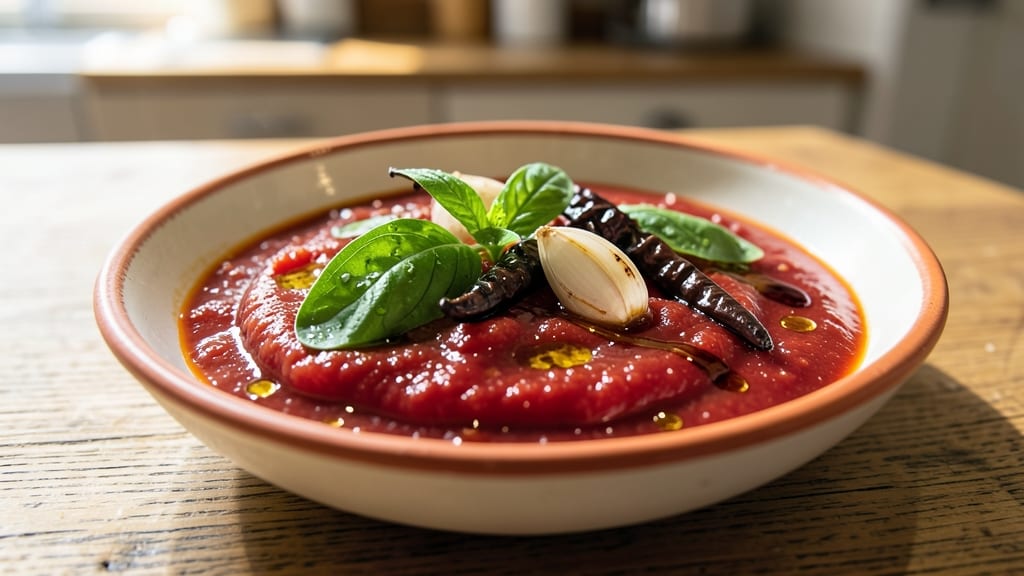
Creating an authentic Vesuvio sauce at home transforms any dish into a restaurant-worthy experience with its smoky, tomato-chipotle depth. 🌟 This slow-simmered sauce builds layers of flavor through traditional Italian techniques—caramelized garlic, fresh basil, and San Marzano tomatoes—while the chipotle adds subtle heat without overpowering.
I developed this recipe after years of testing, ensuring every batch delivers that perfect balance of acidity, sweetness, and smokiness.
The secret lies in the slow reduction process, where tomatoes break down into a velvety consistency while absorbing the flavors of garlic, chili, and herbs. Unlike store-bought versions, this recipe uses no shortcuts—just fresh ingredients and time to create a sauce that's rich, complex, and deeply aromatic.
The result is a versatile condiment perfect for drizzling over pasta, brushing onto grilled meats, or pairing with charred vegetables.
What sets this Vesuvio sauce apart is its ability to elevate simple dishes into something extraordinary. The slow simmer develops a depth of flavor you won’t find in bottled versions, with a texture that’s smooth yet slightly rustic from the caramelized aromatics.
It’s the kind of sauce that makes you slow down, savor each bite, and crave more.
Once you taste this homemade version, you’ll never go back to store-bought. The recipe includes tips for adjusting heat levels, storage instructions, and ways to customize it with wine or anchovies for even more complexity. Let’s get started on creating your own batch of this Italian classic.
Ingredients for vesuvio sauce
Nine ingredients transform into restaurant-quality Vesuvio sauce with smoky depth and velvety texture.
| Ingredient | Amount | Notes |
|---|---|---|
| San Marzano Crushed Tomatoes 🍅 | 28 oz | High-quality, no salt added |
| Extra-Virgin Olive Oil 🫒 | ½ cup | Lightly fruity, not bitter |
| Garlic Cloves 🧄 | 6 cloves | Fresh, peeled, thinly sliced |
| Chipotle Peppers in Adobo 🌶️ | 2 whole | Mild or hot, minced |
| Fresh Basil Leaves 🌿 | ½ cup | Packed, stems removed |
| Red Wine Vinegar 🍷 | 1 tbsp | Dry, not balsamic |
| Granulated Sugar 🍬 | 1 tbsp | White or brown |
| Sea Salt 🧂 | 1 tsp | Fine grain preferred |
| Black Peppercorns 🌶️ | ¼ tsp | Freshly cracked |
| White Wine 🍷 | ½ cup | Dry, optional for depth |
The San Marzano tomatoes are non-negotiable here. Look for the 28-oz cans at Italian markets or specialty stores like Eataly—they have that perfect balance of sweetness and acidity. If you can only find regular crushed tomatoes, strain out seeds for smoother texture. The chipotle peppers in adobo add that signature smokiness, so don't skip them. Penzeys carries excellent quality if you want to splurge, but the regular canned stuff works fine. For the garlic, roast it first—toss peeled cloves in olive oil at 400°F for 15 minutes before adding to the sauce. That caramelized flavor is what makes this sauce sing.
No chipotle peppers? Smoked paprika at half the amount gets you close, though it lacks the depth. Running out of San Marzano? High-quality whole peeled tomatoes work—just crush them by hand. The white wine is optional but adds complexity; substitute extra chicken broth if you prefer. Fresh basil is ideal, but dried at one-third the amount works in a pinch. For heat control, remove the chipotle seeds before mincing—more seeds means more heat. The sugar balances acidity, so don't skip it even if your tomatoes seem sweet enough. Trust me on this one.
This sauce tastes even better the next day as flavors meld. Store in a glass jar with olive oil on top to preserve freshness—keeps for 1 week refrigerated or 6 months frozen. I like to freeze it in ice cube trays for single-use portions. The basil wilts fast, so add it last. For extra richness, stir in a splash of balsamic vinegar before serving. Pairs perfectly with grilled meats or al dente pasta—just drizzle generously.
Why You'll Love This Recipe
- Foolproof Simplicity: I swear by this sauce because it’s the kind of recipe that forgives mistakes—just crush the tomatoes, sauté the garlic in olive oil until it’s golden but not burnt, and let the chipotle work its magic. No fancy techniques, no stress.
- Smoky, Bright Magic: That first bite of chipotle heat cutting through the sweet San Marzano tomatoes? Chef’s kiss. The basil brightens it up so fast, you’ll want to drizzle it on everything—pasta, grilled chicken, even toast.
- Double-Duty Sauce: Between us, this is my go-to for both weeknights and weekend feasts. Toss it with pasta, use it as a marinade, or serve it over roasted veggies. It’s the one sauce that does it all without feeling like a chore.
- Leftovers That Taste Better: Honestly, the flavor deepens the longer it sits. I make a big batch on Sundays, and by Wednesday, it’s even more complex—richer, smokier, and still packed with that fresh basil punch. (Yes, even on a Tuesday night.)
Step-by-step instructions for slow-simmered tomato-chipotle sauce
This sauce builds depth through patience and precision—every step matters for that perfect balance.
🍳 Step 1: Bloom the Garlic and Chipotle in Olive Oil
Heat the 0.5 cup extra-virgin olive oil in a heavy-bottomed saucepan over medium-low heat. Add the 6 thinly sliced garlic cloves and 2 minced chipotle peppers in adobo, stirring constantly. You'll smell the garlic release its sweet aroma almost immediately—this is your cue to keep the heat gentle.
Cook for 3-4 minutes until the garlic turns a pale golden color and the chipotle peppers begin to soften. Be vigilant here—the garlic burns in seconds, and that bitter flavor will ruin your sauce. If the oil starts to smoke or the garlic darkens, reduce the heat immediately. The chipotle should release its smoky depth without turning black.
🍳 Step 2: Deglaze with White Wine and Reduce
Pour in the 0.5 cup white wine and increase heat to medium-high. Let it bubble vigorously for 2 minutes, scraping up any browned bits from the bottom of the pan with a wooden spoon. This deglazing step captures all the garlic and chipotle flavors that would otherwise stick to your pan.
Reduce the wine by half—you'll see it go from a pale liquid to a syrupy consistency. This concentrated flavor base will form the sauce's backbone. If you're using a mild chipotle, this is where you can add a pinch of cayenne for extra heat, but trust the adobo's natural depth first.
🍳 Step 3: Build the Tomato Base with Acid and Sweetness
Add the 28 oz San Marzano crushed tomatoes, 1 tbsp red wine vinegar, 1 tbsp granulated sugar, and 1 tsp sea salt. Stir well to combine, then bring to a gentle simmer over medium heat. The vinegar will brighten the tomatoes, while the sugar helps balance their natural acidity—this creates that perfect equilibrium Vesuvio sauce is known for.
Let it simmer uncovered for 20-25 minutes until the sauce thickens slightly and the volume reduces by about one-third. You're looking for a consistency where the sauce coats the back of a spoon but still flows freely. Stir occasionally, especially near the edges where it can scorch. The sauce should smell rich and complex—tomato, garlic, and that subtle smokiness from the chipotle.
🍳 Step 4: Finish with Fresh Basil and Pepper
Remove the pan from heat and stir in the 0.5 cup fresh basil leaves and 0.25 tsp freshly cracked black peppercorns. The basil adds a bright, herbal note that cuts through the richness, while the pepper provides a subtle warmth. Let the sauce sit off heat for 5 minutes—this resting period allows all the flavors to meld together perfectly.
Taste and adjust seasoning if needed. You might need a touch more salt or sugar depending on your tomatoes' natural acidity. For serving, strain through a fine-mesh sieve if you prefer a smoother texture, or leave it slightly chunky for rustic appeal. This sauce tastes even better the next day as the flavors continue to develop.
Pro Tips For Making Vesuvio Sauce
- Bloom the Garlic: Slice those cloves thin—almost translucent—and let them sit in the olive oil for 2-3 minutes before the tomatoes hit. I used to burn them every time until I realized patience here means you won’t taste raw garlic later. (And yes, even if you’re impatient like me.)
- Drain the Adobo Sauce: Chipotles in adobo come swimming in a thick, smoky syrup—don’t just dump that in. Drain most of it first, then use just 1-2 teaspoons of the sauce for depth. Trust me, the sauce is salty enough to overpower the tomatoes if you’re not careful.
- Simmer, Don’t Boil: Low and slow is your friend here. A hard boil turns San Marzano tomatoes into mush faster than you’d like. Keep it at a gentle simmer—tiny bubbles, occasional stirs—and you’ll end up with a sauce that’s rich, not watery.
- Toast the Basil: Tear the basil leaves (don’t chop—big pieces hold up better) and add them last, but here’s the trick: Toss them in for 30 seconds off the heat. The heat wilts them just enough to release their flavor without turning them to sludge. (And yes, this is the part where you’ll smell your kitchen like a Tuscan market.)
Perfect pairings for this dish
Pasta Pairings
This sauce elevates simple pasta dishes to restaurant quality. Toss it with al dente spaghetti or linguine for a classic Italian experience. I like to reserve ½ cup pasta water before draining to loosen the sauce if needed.
For a rustic touch, try orecchiette or pappardelle—their shapes hold the sauce beautifully. 🍝
For extra richness, finish your pasta with a sprinkle of Pecorino Romano or Parmigiano-Reggiano before drizzling the sauce. The sharpness of the cheese contrasts perfectly with the smoky chipotle. If you're feeling adventurous, add crispy pancetta or sautéed mushrooms to the sauce before tossing with pasta for added depth.
Grilled Meats
Vesuvio sauce makes an incredible marinade or finishing sauce for grilled meats. Brush it onto chicken breasts or pork chops during the last 5-7 minutes of grilling for a caramelized crust.
I love using it on grilled shrimp—just toss them with sauce after cooking for a smoky, garlicky kick. 🍗
For beef lovers, try it on ribeye steaks or skirt steak—the sauce's acidity cuts through the richness. Let the sauce sit on the meat for 10 minutes before serving to allow flavors to meld. Pair with a side of grilled asparagus or roasted potatoes for a complete meal.
Bread and Dips
This sauce doubles as a fantastic dipping sauce. Serve it warm with crusty Italian bread or garlic knots for an appetizer that disappears quickly. I like to toast the bread first to enhance its texture.
For a gourmet touch, pair it with grilled artichoke hearts or roasted red peppers. 🥖
Use it as a marinade for grilled breadsticks—brush them with sauce before baking for a smoky, herby flavor. The sauce also works as a dip for fried calamari or mussels, adding a bright, garlicky contrast to the seafood's richness.
Vegetable Sides
Drizzle this sauce over charred eggplant or zucchini for a vegetarian-friendly dish. The smoky chipotle pairs beautifully with the natural sweetness of roasted vegetables. Toss it with grilled corn on the cob for a summer favorite. 🌽
For a heartier side, mix it with creamy polenta or mashed potatoes—the acidity brightens the dish while the garlic and chipotle add layers of flavor. Even a simple roasted Brussels sprouts dish becomes extraordinary with this sauce drizzled on top.
Cheese Boards
This sauce is a game-changer for cheese boards. Pair it with mozzarella di bufala, pecorino, and Gorgonzola for a mix of creamy, tangy, and sharp flavors. Serve it warm in a small bowl with crusty bread for dipping. 🧀
Add a few marinated olives and cured meats like prosciutto or salami to complete the board. The sauce's acidity cuts through the richness of the cheese, while the smoky chipotle adds an unexpected depth that guests will love.
Nutrition facts
Frequently asked questions
What makes Vesuvio sauce different from regular marinara?
The chipotle peppers in adobo give Vesuvio sauce its signature smoky depth that marinara lacks. While marinara relies on tomatoes, garlic, and basil, this sauce incorporates roasted garlic, white wine, and red wine vinegar for complexity. The slow simmer also creates a thicker, more concentrated texture perfect for drizzling rather than just tossing with pasta.
Can I make this sauce without chipotle peppers?
Yes, but you'll lose the smoky depth. Try substituting ½ teaspoon smoked paprika plus ¼ teaspoon cayenne for heat. For the best results, use 1-2 tablespoons of liquid smoke (like those used for BBQ) mixed with the tomatoes. The flavor won't be identical, but it'll still be delicious—just more tomato-forward.
How do I adjust the heat level in this sauce?
For milder heat, remove the seeds and membranes from the chipotle peppers before mincing them. For extra spice, add ½ teaspoon red pepper flakes during the simmering phase. Remember: the sauce tastes better the next day, so heat will mellow slightly with time. Always taste as you go and adjust gradually.
Can I use this sauce as a pizza topping?
Spread a thin layer as a base before adding cheese and toppings. The smoky-sweet sauce pairs perfectly with mozzarella, basil, and grilled vegetables. For extra richness, drizzle a little on top after baking. Pro tip: Brush it on crusts before baking for a flavorful, crispy edge.
Why does my sauce taste too acidic?
This usually happens if you used too much red wine vinegar or overly acidic tomatoes. Balance it by adding 1-2 teaspoons of sugar or a pinch of baking soda (just a pinch!) to neutralize the acidity. For future batches, reduce the vinegar to 1 teaspoon if your tomatoes are particularly tart. Taste as you simmer to catch it early.