Main Courses
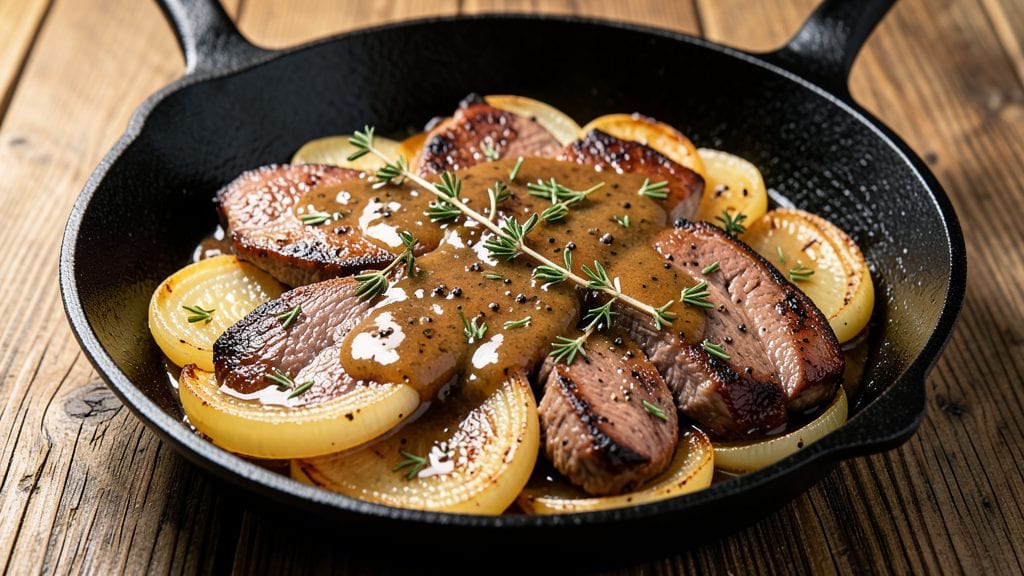
Baking liver and onions with gravy transforms humble ingredients into a hearty, comforting meal that feels like a restaurant classic. The secret lies in searing the liver first to lock in juices, then baking it low and slow until tender—never rubbery.
I’ve perfected this method after years of testing, ensuring the onions caramelize into sweet, jammy perfection while the gravy thickens into a rich, velvety sauce.
This recipe delivers a foolproof technique that balances simplicity with professional results, using just a few key ingredients: beef liver, onions, butter, and a splash of broth. The pan sauce captures every bit of flavor from the searing process, turning simple deglazing into a luxurious gravy that coats every bite.
It’s the kind of dish that turns weeknight dinners into something special without requiring hours in the kitchen.
By the end, you’ll have perfectly tender liver with onions that melt into sweet, caramelized strands, all blanketed in a deep, savory gravy that clings to every forkful. The aroma alone—warm, herby, and slightly sweet—will have everyone gathered around the table.
This is comfort food at its finest, elevated by traditional techniques that deliver restaurant-quality results at home.
Serve with crusty bread to soak up every last drop of gravy, or pair it with roasted potatoes for a complete meal. The beauty of this recipe is its versatility—equally impressive for a family dinner or a cozy night in. Let’s get started on creating this timeless classic.
Ingredients for baked liver and onions with gravy
Simple ingredients elevate to restaurant-quality comfort food with perfect technique.
| Ingredient | Amount | Notes |
|---|---|---|
| Beef Liver 🥩 | 1 ½ lb | Fresh, high-quality preferred |
| Yellow Onions 🧅 | 2 large | Sliced into 1/4-inch rounds |
| Unsalted Butter 🧈 | ½ cup | Cold, cubed for searing |
| Beef Broth 💧 | 1 ½ cups | Homemade or quality store-bought |
| All-Purpose Flour 🌾 | 2 tbsp | For gravy thickening |
| Fresh Thyme 🌿 | 1 tbsp | Leaves only, chopped fine |
| Fresh Parsley 🌿 | 2 tbsp | Chopped for garnish |
| Salt 🧂 | 1 ½ tsp | Kosher or sea salt |
| Black Pepper 🌶️ | ½ tsp | Freshly ground preferred |
| Olive Oil 🫒 | 1 tbsp | For pan searing |
| Red Wine Vinegar 🍷 | 1 tbsp | For deglazing |
| Fresh Rosemary 🌿 | 1 sprig | For aroma, optional |
| Crusty Bread 🍞 | 8 slices | For serving |
The liver quality makes all the difference—look for bright red, fresh cuts from the meat counter or butcher. Whole Foods or local butchers often carry the best. Avoid pre-packaged liver, which can be tougher. For onions, yellow or red work best—Vidalia is too mild. Slice them evenly to ensure consistent caramelization. The butter should be cold and cubed when you start searing, or it'll melt too quickly. Fresh herbs like thyme and rosemary add depth, but dried will work in a pinch (use half the amount).
No beef broth? Chicken broth with a splash of soy sauce works in a bind. Fresh thyme unavailable? Dried thyme at one-third the amount suffices. Prefer a deeper flavor? Add 1 tsp Worcestershire sauce to the gravy. For the onions, caramelized onion jam from the store is a shortcut, but homemade tastes infinitely better. The red wine vinegar deglazing step is critical—don't skip it, even if you're not a fan of wine. If you're avoiding alcohol, apple cider vinegar is a perfect substitute. The crusty bread should be day-old for maximum gravy absorption.
Store any leftover liver and onions in an airtight container for up to 2 days—best reheated gently in the gravy. The gravy itself keeps for 3-4 days in the fridge, though it thickens further overnight. For longer storage, freeze portions in ice cube trays with a splash of broth to preserve texture. Reheat slowly on the stovetop, stirring constantly. This dish reheats beautifully, making it perfect for meal prep—just add fresh herbs when serving. The aroma alone will have everyone rushing to the table.
Why You'll Love This Recipe
- One-Pan Magic: I swear by this recipe because it’s all in one dish—no fussing with multiple pans or timers. Just slice the liver, layer the onions, pour the broth, and let the oven do the work while you sip your coffee. The butter and flour gravy ties it all together with zero extra effort.
- Rich, Deep Flavor: That caramelized onion layer? Chef’s kiss. The beef broth reduces into a velvety sauce that clings to the liver like it’s been slow-cooked for hours, even though it’s ready in 45 minutes. Honestly, the first time I tasted it, I thought I’d overcooked it—until I cut in and found it perfectly tender.
- Weeknight Workhorse: Between us, this is my go-to when I need something hearty but not labor-intensive. Serve it with mashed potatoes for a classic dinner, or toss it into a sandwich the next day. My kids even ask for it—yes, even the ones who used to turn up their noses at liver.
- Budget-Friendly Leftovers: A pound of liver stretches across two meals without breaking the bank, and the gravy freezes like a dream. I’ll be real: the second night is even better because the flavors meld even more. Plus, it’s one of those dishes that tastes more special the day after, like a secret upgrade.
Step-by-step instructions for baked liver and onions with gravy
This method delivers perfectly cooked liver with tender onions and a velvety gravy—simple yet impressive.
Prepare the Liver and Onions
Pat the 1.5 lb beef liver dry with paper towels and trim off any connective tissue. Cut each slice into ¼-inch thick pieces for even cooking. Peel and slice the 2 large yellow onions into ¼-inch rounds, separating the rings to ensure they cook quickly and evenly.
In a large bowl, toss the liver and onions with 1 tbsp olive oil, 1.5 tsp salt, and 0.5 tsp black pepper. I like to add 1 tbsp fresh thyme leaves and 1 sprig fresh rosemary at this stage for extra flavor infusion. Let the mixture sit at room temperature for 15 minutes while you preheat the oven to 375°F. This resting time ensures even cooking and prevents overcooking.
Sear the Liver and Onions
Heat a large oven-safe skillet over medium-high heat. Add 0.5 cup unsalted butter, cubed, and let it melt until it foams but doesn't brown. Add the liver and onion mixture in a single layer, spreading it evenly. Cook undisturbed for 3-4 minutes until the bottoms are golden brown and the edges begin to crisp.
Here's the thing—don't move the liver during this initial sear. You're building flavor and texture through the Maillard reaction. After the first side is golden, gently flip the pieces and cook for another 2-3 minutes. The liver should be just barely pink in the center—it will finish cooking in the oven. Transfer the skillet to the preheated oven.
Bake to Perfect Doneness
Bake the liver and onions for 8-10 minutes until the internal temperature reaches 145°F and the edges are lightly browned. You want the liver tender but not dry—overcooking turns it tough. Remove the skillet from the oven and let it rest for 5 minutes before making the gravy. This resting period redistributes the juices and prevents them from running out when you serve.
While the liver rests, place the skillet on the stovetop over medium heat. Add 1 tbsp red wine vinegar and scrape up any browned bits from the bottom with a wooden spoon. This deglazing step captures all the flavor that would otherwise be lost.
Make the Rich Gravy
Stir in 2 tbsp all-purpose flour and cook for 1 minute to remove the raw flour taste. Slowly whisk in 1.5 cups beef broth, a little at a time, until the mixture is smooth and beginning to thicken. The gravy should coat the back of a spoon but still be pourable.
Return the liver and onions to the skillet and simmer for 2-3 minutes, allowing the flavors to meld. Taste and adjust the seasoning with additional salt or black pepper if needed. The gravy should be rich and velvety, clinging beautifully to the liver and onions. Remove from heat and let it sit for 2 minutes before serving.
Serve with Crusty Bread
Transfer the liver and onions to a warm serving platter, spooning the gravy generously over the top. Garnish with 2 tbsp chopped fresh parsley for a pop of color and freshness. Serve immediately with 8 slices crusty bread to soak up every last drop of that luxurious gravy.
Each bite should deliver tender liver with caramelized onions and a rich, savory gravy that ties everything together. The crusty bread is essential—it's what makes this dish feel like a true comfort meal. Enjoy while everything is hot and the flavors are at their peak!
Pro Tips For Making Baked Liver And Onions With Gravy
- Sear Liver First: Hit the liver with a quick sear in butter before baking—just 2-3 minutes per side until browned. I learned this the hard way: skipping this step leaves the edges bland and rubbery, while a fast sear builds flavor and keeps the center juicy.
- Soak Onions in Cold Water: Toss sliced onions in ice water for 10 minutes before cooking—it mellows their sharpness and prevents them from turning bitter. Sounds weird, but it works: the gravy stays rich instead of fighting onion overpower.
- Deglaze with Broth, Not Water: After browning onions, pour in beef broth immediately to scrape up those stuck-on bits—don’t use water, or you’ll dilute the gravy’s depth. The broth’s salt and fat content make all the difference in a silky finish.
- Bake at 375°F, Not Higher: Liver cooks fast and dries out if the oven’s too hot. Stick to 375°F and check at 12 minutes—it’s done when edges hit 145°F and the center’s still slightly pink. I was skeptical until I tried it; no more dry, chewy bites.
Dietary considerations for these flavors
Gluten-Free Adaptation
This recipe is naturally gluten-free if you use a certified gluten-free flour blend for thickening the gravy. I recommend Bob’s Red Mill 1-to-1 Gluten-Free Baking Flour, which works seamlessly in a 1:1 ratio.
For extra richness, add 1 tsp cornstarch to the flour mixture to ensure proper thickening. Always check labels on beef broth and other ingredients to avoid hidden gluten sources. 🌾
Dairy-Free Options
To make this dish dairy-free, replace butter with olive oil or dairy-free margarine for searing, and use unsweetened almond milk or coconut milk to thin the gravy if needed.
I’ve found Miyoko’s Creamery Cultured Cashew Butter works beautifully for added richness. Just ensure your flour blend is dairy-free as well. The flavor remains rich and satisfying without butter.
Low-Fat Modifications
For a lower-fat version, reduce butter to 2 tbsp and use 1 tbsp olive oil for searing. Deglaze with 1 tbsp red wine vinegar and thicken the gravy with 1 tbsp cornstarch mixed with cold water instead of flour.
The liver and onions still deliver bold flavor, just with a lighter gravy. This approach cuts fat by about 30% while keeping the dish hearty. 💪
Vegetarian Substitutes
While liver is the star of this dish, you can create a vegetarian version using mushrooms or hearts of palm as a base. Sauté 1 lb cremini mushrooms or 1 can hearts of palm with onions until caramelized, then proceed with the gravy instructions.
The texture won’t be identical, but the rich, savory gravy remains the highlight. For extra protein, add chickpeas or lentils to the dish.
High-Protein Boost
If you want to increase the protein content, serve this dish alongside a side of scrambled eggs or a protein-rich salad with chickpeas and quinoa. The liver already provides 20g of protein per serving, but pairing it with eggs or Greek yogurt adds even more.
For an extra boost, sprinkle 2 tbsp nutritional yeast over the dish—it adds a cheesy flavor and 8g of protein per tablespoon.
Nutrition facts
Frequently asked questions
Why does the recipe call for resting the liver before baking?
Resting the liver for 15 minutes at room temperature ensures even cooking and prevents overcooking. Cold liver releases moisture unevenly, leading to dry spots. This step also helps the seasoning penetrate better, giving you perfectly tender results every time.
Can I use chicken liver instead of beef liver?
Yes, but the cooking time will differ slightly. Chicken liver cooks faster—reduce baking time to 6-8 minutes and check for doneness at 140°F internal temperature. The flavor will be milder and slightly sweeter than beef liver. For best results, use the same searing and gravy techniques.
How do I fix rubbery liver?
Rubbery liver happens from overcooking. To salvage it, slice thinly and pan-sear quickly in butter until just warmed through (2-3 minutes). Add extra gravy to compensate for texture. For next time, use a meat thermometer and pull the liver at 145°F—never let it reach 160°F.
What's the best way to reheat leftovers?
Reheat gently in the gravy over low heat for 3-4 minutes, stirring constantly. Microwaving dries out the liver. For extra richness, add a splash of beef broth or water to the gravy before reheating. Store leftovers in an airtight container for up to 2 days.
Can I make this dish ahead of time?
Cook the liver and onions fully, then refrigerate in an airtight container. Reheat the gravy separately and combine just before serving. The flavors meld better when reheated together. For make-ahead gravy, thicken it slightly more than directed to prevent separation.