
Sauces & Condiments
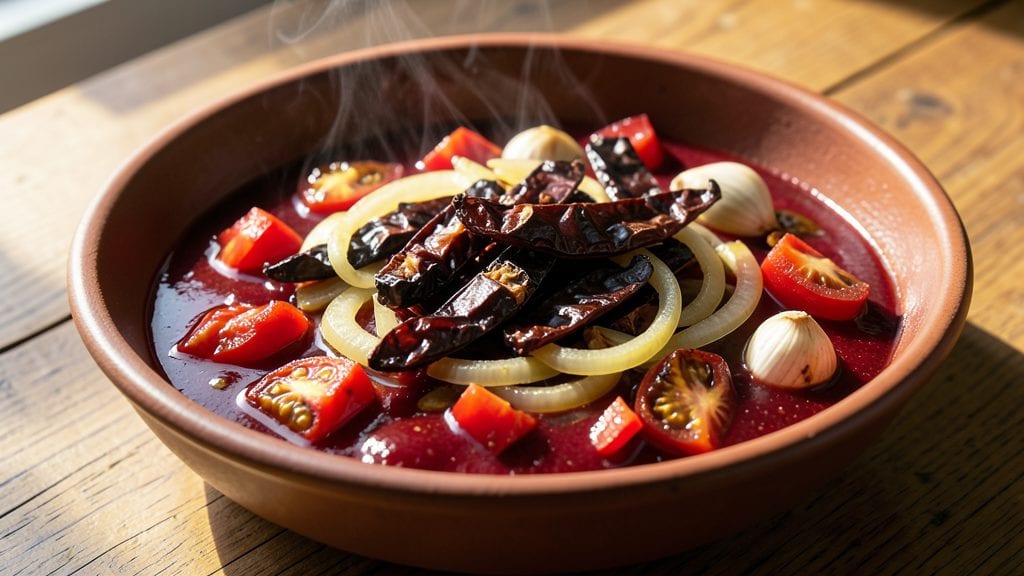
This traditional red chile sauce brings the authentic smoky, earthy flavors of Southwestern cuisine to your kitchen table. The foundation lies in dried chiles and tomatoes, simmered low and slow to develop deep, complex layers of flavor that transform simple dishes into something extraordinary.
I’ve perfected this recipe over years of testing, ensuring every batch delivers that signature balance of heat, richness, and smokiness that defines classic red chile.
The process begins with rehydrating dried chiles and blending them into a smooth paste, which forms the heart of the sauce. Tomatoes—either fresh or canned—add natural sweetness and acidity, while onions and garlic build aromatic depth.
A touch of cumin and oregano enhances the earthy notes, while broth or water adjusts the consistency to your preference. The result is a versatile sauce that elevates everything from tacos to grilled meats, eggs, or even as a dip for tortilla chips.
What sets this sauce apart is its authentic texture and flavor profile—neither too thick nor too thin, with just the right amount of heat to linger on the palate.
The smoky aroma alone will draw everyone to the table, and the taste will remind you of the bold, rustic flavors of traditional Southwestern cooking. Whether you’re serving it at a family gathering or meal prepping for the week, this sauce is a game-changer for adding depth to any dish.
Once you taste the difference between this homemade version and store-bought alternatives, you’ll never go back. The key lies in patience—letting the flavors meld gradually—and using high-quality dried chiles for that unmistakable smoky richness.
Store it in the fridge for up to two weeks or freeze for months, so you always have a taste of tradition ready whenever you need it.
Ingredients for traditional red chile sauce
Start with these essential ingredients for a sauce that tastes like tradition.
| Ingredient | Amount | Notes |
|---|---|---|
| Dried Ancho Chile Peppers 🌶️ | 4 whole | Stems and seeds removed |
| Dried New Mexico Chile Peppers 🌶️ | 2 whole | For smoky depth |
| Dried Guajillo Chile Peppers 🌶️ | 2 whole | For fruity heat |
| Canned Fire-Roasted Diced Tomatoes 🍅 | 2 cups | San Marzano preferred |
| Yellow Onion 🧅 | 1 whole | Chopped, medium size |
| Garlic Cloves 🧄 | 4 cloves | Peeled, roughly chopped |
| Ground Cumin 🌿 | 1 tbsp | Toasted for depth |
| Dried Mexican Oregano 🍃 | 1 tbsp | Not regular oregano |
| Chicken or Vegetable Broth 💧 | 1 cup | Low-sodium preferred |
| Extra-Virgin Olive Oil 🫒 | 2 tbsp | For blending |
The chiles are the soul of this sauce. Look for dried peppers at Mexican markets or specialty stores—they’ll have better quality than your average grocery store. Ancho gives that classic sweetness, New Mexico adds smoky depth, and guajillo brings fruity heat. If you can’t find Mexican oregano, regular oregano works, but it’s not the same. Toast the dried peppers in a dry skillet for 30 seconds per side before soaking—this wakes up their flavors. Penzeys or La Tienda are great spots if you’re hunting for authentic ingredients.
No ancho peppers? Pasilla or mulato are solid swaps—they’re darker but bring similar depth. Short on guajillo? Dried arbol peppers at half the quantity will add heat without the sweetness. The broth can be swapped for water, but low-sodium is key—you don’t want to dilute the sauce’s natural flavors. For the tomatoes, San Marzano cans are worth the splurge—they’re sweeter and less acidic. If you’re using fresh tomatoes, roast them first to concentrate their flavor. And trust me, toast the cumin in a dry pan for 30 seconds—it makes all the difference.
This sauce gets better with time, so make a big batch and store it. Keeps in the fridge for 2 weeks sealed in a jar, or freeze for up to 6 months. The flavor deepens as it sits, so don’t rush it. I like to portion it into ice cube trays for easy single-use servings—perfect for drizzling over eggs or tacos. If it gets too thick, just stir in a splash of broth or water. And if you’re feeling fancy, blend in a few toasted corn kernels for extra texture.
Why You'll Love This Recipe
- No-Fuss Simmer: I swear by this sauce because it’s basically hands-off after the initial chop. Toss those dried peppers in hot water while you dice one onion—that’s it—then let the pot do the work. The fire-roasted tomatoes handle all the blending, so no blender cleanup either.
- Smoky Depth Magic: Between the ancho’s velvety heat and the guajillo’s fruity tang, this sauce tastes like a hug from a New Mexico grandma. Honestly, the New Mexico chiles add this unexpected earthy crunch that makes it way more interesting than store-bought.
- Weeknight Swiss Army: This sauce is my secret weapon for tacos, eggs, or even grilled cheese. I keep a jar in the fridge to toss into anything—yes, even on a Tuesday night—because it turns bland meals into something special without extra effort.
- Pantry Goldmine: I buy dried peppers in bulk, and they last forever. A single batch stretches into three meals, and the cost? A fraction of what pre-made sauces charge. Plus, the more it sits, the richer the flavor gets—like a fine wine, but for your taste buds.
Step-by-step instructions for traditional red chile sauce
Here's how to build this authentic sauce with layers of smoky, fruity, and earthy flavors.
Toast and Rehydrate the Dried Peppers
Preheat your oven to 375°F. Arrange all 4 whole dried ancho chile peppers, 2 whole dried New Mexico chile peppers, and 2 whole dried guajillo chile peppers on a baking sheet. Toast them for 3-4 minutes until fragrant and slightly darkened—this deepens their natural flavors. Watch closely to avoid burning.
Immediately transfer the toasted peppers to a heatproof bowl and pour 2 cups of hot water over them. Let them soak for 15-20 minutes until completely softened. This step is crucial—it removes the heat while preserving their complex flavors. Drain the peppers and reserve the soaking liquid for later.
Build the Sauce Base with Aromatics
Heat 2 tablespoons of extra-virgin olive oil in a medium saucepan over medium heat. Add the chopped yellow onion and cook for 5-6 minutes until softened and translucent. Stir in the 4 cloves of roughly chopped garlic cloves and cook for 30 seconds until fragrant—this prevents bitter flavors.
Add 1 tablespoon of ground cumin and 1 tablespoon of dried Mexican oregano, stirring constantly for 1 minute until the spices are toasted and aromatic. This step develops the earthy, warm foundation of the sauce. Keep the heat at medium to avoid burning the spices.
Blend the Peppers and Tomatoes
Add the softened dried peppers to the saucepan and cook for 2 minutes, stirring occasionally. Pour in the 2 cups of canned fire-roasted diced tomatoes (with their juices) and the reserved soaking liquid from the peppers. Bring the mixture to a gentle simmer over medium-low heat for 10 minutes, stirring occasionally.
Use an immersion blender to purée the mixture directly in the saucepan until completely smooth. If you prefer using a countertop blender, transfer the hot mixture in batches (being careful of splatter) and blend until silky. The sauce should be vibrant red with a thick, velvety texture—this is the heart of your traditional red chile.
Simmer and Season
Return the puréed sauce to the saucepan and stir in 1 cup of chicken or vegetable broth. Simmer gently over low heat for 15-20 minutes, stirring occasionally, until the sauce thickens slightly. The sauce should coat the back of a spoon but remain smooth—this ensures it clings beautifully to your dishes.
Taste and adjust the seasoning with salt if needed. The sauce should have a balanced blend of smoky depth from the New Mexico peppers, fruity warmth from the guajillo, and earthy richness from the ancho. If it's too thick, add a splash of broth to reach your desired consistency. This sauce tastes even better the next day as the flavors meld further.
Pro Tips For Making Traditional Red Chile Sauce
- STEM THE PEPPERS FIRST: I learned this the hard way—don’t just toss whole dried peppers into the pot. Split each ancho, guajillo, and New Mexico chile lengthwise, then remove seeds and stems before toasting. This guarantees even heat distribution and prevents bitter, undercooked pockets where seeds hide.
- TOAST THEM UNTIL DARK: Get that dry skillet smoking hot—you’re not just warming them, you’re deepening the flavor. Toast the peppers for 30-45 seconds per side until they darken and smell like campfire smoke. Overlooking this step leaves your sauce tasting flat, like you skipped the most important part.
- CHAR THE ONION LOW: After toasting the peppers, add the onion but keep the heat low. You want it to caramelize slowly—about 10 minutes—until it’s sticky and golden, not crispy. Dumping it in on high just burns it, and you’ll taste the difference (trust me, I’ve done it).
- BLEND WITH HOT LIQUID: Pour the boiling water or broth over the toasted peppers immediately—don’t let them cool first. This unlocks their flavor and makes blending easier. I used to wait, and the sauce always ended up grainy. Now? Silky smooth every time.
Best sauces and condiments for these flavors
Smoky Chipotle Twist
For extra depth, blend in 1-2 adobed chipotle peppers in adobo sauce with the tomatoes before simmering. This adds a rich, smoky heat that pairs perfectly with grilled meats or beans. I like to add 1 tbsp of the adobo sauce liquid too—it enhances the sauce’s complexity without overpowering. 🌶️
Creamy Avocado Finish
Stir in ¼ cup of blended avocado at the end for a velvety texture that balances the sauce’s heat. This works especially well for breakfast dishes like huevos rancheros or chilaquiles.
For extra richness, add a splash of sour cream or Mexican crema after blending. The avocado also adds a subtle buttery note that rounds out the flavors.
Spicy Tomatillo Salsa
Blend 1 cup of tomatillos (boiled and peeled) with the tomatoes for a tangier, brighter sauce. Add ½ tsp of ground cumin and 1 jalapeño for extra zing.
This variation is perfect for drizzling over tacos or using as a dip. The tomatillos cut through the richness of the chiles beautifully, creating a well-rounded sauce.
Sweet Corn and Black Bean
Fold in ½ cup of cooked black beans and ¼ cup of sweet corn for a heartier, more substantial sauce. This version is ideal for serving with enchiladas or as a filling for burritos.
The beans and corn add texture and a touch of sweetness that complements the smoky chiles. Toast the corn and beans lightly in a dry pan before adding for extra depth.
Citrusy Lime Zest
Finish with a bright burst of flavor by adding 1 tbsp of fresh lime zest and 1 tbsp of lime juice at the end. This cuts through the richness and adds a refreshing note that’s perfect for seafood dishes or grilled vegetables.
The zest also brightens the sauce’s color, making it look as vibrant as it tastes. 💛
Herb-Infused Olive Oil
Swap the olive oil for herb-infused olive oil made with 1 tbsp of chopped cilantro and 1 tsp of fresh oregano. Heat the oil with the herbs for 2 minutes before straining and using it in the sauce.
This adds an aromatic freshness that pairs wonderfully with the smoky chiles. The infused oil also enhances the sauce’s depth, making every bite more flavorful.
Nutrition facts
Frequently asked questions
Can I substitute fresh chiles for dried in this red chile sauce?
Fresh chiles won't work the same way—dried peppers develop deeper, complex flavors through toasting and rehydrating. However, you can roast 2-3 fresh poblano or jalapeño peppers until charred, peel their skins, and blend them with the tomatoes. For best results, still include 1-2 dried ancho peppers for that authentic earthy base.
How do I adjust the heat level in this sauce?
For milder heat, remove the seeds and membranes from the dried peppers before toasting. For extra spice, add 1-2 dried arbol peppers (they're tiny but fiery) or a pinch of cayenne. Always taste as you go—you can't easily reduce heat after blending, but you can always add more tomatoes or broth to balance it.
What's the best way to store leftovers?
Transfer cooled sauce to an airtight container and refrigerate for up to 2 weeks. For longer storage, freeze in ice cube trays or small jars (leave ½-inch headspace to prevent cracking). Thaw overnight in the fridge—never microwave directly from frozen. The flavors actually improve after 3-5 days of refrigeration!
Can vegetarians use this sauce?
Simply substitute vegetable broth for chicken broth. The sauce works beautifully with veggie tacos, roasted vegetables, or as a dip for tostadas. For extra umami, add 1 tbsp of nutritional yeast or a splash of soy sauce when simmering.
Why did my sauce turn out too thin?
This usually happens when using too much broth or not simmering long enough. Let the sauce reduce on low heat for an extra 10-15 minutes and stir in 1 tsp of cornstarch mixed with 1 tbsp water if needed. For next time, start with ½ cup broth and add more only if necessary. The sauce should coat the back of a spoon but remain smooth.