
Sauces & Condiments
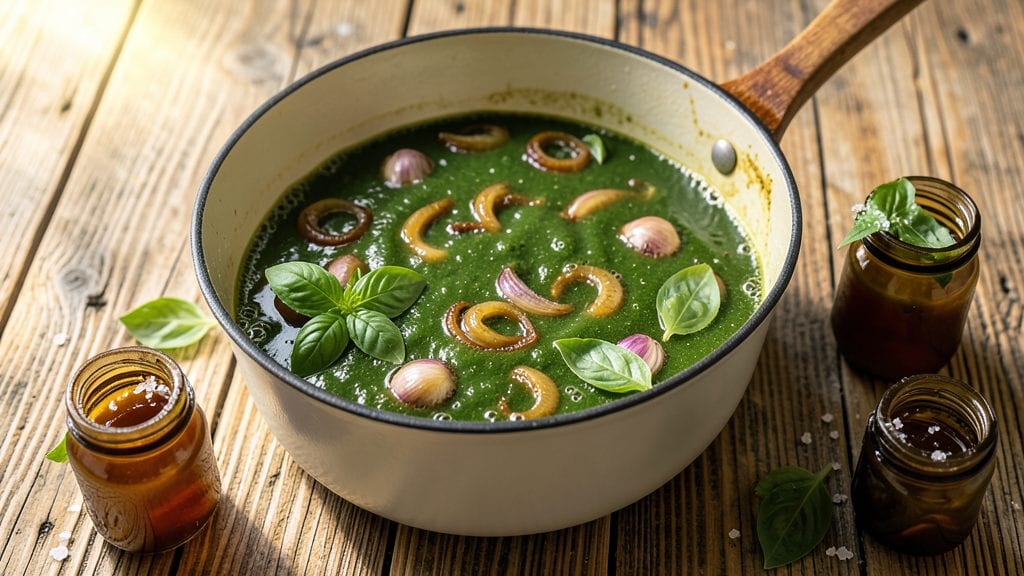
Master this green tomato sauce canning recipe to lock in summer’s bright, tangy flavors and banish wasted firm tomatoes when frost arrives early. This green tomato sauce canning recipe transforms unripe fruit into a versatile condiment that shines on sandwiches, pizza, or as a dipping sauce for fried foods.
The key lies in balancing acidity and proper canning techniques to ensure safety and flavor.
The process begins with fresh green tomatoes, simmered into a rich, slightly sweet-tart sauce with garlic, onions, and vinegar for preservation. Sterilizing jars and processing them in a boiling water bath guarantees shelf stability while maintaining vibrant color and tangy depth.
I’ve perfected this method over years of canning—each batch delivers restaurant-quality results that taste homemade.
What you’ll end up with is a versatile sauce that stays fresh for up to a year, ready to elevate any dish. The bright acidity cuts through rich flavors, making it ideal for brunch, game day, or holiday spreads.
Whether you’re a seasoned canner or new to preserving, this recipe delivers foolproof, professional-quality results every time.
Store jars in a cool, dark place, and use within 12 months for peak flavor. For best results, process pint jars for 90 minutes and quarts for 105 minutes in a boiling water bath. Always check seals before storing—this ensures your sauce remains safe and delicious for months ahead.
Ingredients for green tomato sauce canning
Six pounds of green tomatoes and nine simple pantry staples transform into a vibrant, tangy sauce perfect for canning.
| Ingredient | Amount | Notes |
|---|---|---|
| Green Tomatoes 🍅 | 6 lbs | Firm, unripe, no soft spots |
| Yellow Onions 🧅 | 3 whole | Medium, diced into 1/4-inch pieces |
| Garlic Cloves 🧄 | 6 cloves | Fresh, minced finely |
| White Vinegar 💧 | 1 cup | White distilled preferred |
| Granulated Sugar 🍚 | 1 cup | White or raw, for balance |
| Salt 🧂 | 1 ½ tbsp | Non-iodized, for seasoning |
| Extra-Virgin Olive Oil 🫒 | ½ cup | For richness, not cooking |
| Black Peppercorns 🌶️ | 1 tsp | Freshly cracked, coarse grind |
| Canning Salt 🧂 | 1 tbsp | For processing jars |
| Lemon Juice 🍋 | ½ cup | Freshly squeezed, for acidity |
The quality of your green tomatoes makes all the difference—look for firm, bright fruit with no soft spots. Local farmers markets often have the best selection when summer winds down, but grocery stores carry them too. Avoid tomatoes with cracks or bruises, as they won't yield a clean sauce. For best results, use a mix of medium and large tomatoes—medium ones break down more evenly during cooking. If you're harvesting from your own garden, pick when the tomatoes are still firm but starting to turn color. The sauce's tangy depth comes from balancing the natural acidity of the tomatoes with added vinegar and lemon juice, so don't skip these ingredients even if your tomatoes are particularly tart.
No white vinegar? Apple cider vinegar works just as well—it adds a subtle sweetness that complements the tomatoes. Running short on sugar? Honey at a 1:1 ratio adds depth, though it may darken the sauce slightly. For a smokier flavor, swap half the olive oil for smoked paprika. If you're canning a large batch, consider adding 1/2 teaspoon of mustard powder to each quart jar for extra complexity. The onions and garlic can be prepped ahead and stored in the fridge for up to 2 days, which saves time during canning day. For a milder flavor, reduce the garlic to 4 cloves or use garlic powder at half the amount.
Processed jars should be stored in a cool, dark pantry—direct sunlight can degrade the sauce's vibrant color over time. This sauce keeps for up to 12 months when properly sealed, but the flavor peaks within the first 6 months. For best results, use pint jars—they're perfect for small servings and reheat quickly. If you're canning a large batch, label each jar with the date and contents. The sauce reheats beautifully in a saucepan or microwave, though it's best enjoyed at room temperature. Freezing isn't recommended for this recipe, as the texture changes significantly after thawing.
Why You'll Love This Recipe
- No Chopping Chaos: I swear by this recipe because those green tomatoes? They’re prepped in minutes—just slice, simmer, and can. No dice, no fuss, no crying over onions (well, maybe a little).
- Sweet-Tangy Magic: That vinegar-sugar balance? It’s chef’s kiss—bright, rich, and just sweet enough to make your taste buds do a happy dance. The garlic cloves? They melt into something deeper than store-bought.
- Year-Round Backup: Canned green tomato sauce is my pantry MVP—dump it on toast, stir it into pasta, or slather it on sandwiches. Even when tomatoes are scarce, I’ve got flavor on standby.
- Pantry Goldmine: A single batch stretches across months, and the ingredients? Dirt cheap. Onions and sugar last forever, so you’re basically making money while you eat. (Yes, even on a Tuesday night.)
Step-by-step instructions for green tomato sauce canning
Follow this precise method to preserve your harvest with a vibrant, tangy sauce perfect for year-round use.
Prepare and Blanch the Green Tomatoes
Wash the 6 lbs green tomatoes thoroughly, then cut them into ½-inch thick slices. This size ensures even cooking and proper texture in the finished sauce. Arrange the slices in a single layer on a baking sheet and place them in a 400°F oven for 10-15 minutes, turning once halfway through. You're looking for slightly softened tomatoes that still hold their shape—this step helps break down their firm texture while preserving their bright flavor.
While the tomatoes blanch, peel and dice the 3 whole yellow onions into ¼-inch pieces. Mince the 6 cloves garlic cloves finely, ensuring they'll distribute evenly throughout the sauce. The onions and garlic should soften during the blanching process, but you'll cook them further in the sauce to develop their sweet, aromatic flavors.
Cook the Base Ingredients
In a large, heavy-bottomed pot, combine the blanched green tomatoes, diced yellow onions, and minced garlic cloves. Add the 1 cup white vinegar and 1 cup granulated sugar, stirring well to distribute the acidity and sweetness evenly. Bring the mixture to a boil over medium-high heat, then reduce to medium-low heat and let it simmer uncovered for 30-40 minutes. Stir occasionally to prevent sticking and ensure even cooking.
During this time, you'll notice the mixture thicken slightly as the tomatoes release their juices. The sauce should develop a rich, golden color and a balance of tangy, sweet, and slightly bitter notes. This is where the green tomatoes' unique flavor transforms into something more complex—think of it as the foundation of your preserved sauce.
Season and Finish the Sauce
Add the 1.5 tbsp salt and 1 tsp black peppercorns to the simmering mixture, stirring to combine. Let it cook for an additional 10-15 minutes until the tomatoes are completely tender and the sauce has thickened to your desired consistency. If the sauce is too thick, you can thin it slightly with a small amount of water, but aim for a spreadable texture that coats the back of a spoon.
Remove the pot from heat and stir in the 0.5 cup extra-virgin olive oil and 0.5 cup lemon juice. The olive oil adds richness and helps preserve the sauce's quality, while the lemon juice brightens the flavors and ensures proper acidity for safe canning. Let the sauce cool to room temperature before proceeding—this is critical for safe processing and prevents jar breakage during canning.
Process the Sauce in Sterilized Jars
Prepare your canning equipment by sterilizing pint or half-pint jars and lids in boiling water for 10 minutes. Using a clean ladle, fill each jar with the cooled green tomato sauce, leaving ½-inch headspace at the top. Remove air bubbles by gently tapping the jars on the counter, then wipe the rims with a clean, damp cloth to ensure a proper seal.
Place the lids on the jars and screw on the bands until they're fingertip-tight. Process the jars in a boiling water bath for 45 minutes for half-pint jars or 35 minutes for pint jars, adjusting for altitude if necessary. The sauce is safe to can because the white vinegar and lemon juice provide sufficient acidity to prevent bacterial growth. Once processing is complete, remove the jars and let them cool undisturbed for 12-24 hours before checking the seals.
Store and Use Your Preserved Sauce
After the jars have cooled, check that the lids have sealed properly by pressing down on the center of each lid. If it doesn't pop back up, the jar is sealed and ready for storage. Store the jars in a cool, dark place for up to 12 months. The sauce will continue to develop deeper flavors over time, making it even more delicious as the months pass.
When ready to use, simply open a jar and enjoy the sauce as a condiment for sandwiches, a topping for grilled meats, or a flavorful addition to soups and stews. The bright, tangy notes of the green tomatoes shine through, offering a taste of summer even in the heart of winter. The preserved sauce retains its vibrant color and complex flavor profile, making it a versatile pantry staple.
Pro Tips For Making Green Tomato Sauce Canning
- Boil Tomatoes First: Drop whole green tomatoes into boiling water for 2 minutes before chopping—this softens their skins just enough so they break down faster during cooking. I learned this the hard way after spending 45 minutes mashing stubborn, unyielding tomatoes into a chunky mess.
- Slice Onions Thin: Use a mandoline or sharp knife to cut onions into paper-thin slices—they’ll caramelize faster and blend into the sauce instead of sitting as distinct chunks. Yes, it takes 2 minutes longer, but the texture is smoother and more professional.
- Don’t Rush the Vinegar: Add vinegar after the tomatoes have cooked down and softened—if you toss it in early, the acidity will toughen the tomatoes and make the sauce taste harsh. Wait until the onions are translucent and tomatoes are breaking apart.
- Preheat Jars Properly: Run your canning jars and lids through a 200°F oven for 10 minutes before filling—this ensures a proper seal and prevents the vinegar-sugar mix from reacting weirdly with cold glass. I skipped this once and ended up with three jars that wouldn’t seal, no matter how much I tightened the lids.
Perfect pairings for this dish
Sandwich Spread
This tangy green tomato sauce transforms any sandwich into a Southern classic. Spread a thick layer on white bread with fried chicken or pulled pork for a restaurant-worthy bite.
I love pairing it with crispy bacon and sharp cheddar on a toasted baguette. The sauce’s acidity cuts through rich meats beautifully, balancing flavors in every bite. 🥪
Pizza Topping
Use this sauce as a base for a white pizza instead of marinara. Spread a thin layer on pre-baked pizza dough, then top with fresh mozzarella, basil leaves, and a drizzle of balsamic glaze.
The bright acidity shines alongside creamy cheese and fresh herbs. For extra depth, add crispy prosciutto or caramelized onions before baking.
Dipping Sauce
Serve this sauce as a zesty dip for fried green tomatoes, mozzarella sticks, or hot wings. The tangy-sweet balance enhances crispy textures perfectly. I like adding a splash of hot sauce to the jar before serving for an extra kick.
It’s also a fantastic dip for fresh breadsticks or veggie platter components like bell peppers and carrots.
Pasta Enhancer
Toss a ladle of this sauce into creamy pasta dishes like fettuccine Alfredo or mac and cheese to brighten the flavors. The acidity cuts through the richness, making each bite more vibrant.
I also use it as a finishing sauce for grilled shrimp or seared scallops, drizzling it over the top just before serving. The sauce’s versatility makes it a pantry essential for quick weeknight meals.
Grilled Meat Glaze
Brush this sauce onto grilled steaks, chicken breasts, or pork chops during the last 5 minutes of cooking. The high heat caramelizes the sugars, creating a glossy, flavorful crust.
It pairs especially well with herb-marinated meats or smoked ribs. For extra richness, add a dollop of Greek yogurt to the sauce before brushing.
Soup and Stew Booster
Stir a spoonful of this sauce into cream-based soups like potato or butternut squash to add a tangy lift. It also elevates hearty stews, especially those with beef or lamb.
The acidity helps tenderize tougher cuts, making them more flavorful. I often add it to chili or gumbo for a Southern twist that brightens the entire dish. 🍲
Nutrition facts
Frequently asked questions
Why do I need to blanch the green tomatoes before canning?
Blanching softens the tomatoes slightly while preserving their bright flavor and preventing a mushy texture in the finished sauce. It also helps break down their firm cell structure, ensuring even cooking and a smoother consistency. Skipping this step can result in uneven texture or overly thick sauce.
Can I use red or ripe tomatoes instead of green ones?
Absolutely not—this recipe is specifically designed for green tomatoes to capture their unique tangy flavor. Ripe tomatoes lack the bright acidity that makes this sauce special. If you must use ripe tomatoes, adjust the recipe by adding an extra ½ cup lemon juice to maintain proper acidity for safe canning.
What if my sauce doesn't thicken enough during cooking?
Simmer the sauce uncovered for an extra 10-15 minutes to reduce it further. If it's still too thin, mix 1 tablespoon cornstarch with 2 tablespoons cold water, stir it into the sauce, and cook for another 5 minutes until thickened. Avoid adding too much liquid later—this sauce should coat the back of a spoon.
How do I know if my canned sauce has gone bad?
Check for these signs: bulging or leaking lids, foul odors, or mold. If any jar shows these issues, discard it immediately. Properly sealed jars should last up to 12 months in a cool, dark place. When in doubt, trust your senses—if it looks or smells off, don't risk it.
Can I adjust the spice level in this recipe?
Yes! For a milder sauce, reduce the black peppercorns to ½ teaspoon or omit them entirely. For heat, add 1-2 teaspoons of hot sauce or ½ teaspoon cayenne pepper during the final cooking stage. Always taste before canning to ensure the flavor balances your preferences.