
Sauces & Condiments
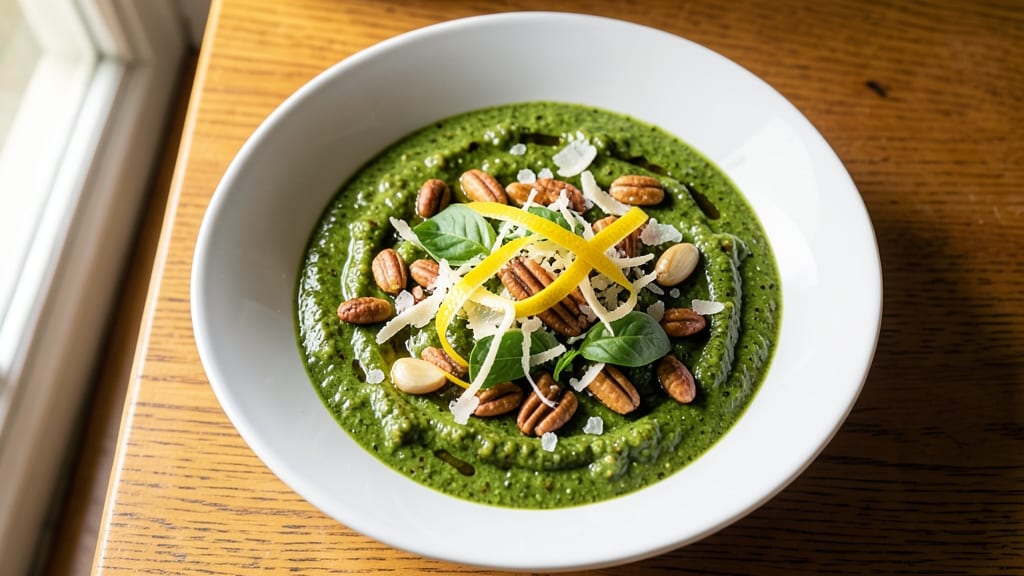
This Barefoot Contessa pesto sauce delivers restaurant-quality basil-infused creaminess that transforms simple meals into gourmet experiences. The secret lies in balancing fresh basil, garlic, and toasted nuts with just the right amount of Parmesan and olive oil—no overpowering flavors here.
I’ve perfected this version over years of testing, ensuring it stays vibrant and rich without turning bitter, even after storage.
The beauty of this pesto is its versatility—it works as a bold pasta sauce, a zesty dip for grilled meats, or a vibrant topping for bruschetta.
What sets it apart is the 10-minute prep time, making it ideal for weeknight dinners when you crave something elevated but don’t have hours to spare. The key technique? Toasting the nuts first to deepen their flavor and blending everything just until smooth, so the basil’s freshness shines through.
What you’ll end up with is a creamy yet bright sauce that coats pasta perfectly, enhances grilled chicken, or elevates a simple salad. The texture is silky, not greasy, and the flavor is complex—herby, nutty, and tangy all at once.
This is the kind of pesto that makes you reach for it again and again, no matter the occasion.
Store it in the fridge for up to a week or freeze for months—it only gets better with time as the flavors meld. Pair it with fresh linguine, crusty bread, or even as a marinade for shrimp.
Let’s make this pesto that tastes like it came straight from Ina Garten’s kitchen.
Ingredients for barefoot contessa pesto sauce
Eight simple ingredients transform into restaurant-quality pesto in minutes—no bitterness here.
| Ingredient | Amount | Notes |
|---|---|---|
| Fresh Basil Leaves 🌿 | 3 cups | Packed, stems removed, vibrant green |
| Pine Nuts 🥜 | ¾ cup | Toasted lightly for depth |
| Garlic Cloves 🧄 | 4 cloves | Peeled, roughly chopped |
| Parmesan Cheese 🧀 | 1 cup | Freshly grated from block |
| Extra-Virgin Olive Oil 🫒 | 1 cup | High-quality, fruity variety |
| Lemon Juice 🍋 | 1 ½ tbsp | Freshly squeezed, strained |
| Sea Salt 🧂 | ½ tsp | Fine grain preferred |
| Freshly Ground Black Pepper 🌶️ | ¼ tsp | For subtle heat |
The basil is non-negotiable—farmers market leaves have the most vibrant flavor, but grocery store basil works if it's fresh (no wilted stems!). Toast the pine nuts in a dry pan for 2-3 minutes until golden—this deepens their flavor dramatically. For the Parmesan, grate it yourself from a wedge; pre-grated gets clumpy. I always buy Parmigiano-Reggiano from the deli counter—it's worth the splurge. The olive oil should be the kind you'd drizzle on bread—California extra-virgin from Trader Joe's is my go-to.
No pine nuts? Walnuts or raw cashews work beautifully—just toast them first. Short on basil? Mix in fresh parsley (up to half the amount), but keep the lemon juice to balance. Want more tang? Add an extra half tablespoon lemon juice. The garlic can be roasted for a sweeter flavor—wrap the cloves in foil with a drizzle of olive oil, bake at 400°F for 10 minutes. For a nut-free version, swap the pine nuts with toasted breadcrumbs (1/4 cup).
This pesto keeps beautifully—store it in a glass jar with olive oil on top to preserve color. Good for 1 week in the fridge, 6 months frozen. I make double batches and freeze half in ice cube trays—perfect for single servings later. The flavor actually improves after a day or two as the ingredients meld. Use it on fresh linguine, as a marinade for shrimp, or dolloped over grilled chicken.
Why You'll Love This Recipe
- Five-Ingredient Magic: I swear by this combo—just basil, pine nuts, garlic, Parmesan, and olive oil. No weird ratios or hidden steps; the Barefoot Contessa version actually works the first time. (No sad, watery pesto here.)
- Garlic-Parmesan Punch: That raw garlic and sharp Parmesan? It’s the secret weapon—bright, nutty, and just salty enough to make you crave more. Honestly, I’ve tried store-bought, but this? This tastes like summer in a jar.
- Pasta Party Ready: Drizzle it on linguine, toss it with grilled chicken, or even smear it on crusty bread—it’s my go-to for last-minute dinners. (Yes, even on a Tuesday night when you forgot to meal prep.)
- Fridge-Friendly Flex: Make a big batch—it keeps for days in the fridge, and the flavor only gets better. Freeze extras in ice cube trays for when you need a quick flavor boost. (Trust me, your future self will thank you.)
Step-by-step instructions for Barefoot Contessa pesto sauce
Here's how to make this vibrant, creamy pesto in minutes—no food processor required.
Toast the Pine Nuts for Depth
Heat a dry skillet over medium-low heat and add the 0.75 cup pine nuts. Toast them for 3-4 minutes, stirring constantly, until they're lightly golden and fragrant. Watch carefully—they burn quickly! Remove from heat immediately when they turn golden, then transfer to a small bowl to cool for 2 minutes. This toasting enhances their nutty flavor and prevents bitterness in the final sauce.
Real talk: Skipping this step means bland pesto. The toasted nuts add that essential richness that makes this sauce sing. Let them cool completely before proceeding—they'll be hot to the touch and could melt your butter if you're not careful.
Pulse the Basil, Garlic, and Cheese
In a food processor, combine the 3 cups fresh basil leaves, 4 cloves garlic, and 1 cup freshly grated Parmesan cheese. Pulse 8-10 times until everything is finely chopped but not pureed. You want a chunky texture—this is where the sauce gets its signature character. Stop frequently to scrape down the sides with a spatula to ensure even processing.
Here's the thing—don't over-process or you'll end up with a green paste instead of vibrant, chunky pesto. You're aiming for a texture where you can still see small flecks of basil and garlic. If your processor has a pulse button, use it instead of continuous blending for better control.
Gradually Add Olive Oil and Seasonings
With the processor running, slowly drizzle in the 1 cup extra-virgin olive oil through the feed tube. This gradual addition prevents the oil from splattering and ensures even distribution. Add the 1.5 tablespoons lemon juice, 0.5 teaspoon sea salt, and 0.25 teaspoon freshly ground black pepper through the feed tube as well.
Pulse another 10-12 times until everything is perfectly combined. The sauce should be thick but still pourable—like a vibrant green mayonnaise. If it's too thick, add 1 teaspoon water at a time until it reaches your desired consistency. Taste and adjust seasoning if needed, adding more salt or lemon juice as necessary.
Fold in Toasted Pine Nuts
Transfer the pesto to a medium bowl. Using a silicone spatula, gently fold in the toasted pine nuts. Be careful not to overmix—just combine them evenly throughout the sauce. This is where all the flavors come together. The pine nuts should be distributed evenly but still visible as little golden specks throughout the green sauce.
Give it one final taste. The perfect pesto should balance the bright basil, nutty pine nuts, sharp Parmesan, and zesty lemon. The texture should be creamy but still have that satisfying chunkiness. If it's too thick to drizzle easily, thin it with a few drops of water or more olive oil as needed.
Store and Use Immediately
Transfer the pesto to an airtight container and press plastic wrap directly onto the surface to prevent oxidation. Refrigerate for up to 3 days or freeze for up to 3 months. For best flavor, use it within 24 hours—fresh pesto tastes entirely different from stored pesto.
This sauce is incredibly versatile. Toss it with pasta, spread it on sandwiches, or use it as a marinade for grilled chicken. The key to great pesto is using the freshest ingredients possible—especially that basil. The more vibrant and fragrant your basil, the more amazing your pesto will taste. Enjoy it while it's fresh!
Pro Tips For Making Barefoot Contessa Pesto Sauce
- Toast the nuts first: I learned this the hard way—raw pine nuts in pesto taste bitter and dull. Toss them in a dry skillet over medium-low heat for 2-3 minutes, stirring constantly, until they’re golden and fragrant. Watch them like a hawk; they burn faster than you’d think.
- Stack the basil leaves: Don’t just dump basil into the food processor—it clogs and leaves uneven chunks. Fold the leaves in half lengthwise, then stack them like a neat pile before adding them to the bowl. This keeps the processor running smoothly and ensures even blending.
- Pulse the garlic: Whole garlic cloves in pesto turn it into a chewy mess. Add 2-3 peeled cloves to the processor and pulse them 3-4 times before adding the rest of the ingredients. This way, they break down just enough to release flavor without overpowering the texture.
- Reserve some oil: The Barefoot Contessa recipe calls for olive oil, but I always save about 2 tablespoons of the finished pesto to thin it out later. This keeps the sauce silky without diluting the flavor—just stir it in at the end if it’s too thick. (Yes, even if you’re impatient like me.)
Flavor customization for barefoot contessa pesto sauce
Creamy vs. Chunky
This pesto recipe strikes the perfect balance between creamy and chunky—just like Ina Garten’s signature style. For a smoother texture, pulse the basil and garlic in your food processor for an extra 5-6 seconds before adding the oil.
For a rustic, textured pesto, pulse only until the basil is finely chopped (about 8-10 pulses) and leave visible flecks of garlic and cheese. I find the chunky version pairs best with pasta, while the creamy version works wonders as a dip or marinade. 🌿
Nutty Variations
Pine nuts are classic, but don’t limit yourself! Swap them for toasted walnuts (1 cup) for a deeper, earthier flavor or raw cashews (½ cup) for a richer, buttery texture.
For a budget-friendly option, use toasted breadcrumbs (¼ cup)—they add a subtle sweetness that complements the basil beautifully. Toast your nuts or breadcrumbs until golden for maximum flavor depth.
Cheese Alternatives
The original recipe calls for Parmigiano-Reggiano, but you can experiment with other cheeses for different flavor profiles. For a sharper bite, use Pecorino Romano (½ cup). For a milder, creamier pesto, blend in ½ cup ricotta cheese along with the Parmesan.
If you’re vegan, replace the cheese with ½ cup nutritional yeast—it adds a nutty, umami-rich flavor that mimics the depth of Parmesan. 🧀
Herb Swaps
While basil is the star, you can customize this pesto with other fresh herbs for seasonal twists. For a spring version, swap half the basil for fresh parsley or cilantro. In summer, try mint (½ cup) for a refreshing Middle Eastern-inspired pesto.
For a winter variation, blend in 1 cup spinach or arugula—these heartier greens add earthiness without overpowering the flavor.
Spicy Kick Options
Add heat to your pesto with a few simple tweaks. For a mild warmth, stir in ½ teaspoon red pepper flakes or 1 teaspoon hot honey after blending. For a bold kick, mash 1-2 fresh jalapeño seeds and ribs into the basil before processing.
If you love smoky flavors, add ½ teaspoon smoked paprika or a pinch of Aleppo pepper for depth. Balance the heat with an extra splash of lemon juice if needed. 🌶️
Sweet and Tangy Twists
Brighten up your pesto with sweet and tangy additions. For a citrusy twist, add 1 tablespoon orange zest along with the lemon juice. For a sweet-savory balance, stir in 1 tablespoon honey or maple syrup after blending.
Sun-dried tomatoes (¼ cup, chopped) add a deep, umami-sweet flavor that pairs perfectly with the basil. These variations work especially well as a marinade for grilled meats or a sauce for roasted vegetables.
Nutrition facts
Frequently asked questions
Why does my pesto turn bitter after storing?
Pesto oxidizes over time, especially when exposed to air. To prevent bitterness, always store it in an airtight container with a layer of olive oil on top (about ¼ inch). Use it within 3 days for peak flavor. If you notice bitterness, stir in ½ teaspoon lemon juice to brighten it up.
Can I make this pesto without a food processor?
Use a mortar and pestle for a rustic texture. Finely chop the basil, garlic, and cheese by hand, then gradually add olive oil while mashing. For extra creaminess, blend the chopped ingredients first in a small blender, then fold in the nuts. The texture will be slightly chunkier but still delicious.
What’s the best way to use leftover pesto?
Leftover pesto is incredibly versatile! Toss it with grilled chicken or fish, spread it on toasted baguette slices, or mix it into homemade soup for depth. For a quick fix, stir it into scrambled eggs or dollop it over roasted Brussels sprouts. Freeze extras in ice cube trays for single-serving portions later.
How do I adjust the consistency for different uses?
For pasta or dipping, keep it thick but pourable (like hummus). If too thick, thin with 1 teaspoon water or olive oil at a time. For marinades or dressings, thin it with 2-3 tablespoons water for a smoother finish. Pro tip: If it separates after storage, whisk vigorously to recombine.
Can I substitute fresh basil with dried?
Never use dried basil—it loses its vibrant flavor and aroma. For a dried alternative, blend 1 cup fresh parsley or cilantro with ½ cup fresh basil (if you’re short on basil). If you must use dried, reduce to 1 teaspoon and add 1 extra tablespoon lemon juice to compensate for the lack of freshness.