Main Courses
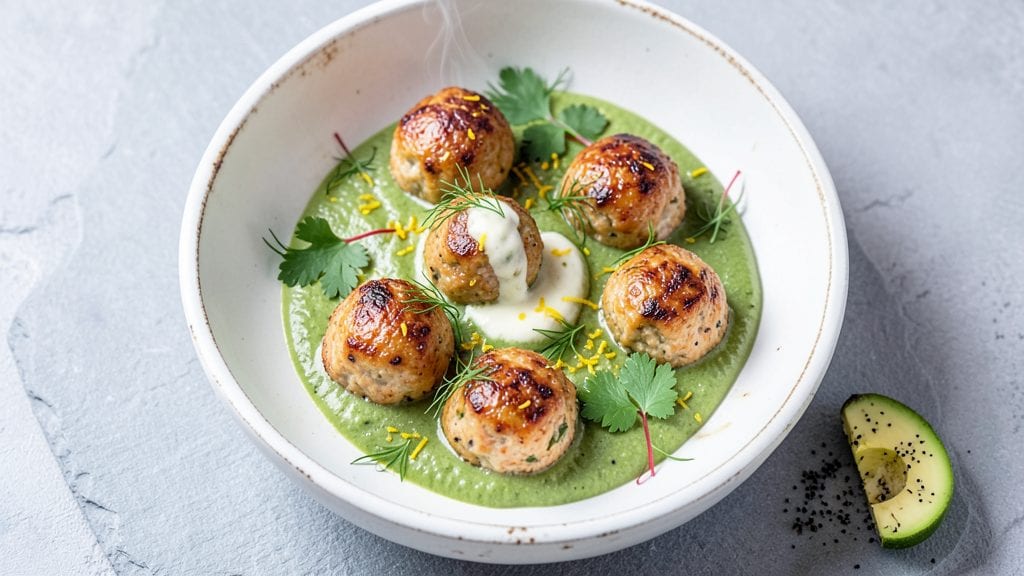
This recipe for baked salmon meatballs with creamy avocado sauce transforms simple ingredients into a restaurant-worthy dish that’s both elegant and approachable. The tender salmon meatballs—flavored with bright lime zest and fresh herbs—pair perfectly with a velvety avocado sauce that adds cooling richness without dairy.
I developed this recipe after realizing how often salmon gets overlooked in meatball preparations, and the result is a dish that’s equally satisfying for weeknight dinners and special occasions.
The beauty of this recipe lies in its balance: the salmon meatballs bake until just tender, never dry, while the avocado sauce—made with ripe avocados, Greek yogurt, and a touch of garlic—creates a luxurious contrast.
No frying is required, making it a healthier twist on traditional meatballs that still delivers bold flavor. The lime and herb notes in the meatballs brighten the dish, while the avocado sauce adds a creamy, cooling element that rounds out every bite.
What you’ll end up with is a plate that looks as impressive as it tastes: golden-brown salmon meatballs nestled in a pool of vibrant green sauce, garnished with fresh herbs and a squeeze of lime.
This dish is naturally pescatarian but can easily accommodate vegetarian or vegan adaptations by swapping the yogurt for a plant-based alternative. The creamy texture of the sauce ensures it’s rich and satisfying, while the salmon provides lean protein that keeps the meal balanced.
Perfect for serving with roasted vegetables, a fresh salad, or crusty bread to soak up every last bit of sauce. The recipe comes together in under 45 minutes, making it ideal for busy weeknights when you still want to feel like you’ve prepared something special.
Let’s get started—your taste buds will thank you.
Ingredients for baked salmon meatballs with creamy avocado sauce
Fourteen ingredients, two star players: salmon and avocado. Everything else just makes it sing.
| Ingredient | Amount | Notes |
|---|---|---|
| Fresh Salmon Fillets 🐟 | 1 ¼ lb | Skinless, boneless, sushi-grade preferred |
| Fresh Dill Weeds 🌿 | ¼ cup | Chopped, stems removed |
| Fresh Parsley Leaves 🌿 | ¼ cup | Chopped, flat-leaf preferred |
| Lime Zest 🍋 | 2 tbsp | From 1 large lime, finely grated |
| Plain Greek Yogurt 🥛 | ½ cup | Full-fat for creaminess (or vegan yogurt) |
| Ripe Avocados 🥑 | 2 whole | Flesh only, about 1 cup mashed |
| Garlic Cloves 🧄 | 2 cloves | Minced, fresh preferred |
| Extra-Virgin Olive Oil 🫒 | ¼ cup | For binding meatballs |
| Panko Breadcrumbs 🍞 | ½ cup | For texture, not regular breadcrumbs |
| Diamond Crystal Kosher Salt 🧂 | 1 ½ tsp | For seasoning, not iodized |
| Freshly Ground Black Pepper 🌶️ | ½ tsp | Cracked peppercorns preferred |
| Lemon Juice 🍋 | 1 tbsp | Freshly squeezed, from 1 lemon |
| Egg 🥚 | 1 whole | Large, lightly beaten |
| Fresh Cilantro Leaves 🌿 | ⅛ cup | Chopped, for garnish (optional) |
The salmon is the foundation, so quality matters here. Grab the freshest fillets you can find—Whole Foods or your local fishmonger are best. Look for bright, translucent flesh with no fishy odor (that's a red flag). If you can't find sushi-grade, cook the meatballs to 145°F internal temp. Panko breadcrumbs are a must—they add that perfect crunch without making the meatballs dense. I always grab mine from Trader Joe's because it's consistently light and crispy. For the avocados, ripe but firm is key—press gently, they should yield slightly but not feel mushy.
No Greek yogurt? Coconut yogurt works beautifully for a vegan option, or even mashed avocado alone if you want to keep it dairy-free. Fresh herbs are ideal, but dried dill at one-third the amount gets you close in a pinch. Short on lime zest? Lemon zest works too, though it's slightly less vibrant. The garlic can be roasted for a sweeter flavor—just toss whole cloves in olive oil at 400°F for 10 minutes. For extra richness in the sauce, add 1 tbsp tahini. And if you're feeling fancy, top with toasted pumpkin seeds for crunch.
Salmon meatballs keep best in an airtight container for 2 days in the fridge, though they reheat beautifully. The avocado sauce is best made fresh—it oxidizes quickly—but you can prep the meatball mixture ahead and bake later. For leftovers, store sauce separately and stir in extra lemon juice before serving. Freezes well for 2 months if you portion the meatballs individually. Garnish with fresh herbs right before serving—they wilt fast, so don't prep too early.
Why You'll Love This Recipe
- No-Fry Magic: I swear by this recipe when I’m too tired to deal with oil splatter—just mix salmon, yogurt, and herbs, roll into balls, and bake. The result? Juicy, golden meatballs with zero guilt over deep-frying.
- Zesty Brightness: That lime zest and fresh dill? It’s like a vacation in your mouth—bright, herby, and just sweet enough to make you forget this isn’t takeout. The avocado sauce ties it all together with creamy, tangy perfection.
- Lunchbox Hero: Between us, these meatballs keep perfectly for days in the fridge. Pack them for work with a side of sauce, and you’ve got a protein-packed lunch that’ll have coworkers asking for the recipe.
- Budget Fish Night: Salmon fillets stretch further than you’d think when you turn them into meatballs, and Greek yogurt replaces heavy cream without breaking the bank. Honestly, it’s the kind of meal that makes grocery day feel like a win.
Step-by-step instructions for baked salmon meatballs with creamy avocado sauce
Here's how to create tender baked salmon meatballs paired with luscious avocado sauce—simple, flavor-packed, and ready in under an hour.
Prepare the Salmon Mixture
Start by flaking the 1.25 lb fresh salmon fillets into small, even pieces using your fingers or a fork. This ensures uniform cooking and texture in your meatballs. In a large mixing bowl, combine the flaked salmon with the 0.25 cup chopped fresh dill weeds, 0.25 cup chopped fresh parsley leaves, 2 tbsp lime zest, 2 cloves minced garlic cloves, 1.5 tsp diamond crystal kosher salt, and 0.5 tsp freshly ground black pepper.
Gently fold these ingredients together until just combined—you want to avoid overworking the salmon, which can make the meatballs dense. The lime zest and fresh herbs will infuse the mixture with bright, zesty flavors. I like to use my hands for this step to ensure everything is evenly distributed, but a silicone spatula works too if you prefer not to touch the raw fish.
Bind and Shape the Meatballs
In a separate small bowl, whisk together the 1 whole egg, 0.25 cup extra-virgin olive oil, and 1 tbsp lemon juice until fully combined. This mixture acts as the binder for your meatballs, helping them hold their shape during baking. Pour this liquid over the salmon mixture and gently fold until everything is thoroughly coated.
Next, add the 0.5 cup panko breadcrumbs to the bowl and mix again until the dough comes together. The panko will add a delightful crunch to each bite. Once the mixture is well combined, use your hands to roll it into 16 even-sized meatballs, about 1.5 inches in diameter. Place them on a parchment-lined baking sheet, spacing them about 1 inch apart to allow for even baking.
Bake the Salmon Meatballs
Preheat your oven to 400°F to ensure it's fully heated before baking. Once preheated, place the baking sheet with the meatballs on the middle rack. Bake for 12-15 minutes until the meatballs are cooked through and the edges are lightly golden. You'll know they're ready when they reach an internal temperature of 145°F—use an instant-read thermometer to check the thickest meatball.
While the meatballs bake, you'll have time to prepare the avocado sauce. This ensures everything is ready simultaneously, making assembly a breeze. Don't be tempted to peek at the meatballs during baking—opening the oven door can cause them to lose heat and steam, which can affect their texture.
Make the Creamy Avocado Sauce
In a medium bowl, mash the 2 whole ripe avocados with a fork until smooth. Add the 0.5 cup plain Greek yogurt, 1 tbsp lemon juice, and 0.125 cup chopped fresh cilantro leaves to the bowl. Mix everything together until you achieve a creamy, well-blended consistency. The cilantro adds a fresh, herbaceous note that complements the richness of the avocado perfectly.
Taste the sauce and adjust the seasoning if needed. If it's too thick, you can add a splash of water or more Greek yogurt to reach your desired consistency. The sauce should be smooth and velvety, ready to drizzle over your baked salmon meatballs. Keep this sauce refrigerated until you're ready to serve, as it thickens slightly over time.
Serve and Enjoy
Once the meatballs are fully baked, transfer them to a serving platter and let them cool for 5 minutes. This brief resting period allows the juices to redistribute, ensuring each bite is moist and flavorful. Drizzle the creamy avocado sauce generously over the top of the meatballs, allowing it to cascade down the sides for an elegant presentation.
Serve the salmon meatballs immediately while they're still warm, accompanied by a side of fresh greens or a simple cucumber salad. The contrast between the warm, baked meatballs and the cool, creamy avocado sauce creates a delightful balance of textures and flavors. Each bite delivers a harmonious blend of zesty lime, fresh herbs, and rich avocado, making this dish a standout for any meal.
Pro Tips For Making Baked Salmon Meatballs With Creamy Avocado Sauce
- Prep Salmon Like Sushi: DESCRIPTION: Cut the fillets against the grain into 1-inch chunks—it keeps them from falling apart when baking. I used to ignore this and ended up with mushier meatballs that stuck together like sad dumplings.
- Chill the Mixture: DESCRIPTION: After mixing salmon, dill, parsley, and lime zest, pop the bowl in the fridge for 15 minutes. This firms up the texture so the meatballs hold shape instead of oozing everywhere when you bake them.
- Skip the Overmixing: DESCRIPTION: Stir just until the herbs and yogurt bind—overworking the salmon turns it into a dense, rubbery mess. Think "gentle fold," not "beat it into submission."
- Bake in Two Batches: DESCRIPTION: Crowding the tray steams the meatballs, making them greasy and unevenly cooked. Spread them in a single layer with space between each—your oven’s hot spots will thank you.
Troubleshooting perfect results
Meatballs Too Dense
Overmixing the salmon mixture is the #1 cause of dense meatballs. I’ve learned to fold ingredients just until combined—no more than 12-15 strokes with your hands. The panko breadcrumbs (0.5 cup) should stay chunky for texture, so don’t pulse them in a food processor.
If your mixture feels too sticky, add 1 extra tbsp panko to absorb excess moisture. 🌡️
Sauce Separates
The avocado sauce may split if the avocados aren’t ripe enough or if you overmix. Always use ripe but firm avocados—press gently, they should yield slightly. For extra insurance, add 1 tsp lemon juice to the avocado before mashing to prevent browning.
If the sauce separates after mixing, blend it briefly with an immersion blender until smooth again.
Meatballs Fall Apart
Underbaked meatballs crumble because salmon cooks faster than traditional meatballs. Use an instant-read thermometer to check the thickest meatball—it should reach 145°F internal temperature. If yours are falling apart, try rolling them slightly larger (1.75 inches) and baking for 1 extra minute.
Chilling the shaped meatballs for 10 minutes before baking also helps them hold together.
Sauce Too Thin
If your avocado sauce is watery, the avocados were likely overripe. For a thicker consistency, mash them more thoroughly or add 1 tbsp tahini or 1 tsp olive oil to bind it.
If you prefer a thinner sauce for dipping, add 1-2 tbsp coconut milk to create a silky texture. Always taste as you go—adjust gradually to avoid overcorrecting. 🥑
Fishy Aftertaste
Fresh salmon should have no fishy odor, but if your meatballs taste off, it’s likely from overcooking. Remove them from the oven as soon as they hit 145°F—no need to go higher.
For extra brightness, add 1 extra tbsp lime zest to the mixture or serve with a fresh lime wedge on the side. Using high-quality sushi-grade salmon from Whole Foods or your fishmonger makes all the difference.
Panko Doesn’t Crisp
If your panko stays soggy, your meatballs were likely overmixed or underbaked. To fix this, pat the shaped meatballs gently with a paper towel before baking to remove excess moisture.
For extra crunch, toast the panko in a dry pan over medium heat for 2-3 minutes before mixing it into the salmon. Bake the meatballs at 400°F for the full 15 minutes—don’t rush them! 💡
Nutrition facts
Frequently asked questions
Can I make these salmon meatballs ahead of time?
The shaped meatballs can be refrigerated for 24 hours before baking, but for best texture, bake them fresh. The avocado sauce should be made fresh—it oxidizes quickly. Store prepared meatballs in an airtight container and bake from room temperature, adding 2-3 extra minutes to reach 145°F. For the sauce, prep ingredients separately and blend just before serving.
How do I keep the avocado sauce from browning?
Mix 1 tsp lemon juice directly into the mashed avocados before combining with other ingredients. This prevents browning while adding brightness. For extra protection, press plastic wrap directly onto the sauce surface in the bowl, creating a seal. Use within 2 hours of making for best texture.
What's the best way to reheat leftover meatballs?
Reheat in a 350°F oven for 8-10 minutes on a parchment-lined tray until warmed through. Avoid microwaving—they can become rubbery. For the sauce, gently reheat in a saucepan over low heat with 1 tbsp water to restore creaminess. Add fresh herbs after reheating to preserve color.
Can I substitute another fish for the salmon?
Cod or halibut work well as salmon substitutes, but avoid flaky fish like tilapia—they'll fall apart. For best results, use 1 lb firm white fish and reduce baking time to 10-12 minutes. The texture will be slightly different but still delicious. The avocado sauce pairing remains perfect for either protein.
What sides pair best with this dish?
Try these complementary sides: garlic roasted asparagus, cucumber-dill salad, or warm naan bread for dipping. For a complete meal, add quinoa pilaf or roasted sweet potatoes. The creamy avocado sauce balances well with acidic or crunchy elements.