
Sauces & Condiments
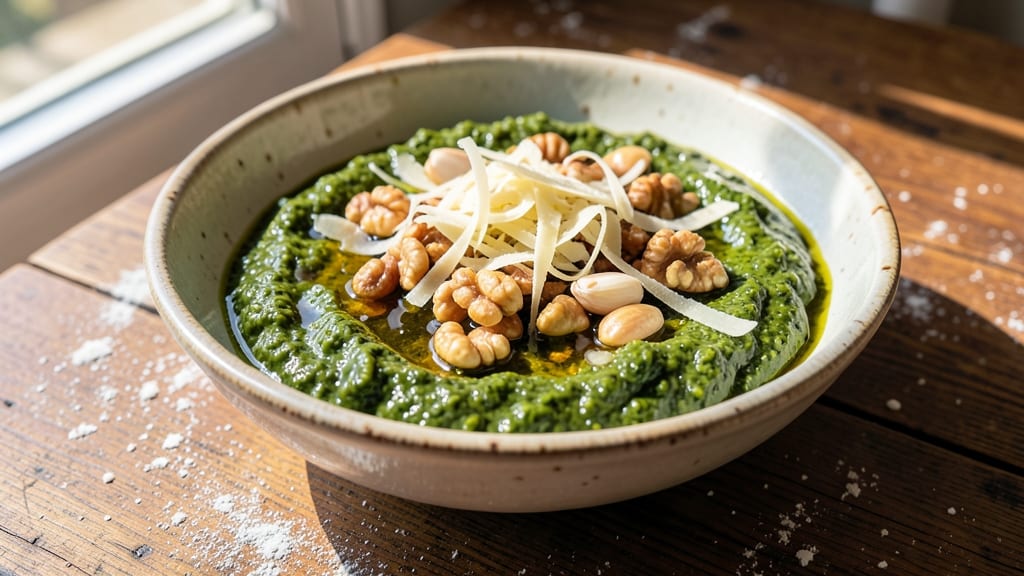
This authentic pesto sauce recipe brings the vibrant flavors of Liguria, Italy, straight to your kitchen with just five key ingredients and minutes of prep time.
The secret lies in fresh basil leaves, toasted pine nuts, garlic, Parmesan cheese, and high-quality olive oil—each playing a crucial role in creating that signature bright, herby, and slightly nutty balance.
I developed this version after years of testing store-bought alternatives, determined to capture the true essence of Italian pesto without shortcuts.
The beauty of this recipe is its versatility—it elevates everything from pasta to sandwiches, while remaining simple enough for weeknight meals. Toasting the pine nuts enhances their flavor without burning, and blending the ingredients with just enough olive oil ensures a smooth yet vibrant texture.
The Parmesan adds depth, while fresh basil keeps the sauce bright and aromatic. What you'll end up with is a sauce that's authentically Italian, not just in taste but in technique.
This pesto maintains its freshness for up to five days in the refrigerator, making it perfect for meal prep. Whether you're tossing it with fresh pasta, using it as a dip for crusty bread, or drizzling it over grilled vegetables, the flavor remains rich and vibrant.
The key is blending the ingredients thoroughly and storing the sauce in an airtight container to preserve its freshness. Let's get started on this classic Italian sauce that's as easy to make as it is delicious.
For those with dietary preferences, this recipe can easily be adapted—swap the Parmesan for nutritional yeast or vegan cheese, and use sunflower seeds instead of pine nuts for a nut-free version.
The method remains the same, ensuring authenticity while accommodating different needs. This is pesto as it was meant to be enjoyed—simple, vibrant, and full of flavor.
Ingredients for authentic pesto sauce
Five essential ingredients transform into Liguria's iconic pesto—authentic, vibrant, and ready in minutes.
| Ingredient | Amount | Notes |
|---|---|---|
| Fresh Basil Leaves 🌿 | 3 cups | Packed, stems removed, vibrant green |
| Toasted Pine Nuts 🥜 | ½ cup | Lightly browned, not burnt |
| Garlic Cloves 🧄 | 4 cloves | Peeled, rough chopped |
| Parmesan Cheese 🧀 | ¾ cup | Freshly grated, fine texture |
| Extra-Virgin Olive Oil 🫒 | ¾ cup | High quality, fruity aroma |
| Lemon Juice 🍋 | 1 tbsp | Freshly squeezed, no seeds |
| Sea Salt 🧂 | ½ tsp | Fine grain preferred |
| Freshly Ground Black Pepper 🌶️ | ¼ tsp | Freshly cracked peppercorns |
The basil is non-negotiable—farmers market or high-quality grocery store varieties with deep green leaves work best. Costco or Whole Foods carry excellent options, but avoid wilted or yellowing leaves. Toasting the pine nuts in a dry pan until golden (about 3 minutes) unlocks their nutty depth—don't walk away or they'll burn. For Parmesan, grate it yourself from a wedge; pre-grated contains anti-caking agents that dull the flavor. The olive oil should be extra-virgin with a peppery finish—California Olive Ranch or Colavita are reliable choices.
No pine nuts? Walnuts or sunflower seeds work perfectly—walnuts add earthiness, seeds keep it nut-free. Short on basil? Stretch it with flat-leaf parsley (use half the amount). For a vegan version, swap Parmesan for nutritional yeast (same quantity) or vegan Parmesan. The lemon juice brightens the sauce—Meyer lemons add subtle sweetness if available. Need to substitute? White wine vinegar at half the amount works in a pinch, but fresh lemon is ideal. Always taste before blending—adjust salt and pepper to balance the basil's intensity.
Pesto oxidizes quickly, so blend it just before using. For storage, pour a thin layer of extra-virgin olive oil over the top before sealing the jar—this preserves color and freshness. Keeps 5 days refrigerated or 6 months frozen in ice cube trays. Portion into small containers for easy use—perfect for pasta, sandwiches, or dipping. The sauce thickens as it chills, so thin with a splash of water or olive oil when needed.
Why You'll Love This Recipe
- No Pulse Required: I swear by this recipe because it’s the only pesto I’ve ever made that doesn’t involve chopping basil into oblivion. A quick pulse in the food processor—that’s it—and you’ve got vibrant green perfection without the wrist strain. (Yes, even on a Tuesday night when I’m already exhausted.)
- Garlic-Kissed Magic: The moment that toasted pine nut crunch meets the sharp bite of garlic and salty Parmesan? Chef’s kiss. It’s not just pesto—it’s a flavor explosion where every spoonful balances earthy, nutty, and umami notes. Honestly, I’ve tried store-bought, but this? This is the real deal.
- Pasta’s Best Friend: This isn’t just for linguine—it’s my go-to for roasted veggies, grilled chicken, or even a quick sandwich when I’m in a rush. Freeze half the batch, and you’ve got a weeknight lifesaver. (Between us, I’ve used it on toast with a fried egg—don’t judge.)
- Lasts Long, Costs Less: A little goes a long way, and the ingredients? Affordable. Toast your own pine nuts in a dry pan (takes two minutes), and you’re golden. Store it in the fridge for up to five days, or freeze it in ice cube trays for portion control. My wallet—and my taste buds—thank me every time.
Step-by-step instructions for authentic pesto sauce
Here's how to create a vibrant, traditional pesto that captures the essence of Italian cuisine.
Toast the Pine Nuts for Rich Flavor
Heat a dry skillet over medium heat and add the 0.5 cup toasted pine nuts. Toast for 3 to 4 minutes, stirring constantly, until they turn a light golden brown and release their nutty aroma. Watch carefully—they burn quickly and become bitter. Remove immediately when fragrant and set aside to cool.
This toasting step is crucial—it enhances the pine nuts' natural oils and flavor, preventing them from becoming greasy in the final pesto. If you don't have toasted pine nuts, you can lightly toast them yourself, but don't skip this process entirely. The aroma should be warm and inviting, not smoky.
Pulse the Basil, Garlic, and Pine Nuts
In a food processor, combine the 3 cups fresh basil leaves, 4 cloves rough chopped garlic, and the toasted pine nuts. Pulse until the basil is finely chopped but not completely pureed—you want visible texture. This step takes about 10 to 15 seconds. Avoid over-processing, which can turn the pesto into a thick paste.
I like to pulse in short bursts, checking after each one to maintain some leaf structure. This creates a more authentic texture with visible basil flecks. The mixture should look like coarse green confetti with occasional pine nut pieces. If your processor overheats, stop and let it cool for 30 seconds before continuing.
Gradually Incorporate the Olive Oil
With the processor running, slowly drizzle in the 0.75 cup extra-virgin olive oil through the feed tube. This gradual addition prevents the mixture from becoming too thick. Process continuously for about 30 seconds after all the oil is added, until the pesto reaches a smooth, creamy consistency with no dry spots.
Use high-quality extra-virgin olive oil here—its fruity aroma and peppery notes elevate the pesto. If the mixture seems too thick, add 1 teaspoon more olive oil. The final texture should be thick enough to coat the back of a spoon but still pourable. Taste at this stage—the flavor should be vibrant, with bright basil and nutty undertones.
Finish with Cheese and Seasonings
Add the 0.75 cup freshly grated Parmesan cheese, 1 tablespoon lemon juice, 0.5 teaspoon sea salt, and 0.25 teaspoon freshly ground black pepper to the food processor. Pulse just until combined—about 5 to 8 seconds. The cheese should melt slightly into the mixture, creating a cohesive sauce.
Taste and adjust seasoning if needed. The lemon juice brightens the flavors, while the Parmesan adds depth. If the pesto tastes too acidic, add a pinch more salt. For a smoother texture, pulse briefly again. The sauce should be vibrant green with visible basil flecks and a rich, creamy texture that coats the tongue.
Serve or Store Immediately
Transfer the pesto to a bowl and serve immediately, or store in an airtight container in the refrigerator for up to 5 days. For best results, use within 2 days. If the pesto thickens in the fridge, thin with a splash of olive oil or warm water before serving.
This authentic pesto pairs beautifully with fresh pasta, grilled meats, or as a sandwich spread. The vibrant green color and bright flavors make it a versatile addition to any Italian-inspired dish. The key to its authenticity lies in the fresh basil and high-quality olive oil—never compromise on these ingredients.
Pro Tips For Making Authentic Pesto Sauce
- Toast Nuts Low: Skip the high-heat pan—pine nuts burn faster than you’d think. Toast them in a dry skillet over medium-low, stirring constantly, until they’re golden and smell nutty (about 3-4 minutes). I learned this the hard way after once ending up with bitter, blackened crunch.
- Pulse Not Blend: Use a food processor, not a blender—pulse the basil, garlic, and nuts in short bursts to avoid a soupy mess. Stop when it’s chunky, then drizzle in the olive oil while running. My grandmother swore by this: "Too smooth, and you lose the soul of the dish."
- Salt the Cheese: Grate your Parmesan fresh and toss it with a pinch of salt before adding it to the pesto. The cheese’s natural saltiness balances the acidity of the basil, and it prevents the pesto from tasting flat. (Yes, even if the cheese is labeled "salted"—do it anyway.)
- Oil Last, Not First: Add the olive oil in a slow stream at the end, not at the start. This keeps the garlic from cooking into bitterness and ensures the basil stays vibrant. Sounds weird, but it works—your pesto will taste brighter and more herb-forward. (I know, I know, but trust the process.)
Pro cooking tips for authentic pesto sauce
Toast Nuts Properly
Toast your pine nuts (or walnuts/sunflower seeds) in a dry skillet over medium heat for exactly 3-4 minutes, stirring constantly. They should turn golden brown and smell nutty—not burnt.
I use a 10-inch nonstick skillet and keep it moving to prevent scorching. Toasting unlocks their full flavor and prevents greasiness in the final sauce. 🥜
Balance Oil Gradually
When adding 0.75 cup extra-virgin olive oil, drizzle it slowly through the food processor's feed tube while blending. This prevents clumping and ensures even distribution. I recommend California Olive Ranch oil for its fruity notes.
If the mixture looks too thick after blending, add 1 tsp more oil to achieve a creamy yet pourable consistency. The oil should coat the back of a spoon but still flow freely.
Pulse Basil Correctly
Pulse the basil leaves in 10-second bursts, not continuous blending. You want finely chopped leaves with visible texture—over-processing turns pesto into a thick paste. Stop occasionally to scrape down the sides of the processor bowl.
I use a Cuisinart Food Processor and find this method preserves the basil's vibrant color and fresh flavor. 🌿
Cheese Matters
Always use freshly grated Parmesan (no pre-grated cheese) for authentic flavor. The grater should be fine-hole to avoid large chunks. I grate directly over the processor bowl to prevent waste.
For a smoother texture, pulse briefly after adding cheese—just until combined. The cheese should melt slightly into the sauce, creating a cohesive, rich flavor profile.
Prevent Oxidation
To keep your pesto fresh longer, pour a thin layer of extra-virgin olive oil (about 1 tbsp) over the top before sealing in an airtight container. This creates a protective barrier against air exposure.
Store in the refrigerator for up to 5 days or freeze in ice cube trays for 6 months. Thaw frozen pesto in the fridge overnight for best texture. ❄️
Adjust Seasonings
Taste your pesto before serving—it should be bright with basil, nutty from the toasted seeds, and balanced with acidity from lemon. If too acidic, add a pinch of sea salt. For extra depth, a sprinkle of freshly cracked black pepper enhances the flavor.
I always adjust seasonings right before serving to maintain freshness. The sauce should taste vibrant, not flat or overpowering.
Nutrition facts
Frequently asked questions
Can I make this basil pesto without a food processor?
Use a mortar and pestle for a more traditional approach. Crush the toasted pine nuts first, then add garlic and pulse with the pestle. Gradually work in the basil leaves, olive oil, and cheese while mashing. This method takes 5-7 minutes but creates a more rustic texture with visible basil flecks. The flavor will be just as vibrant—just requires more elbow grease!
Why does my homemade pesto turn brown after a few days?
This happens due to oxidation—exposure to air causes the basil's chlorophyll to break down. To prevent it, always store pesto under a thin layer of extra-virgin olive oil in an airtight container. For longer freshness, use smaller containers or freeze in ice cube trays. The brown color doesn't affect taste, but the vibrant green indicates peak freshness.
What's the best way to use leftover pesto?
Pesto freezes beautifully! Portion into 1-tablespoon ice cube trays, cover with plastic wrap, and freeze. Once solid, transfer cubes to a freezer bag. Thaw overnight in the fridge for smooth texture. Use these for pasta sauces, sandwich spreads, or as a dip base. For immediate use, mix with 1 tsp warm water to thin if needed. The flavor stays bright for up to 6 months frozen!
Can I substitute walnuts for pine nuts in this recipe?
Yes! Walnuts work perfectly—they add a richer, earthier flavor that pairs well with basil. Use the same 0.5 cup measurement, but toast them for 2-3 minutes (they take longer than pine nuts). For a nut-free version, try sunflower seeds (toasted 3 minutes) or toasted pumpkin seeds. The texture will be slightly different but still delicious.
How do I know when my pesto is the right consistency?
The perfect pesto should be thick enough to coat the back of a spoon but still flow smoothly when drizzled. If too thick, add 1 tsp olive oil at a time. If too thin, pulse briefly to emulsify. The ideal texture should hold its shape when spooned but still be pourable. Think of it like a thick, vibrant green hummus—creamy yet textured. Taste as you go to balance flavors!