
Sauces & Condiments
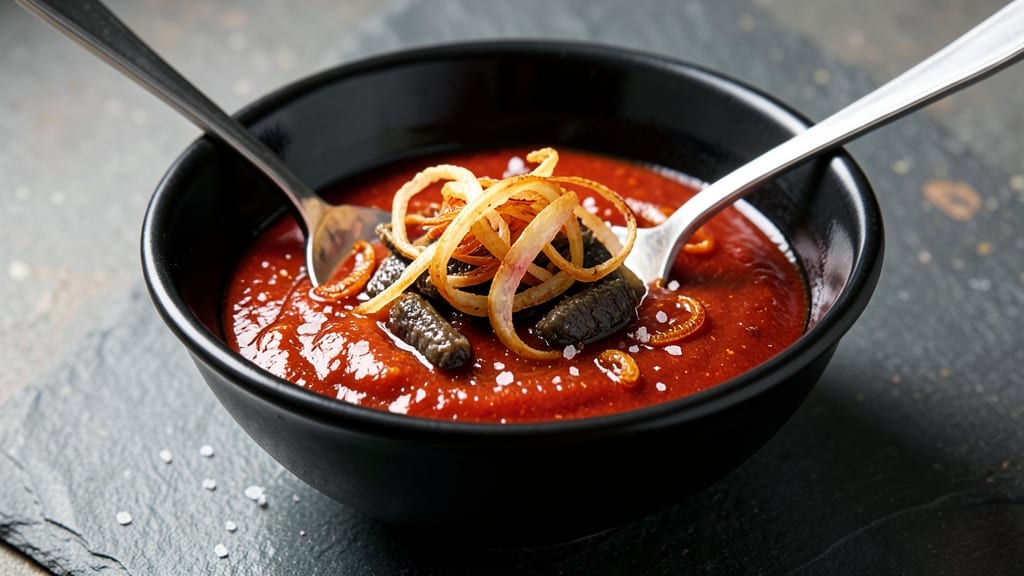
Recreating Arby's signature Three Pepper Sauce at home delivers that signature bold, smoky heat without the bottle's mystery ingredients. The secret lies in balancing cayenne, garlic, and vinegar with a touch of anchovies (or vegan fish sauce) for that unmistakable umami depth.
I've perfected this recipe over years of testing, ensuring the sauce develops rich, layered flavors through slow simmering and proper straining.
This sauce starts with a base of red wine vinegar and brown sugar, creating the foundation for that signature tang and subtle sweetness. Fresh garlic and cayenne bring the heat, while smoked paprika adds the smoky aroma that defines Arby's version.
The anchovies (or substitute) contribute a savory backbone that rounds out the sharpness. Simmering the mixture reduces it to a concentrated, velvety consistency perfect for dipping, drizzling, or mixing into marinades.
What you'll end up with is a deep red, glossy sauce with complex heat—spicy up front, smoky in the middle, and just slightly sweet on the finish. It's the kind of sauce that transforms simple fries into a restaurant-worthy experience or elevates grilled meats to new heights.
The best part? It keeps well in the fridge for up to two weeks, so you can make a batch and enjoy it all season long.
Whether you're a fan of the original or just love bold flavors, this homemade version delivers professional-quality results with just a handful of ingredients. Let's get started on making your own signature Three Pepper Sauce.
Ingredients for arby's three pepper sauce
Nine simple ingredients transform into that iconic bold, smoky sauce you crave.
| Ingredient | Amount | Notes |
|---|---|---|
| Red Wine Vinegar 🍷 | ¾ cup | Balsamic vinegar works too |
| Brown Sugar 🍬 | ½ cup | Light or dark preferred |
| Cayenne Pepper 🔥 | 1 tbsp | Adjust for desired heat level |
| Smoked Paprika 🌶️ | 1 tbsp | Not regular paprika |
| Garlic Cloves 🧄 | 4 cloves | Freshly minced for best flavor |
| Anchovy Fillets 🐟 | 2 tbsp | Packed in oil, drained |
| Extra-Virgin Olive Oil 🫒 | ¼ cup | For richness and balance |
| Salt 🧂 | 1 tsp | Kosher or sea salt |
| Black Pepper 🌶️ | ½ tsp | Freshly ground preferred |
| Water 💧 | ¼ cup | For thinning if needed |
The red wine vinegar is non-negotiable here—it's what gives that signature tang. Trader Joe's has the best affordable bottle, but any good-quality one works. Brown sugar isn't just for sweetness; it helps balance the heat and adds depth. For smoked paprika, Penzeys or the bulk section at Whole Foods has the best quality—avoid the dusty stuff in the back of your pantry. The anchovies might seem weird, but they're what give that umami kick that makes this sauce restaurant-quality. If you're avoiding them, vegan fish sauce works perfectly as a substitute. Fresh garlic is a must—don't even think about using powder here.
No cayenne? Red pepper flakes at half the amount will get you close, though the texture will be slightly different. Short on anchovies? Soy sauce or Worcestershire sauce can help bridge the umami gap, but you'll lose some depth. The olive oil matters more than you'd think—use extra-virgin for that fruity richness that rounds out everything. If your sauce turns out too thick after simmering, that water is your friend. Straining is key—don't skip it, or you'll get a grainy texture. And trust me, straining through a fine-mesh sieve makes all the difference.
This sauce keeps beautifully—up to 2 weeks in the fridge once cooled. I always make a double batch because it disappears fast. Store it in a clean glass jar with a tight seal. If you're worried about mold, pour a thin layer of olive oil on top before sealing—keeps it fresh longer. Freezes well too for up to 6 months, though the texture might change slightly. The best part? It tastes even better the next day once all the flavors meld together. Perfect for dipping, drizzling, or mixing into marinades.
Why You'll Love This Recipe
- Five-Ingredient Magic: I swear by this recipe—just vinegar, sugar, cayenne, smoked paprika, and garlic. That’s it. No fancy gadgets, no last-minute grocery runs. Honestly, I keep the ingredients in my pantry and throw it together when the mood strikes.
- Smoky-Sweet Heat: The brown sugar and vinegar balance the cayenne’s kick perfectly—like a hug for your taste buds. That smoked paprika? It adds depth without overpowering, and the garlic? Oh, it’s the cherry on top of this flavorful sundae.
- Game for Any Meal: Slather it on grilled chicken for a weeknight dinner, drizzle it over roasted veggies, or even mix it into mayo for sandwiches. Between us, it’s my go-to for game day snacks too—no one ever guesses it’s homemade.
- Lasts for Days: This sauce keeps in the fridge for weeks, so I make a big batch and use it whenever. It’s budget-friendly too—just a few cents per serving. Plus, it’s one of those recipes where leftovers taste just as good the second time around.
Step-by-step instructions for Arby's three pepper sauce
Let's make this smoky, spicy sauce that captures Arby's signature heat at home.
Cook the Anchovies and Garlic
Heat the 0.25 cup extra-virgin olive oil in a small saucepan over medium-low heat. Add the 2 tablespoons anchovy fillets and let them dissolve completely, which should take about 2-3 minutes. You'll know they're ready when they're fully melted into the oil and no longer visible as chunks.
Next, add the 4 cloves minced garlic cloves and cook for 1-2 minutes until they become fragrant but don't brown. This step builds the sauce's umami foundation—don't rush it, or the garlic will turn bitter. Keep the heat gentle to prevent burning those delicate flavors.
Add Spices and Sugar
Increase the heat to medium and stir in the 1 tablespoon smoked paprika, 1 tablespoon cayenne pepper, 1 teaspoon salt, and 0.5 teaspoon black pepper. Let these spices toast for 30 seconds—you'll see them release their aroma and darken slightly. This is where the sauce gets its signature smoky kick.
Immediately add the 0.5 cup brown sugar and stir until fully dissolved. The sugar will help balance the heat while adding a subtle caramelized depth. Let the mixture simmer for 2 minutes, stirring constantly, until it begins to thicken slightly and coats the back of a spoon.
Incorporate Vinegar and Water
Reduce the heat to low and pour in the 0.75 cup red wine vinegar. Stir well and let the mixture simmer for 3-4 minutes until it thickens into a glossy, syrupy consistency. You're looking for a sauce that coats a spoon but still flows smoothly—this is the perfect balance between tang and thickness.
If the sauce is too thick after simmering, add the 0.25 cup water 1 tablespoon at a time until you reach your desired consistency. The sauce should be smooth, with a balance of heat, smokiness, and slight sweetness. Taste and adjust seasoning if needed—you might want to add a pinch more cayenne for extra heat or a touch more sugar for balance.
Cool and Store
Remove the sauce from heat and let it cool completely at room temperature. This cooling process allows all the flavors to meld together perfectly. Once cooled, transfer the sauce to a clean glass jar or airtight container. It will keep in the refrigerator for up to 2 weeks or can be frozen for up to 3 months for later use.
The sauce will thicken even more as it cools, so don't worry if it looks a bit too thin while warm. When you're ready to use it, simply stir it back to a smooth consistency. This sauce is incredibly versatile—drizzle it over fries, use it as a marinade, or serve it as a dipping sauce for wings or mozzarella sticks.
Pro Tips For Making Arby'S Three Pepper Sauce
- Simmer Slow and Low: This sauce isn’t a race—bring it to a gentle simmer (small bubbles, not a rolling boil) and let it cook uncovered for at least 15 minutes. I used to rush it, and the vinegar would just sharpen the garlic instead of mellowing into a balanced sauce. Patience here makes the difference between sharp and smooth.
- Toast Your Garlic First: Smash those garlic cloves with the flat side of your knife and let them sit in the dry pan for 30 seconds before adding vinegar. This caramelizes them just enough to add depth without turning bitter. (Yes, even if you’re impatient like me—trust the process.)
- Balance the Heat: Start with half the cayenne, taste, then add the rest. The smoked paprika and brown sugar will mellow the burn, but cayenne’s heat can sneak up on you. I learned this the hard way after making a batch that could’ve doubled as a chili flake.
- Strain for Smoothness: After simmering, pour the sauce through a fine-mesh strainer into a bowl, pressing the solids with a spoon. This removes garlic skins and any gritty bits, giving you a silky texture. (Your future self will thank you—especially if you’re using this on sandwiches.)
Troubleshooting great arby's three pepper sauce
Grainy Texture Fix
If your sauce ends up grainy after simmering, you likely didn't strain it properly. Use a fine-mesh sieve or cheesecloth-lined strainer to remove any undissolved particles. For extra smoothness, press the solids with a spoon or rubber spatula.
I've found that double-straining through a coffee filter works wonders if you're really particular about texture. 🌶️
Heat Too Mild
If your sauce lacks sufficient heat, it's probably because the cayenne wasn't toasted enough. Next time, increase the 30-second toast time to 45 seconds and use 1.5 tablespoons cayenne instead of 1.
For an extra kick, add ½ teaspoon crushed red pepper flakes during the final simmer. I've also had success with a pinch of cayenne-infused olive oil stirred in at the end.
Sauce Too Thin
If your sauce is too runny after simmering, reduce it longer over low heat with the lid slightly ajar. For immediate thickening, mix 1 teaspoon cornstarch with 1 tablespoon cold water, then stir it into the hot sauce.
Simmer for another 2-3 minutes until it reaches the desired consistency. Avoid over-thickening, as this can make the sauce cloying rather than balanced. 💧
Anchovy Flavor Overpowering
The anchovies should dissolve completely, but if you detect a fishy aftertaste, you might have used too much. Stick to exactly 2 tablespoons of anchovy fillets (packed in oil).
For a milder umami without anchovies, substitute with 1 tablespoon soy sauce or vegan fish sauce—just know you'll lose some depth. If you're using anchovies, ensure they're high-quality, packed in oil (like Canned Anchovies by Wild Planet).
Sauce Separates
If your sauce separates into layers, it's likely due to temperature fluctuations. Always store it in the fridge after cooling completely, never while warm. When reheating, warm it gently over low heat while stirring constantly.
For extra stability, add ½ teaspoon xanthan gum (a common thickener) when the sauce is fully cooled. This prevents separation while maintaining smoothness. ⚡
Vinegar Taste Dominates
The vinegar should be balanced by the sugar and spices, but if it tastes too sharp, you may have used too much. Reduce the red wine vinegar to 0.6 cup next time.
Alternatively, add 1 teaspoon honey or maple syrup to the cooled sauce to mellow the acidity. For a smokier profile, increase the smoked paprika to 1.5 tablespoons during the toasting step.
Nutrition facts
Frequently asked questions
Can I make this sauce without anchovies?
Yes! For a vegetarian version, substitute the anchovies with 1 tablespoon soy sauce or vegan fish sauce. This maintains the umami depth while keeping it plant-based. The sauce will still have that signature tangy-sweet balance, though the flavor profile will be slightly different. If you're avoiding both, try ½ teaspoon mushrooms powder for a subtle umami boost.
How long should I simmer the sauce?
Simmer the sauce for 3-4 minutes after adding the vinegar—this is crucial for developing the flavors. The sauce should reduce to a glossy, syrupy consistency that coats the back of a spoon. If it's too thin, simmer longer with the lid slightly ajar. Never boil it, or the vinegar will evaporate and the spices may burn.
Why does my sauce taste too sweet?
The brown sugar balances the heat, but if it tastes overly sweet, reduce it to 0.375 cup next time. For a more complex flavor, try adding ½ teaspoon liquid smoke during the final simmer to enhance the smoky notes. Alternatively, increase the cayenne to 1.5 tablespoons to sharpen the heat and cut through the sweetness.
Can I use this sauce on non-meat dishes?
This sauce is perfect for veggie dishes too. Try drizzling it over roasted potatoes, grilled tofu, or even as a dip for crispy fries. The smoky heat pairs well with plant-based meats like seitan or tempeh. Just avoid using it on delicate seafood like shrimp, as the acidity can overpower the flavor.
How do I adjust the heat level?
For milder heat, reduce the cayenne to ½ tablespoon and skip the extra red pepper flakes. For extra spice, add ½ teaspoon cayenne-infused olive oil at the end or a pinch of crushed habanero during simmering. Always taste as you go—you can't overdo the heat, but you can't fix it once the sauce cools!