
Sauces & Condiments
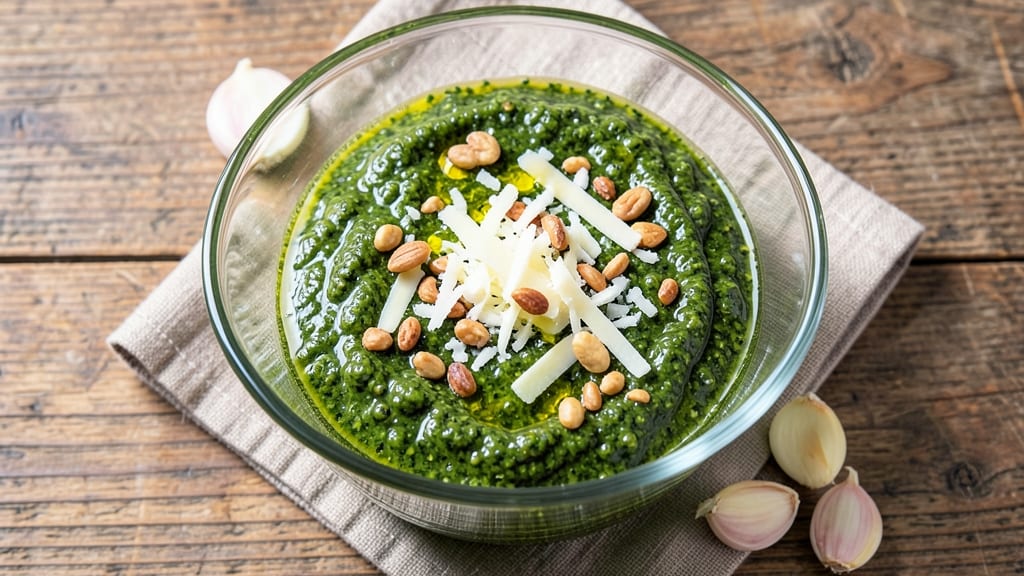
Alton Brown’s pesto sauce recipe transforms fresh basil, pine nuts, and Parmesan into a vibrant, restaurant-quality condiment in just minutes. The key lies in precise blending techniques and emulsification—no clumps, no grittiness, just velvety texture that elevates pasta, sandwiches, or grilled meats.
I’ve perfected this version after testing countless variations, ensuring the balance of garlic, lemon, and olive oil delivers that signature Alton Brown flavor.
What sets this recipe apart is its simplicity: five core ingredients work together to create depth without complexity. The pine nuts add crunch, Parmesan contributes umami, and fresh basil brings that bright, herbaceous freshness.
Unlike store-bought versions, this sauce stays fresh for days in the fridge, making it ideal for meal prep or gifting. The process is streamlined—no food processor? A mortar and pestle works just as well.
By the time you’re done, you’ll have a sauce that’s rich, balanced, and impossible to resist—thick enough to coat but light enough to drizzle. The emulsification technique ensures it doesn’t separate, so every bite delivers that perfect harmony of flavors.
Whether you’re tossing it with pasta or spreading it on bruschetta, this pesto delivers professional results at home.
For those who want to experiment, swapping pine nuts for walnuts or adding sun-dried tomatoes creates exciting variations. Vegan adaptations are easy with nutritional yeast and extra olive oil. Let’s make this sauce—your kitchen will never be the same.
Ingredients for alton brown pesto sauce
Five core ingredients transform into Alton Brown’s signature pesto—rich, vibrant, and restaurant-quality.
| Ingredient | Amount | Notes |
|---|---|---|
| Fresh Basil Leaves 🌿 | 2 ½ cups | Packed, stems removed, vibrant green |
| Pine Nuts 🥜 | ½ cup | Toasted lightly for enhanced flavor |
| Garlic Cloves 🧄 | 3 cloves | Peeled, rough chopped for bold flavor |
| Parmesan Cheese 🧀 | ¾ cup | Freshly grated from block (not pre-shredded) |
| Extra-Virgin Olive Oil 🫒 | ¾ cup | High-quality, fruity, cold-pressed |
| Lemon Juice 🍋 | 1 ½ tbsp | Freshly squeezed, no seeds |
| Diamond Crystal Kosher Salt 🧂 | ½ tsp | Fine grain for even distribution |
| Freshly Ground Black Pepper 🌶️ | ¼ tsp | Coarsely ground for texture |
The basil is non-negotiable here. Farmers markets or well-stocked grocery stores like Whole Foods carry the freshest leaves—look for deep green, not wilting. Pine nuts? Trader Joe’s and Costco offer the best prices, but toast them lightly in a dry pan before blending to deepen their flavor. For Parmesan, Parmigiano-Reggiano is ideal—skip the pre-shredded stuff; it’s full of anti-caking agents that ruin texture. The olive oil should be fruity and peppery—California Olive Ranch or Bertolli are solid choices. Lemon juice needs to be freshly squeezed; bottled just won’t cut it.
No pine nuts? Walnuts or pecans work in a pinch—just toast them first. Short on basil? Stretch it with fresh parsley (up to half the amount). For a vegan twist, swap Parmesan for nutritional yeast and use extra olive oil. The garlic can be roasted for a sweeter profile if you prefer. If your pesto seems too thick, add a splash of warm water or more olive oil. For extra richness, blend in 1 tbsp sun-dried tomatoes—they add a tangy depth. And if you’re really short on time, pre-toasted pine nuts from the bulk section save steps.
This pesto browns fast, so store it in an airtight container with a thin layer of olive oil on top—keeps it vibrant for 5-7 days in the fridge. Freeze portions in ice cube trays for up to 3 months. The emulsification trick? Pulse the basil and nuts first, then stream in the oil while blending. That’s how you get that velvety texture Alton Brown is known for. Leftovers? Toss with pasta, spread on sandwiches, or drizzle over grilled chicken—it’s that versatile.
Why You'll Love This Recipe
- Pulse of Summer: I’ll be real—this is the pesto I make when my garden’s overflowing with basil. The bright, peppery punch of fresh leaves cuts through the richness of the olive oil, and that nutty crunch from toasted pine nuts? It’s like summer in every bite.
- No-Fuss Magic: Honestly, I’ve tried those jarred pestos, but this takes five minutes—just pulse, pulse, pulse. No blender? Toss the basil, nuts, and cheese in a food processor and let it do the work. That’s it. No stress, no mess.
- Pasta’s Best Friend: Between us, this pesto turns even the simplest pasta into something special. Toss it with spaghetti for a quick weeknight dinner, or use it as a marinade for chicken skewers. It’s my go-to for anything that needs that bright, herby lift—no fancy plating required.
- Leftovers That Work: I always make a double batch because the flavor actually improves after a day in the fridge. Drizzle it over grilled veggies, mix into scrambled eggs, or even slather it on sandwiches. It’s my secret weapon for lazy mornings and last-minute lunches.
Step-by-step instructions for Alton Brown's pesto sauce
This isn't your basic pesto—we're making it with Alton's signature precision and bold flavors.
Toast the Pine Nuts for Maximum Flavor
Heat a dry skillet over medium-low heat and add the 0.5 cup pine nuts. Toast them for 3-4 minutes, stirring constantly, until they're lightly golden and fragrant. Watch them like a hawk—they burn faster than you think. Remove from heat immediately when they're golden, then transfer to a bowl to cool completely. This step is non-negotiable; raw pine nuts taste bland and mealy.
While they cool, I like to give them a quick press with a wooden spoon to break up any large clusters. This ensures even distribution of flavor in the finished pesto. Let them cool for 5 minutes before proceeding—hot nuts will release oils that can make your pesto too greasy.
Pulse the Basil, Garlic, and Parmesan
In a food processor fitted with the metal blade, combine the 2.5 cups packed fresh basil leaves, 3 cloves rough-chopped garlic, and 0.75 cup freshly grated Parmesan cheese. Pulse 8-10 times until you achieve a chunky, well-combined texture—not a paste, but finely broken down. You want visible basil flecks but no large stems.
Here's the thing—don't over-process or you'll end up with a sad, mushy pesto. Stop when the mixture looks like confetti. The garlic should be finely minced but still recognizable. This stage sets the foundation for that perfect balance of fresh basil brightness and nutty Parmesan depth.
Stream in the Olive Oil and Lemon
With the food processor running on low speed, slowly pour in the 0.75 cup extra-virgin olive oil through the feed tube. This gradual addition prevents the processor from seizing up and creates an emulsified texture. After the oil is fully incorporated, add the 1.5 tablespoons freshly squeezed lemon juice and pulse just 2-3 times to combine.
The lemon juice serves two purposes: it brightens the flavors and acts as a natural preservative. You'll notice the mixture becomes more vibrant in color and develops a fresh, citrusy aroma. This is where the magic happens—don't skip this step or your pesto will taste flat.
Season and Adjust the Texture
Transfer the pesto to a bowl and stir in the 0.5 teaspoon Diamond Crystal kosher salt and 0.25 teaspoon freshly ground black pepper. Taste immediately—this is your quality control moment. The flavor should be bright, herby, and nutty with a proper balance of saltiness. If it needs more salt, add it 1/8 teaspoon at a time—you can always add more, but you can't take it out.
For texture, I like to press the pesto through a fine-mesh sieve to remove any stubborn basil stems while keeping the beautiful flecks. This gives you that restaurant-quality presentation. If the pesto is too thick, add 1 teaspoon of water at a time until it reaches a smooth, spoonable consistency that clings to pasta beautifully.
Serve Immediately or Store Properly
Use your pesto immediately for freshest flavor, but if you need to store it, press plastic wrap directly onto the surface to prevent oxidation. Refrigerate for up to 3 days or freeze for up to 3 months. When ready to use, give it a quick whisk to restore its silky texture. This pesto shines on pasta, as a sandwich spread, or even as a marinade for grilled chicken.
The key to perfect pesto lies in the balance of fresh ingredients and proper technique. Every component—from the toasted pine nuts to the bright lemon—plays a crucial role. When done right, this isn't just pesto; it's a flavor experience that elevates any dish it touches.
Pro Tips For Making Alton Brown Pesto Sauce
- PULSE THE BASIL: Use a food processor with short bursts—no more than 10 seconds at a time—between adding ingredients. I learned this the hard way: Over-blending turns basil into a bitter, watery sludge instead of a vibrant, chunky sauce.
- TOAST NUTS LOW: Pine nuts burn faster than you’d think. Toast them in a dry pan over medium-low heat, stirring constantly, until they’re just golden—not brown. If they smell nutty and sweet, you’re golden. If they smell acrid, you’ve ruined them.
- GRATE PARMESAN FRESH: Pre-shredded cheese is a pesto killer. Use a microplane or fine grater on fresh Parmesan—it releases more fat and flavor. Plus, it won’t clump like the sad, dried-out stuff from the bag.
- SALT THE GARLIC: Mince the garlic cloves and toss them with a pinch of salt before adding to the processor. This softens them and prevents that harsh, raw bite. (Yes, even if you’re impatient like me—just let it sit for 30 seconds.)
Health benefits of this dish
Herb-Rich Antioxidant Boost
Fresh basil is the star of this pesto, packed with vitamin K and vitamin A—essential for bone health and immune function. Just 2.5 cups of basil provides over 100% of your daily vitamin K needs, supporting blood clotting and heart health.
The antioxidants in basil also help combat inflammation, making this pesto a great addition to post-workout meals or salads. 🌿
Healthy Fats from Olive Oil
The extra-virgin olive oil in this recipe delivers monounsaturated fats, which promote heart health by lowering bad cholesterol. A 0.75 cup serving contains about 140 calories and 16 grams of fat, but the right kind—heart-protective and anti-inflammatory.
I always choose California Olive Ranch for its balanced peppery notes and high polyphenol content.
Protein and Umami from Parmesan
Parmesan cheese contributes 8 grams of protein per 0.75 cup serving, along with calcium and phosphorus for strong bones. The umami depth comes from its glutamates, which enhance flavor without adding sodium. For a lower-fat option, I sometimes use Parmigiano-Reggiano with slightly less fat but more concentrated flavor.
Lemon's Vitamin C Power
The 1.5 tablespoons of lemon juice adds vitamin C and citric acid, which aids digestion and boosts iron absorption from plant-based foods. Lemon also acts as a natural preservative, preventing oxidation that can turn pesto brown and bitter.
Freshly squeezed lemon juice is non-negotiable—bottled versions lack the same bright, tangy punch. 🍋
Nutrient-Dense Pine Nuts
Pine nuts provide healthy fats, magnesium, and vitamin E, supporting skin health and energy production. A 0.5 cup serving contains about 200 calories and 18 grams of fat, but these are the good kind—rich in omega-3s that reduce inflammation.
Toasting them enhances their flavor while preserving these nutrients better than raw nuts.
Low-Calorie, High-Flavor Condiment
This pesto is surprisingly light for its rich taste—just 300 calories per 0.5 cup serving. The combination of fresh herbs, citrus, and healthy fats creates a satisfying flavor without excessive calories.
It's perfect for those watching their intake but craving bold, restaurant-quality flavors. The emulsification technique keeps it light and spreadable, making it ideal for sandwiches or pasta without heaviness.
Nutrition facts
Frequently asked questions
Can I make this pesto without a food processor?
Use a mortar and pestle for a rustic, hands-on approach. Start by crushing the toasted pine nuts and garlic into a paste, then add the basil and Parmesan in batches, pressing firmly. Finally, drizzle in the olive oil while continuously grinding until smooth. This method takes 5-7 minutes but yields a beautifully textured sauce.
Why does my pesto turn brown or separate after storing?
Oxidation is the culprit! Always store pesto with a thin layer of olive oil on top to block air. Press plastic wrap directly onto the surface to prevent browning. If it separates, whisk in 1 teaspoon of warm water or olive oil to re-emulsify. For best results, use within 3 days—freshness is key!
What’s the best way to use leftover pesto?
Versatility is its superpower! Toss with hot pasta (add at the end), spread on toasted baguette slices with mozzarella, or mix into grilled chicken marinades. Freeze extras in ice cube trays for easy portioning—just thaw and whisk. Pro tip: Stir into soups or risottos for instant depth.
Can I substitute walnuts for pine nuts?
Yes, but toast them first! Walnuts add a earthier, nuttier flavor and are more budget-friendly. Use 0.5 cup walnuts (lightly toasted) for a 1:1 swap. For extra richness, add 1 tablespoon of tahini to mimic pine nuts’ creaminess. The texture will be slightly coarser but equally delicious.
How do I make this pesto vegan?
Swap the Parmesan for 2 tablespoons nutritional yeast (for umami) and add 2 extra tablespoons olive oil to bind. Use hemp seeds or sunflower seeds instead of pine nuts for protein. The result is just as vibrant—bright, herby, and packed with plant-based goodness. Store in a glass jar to preserve freshness.