Sauces & Condiments
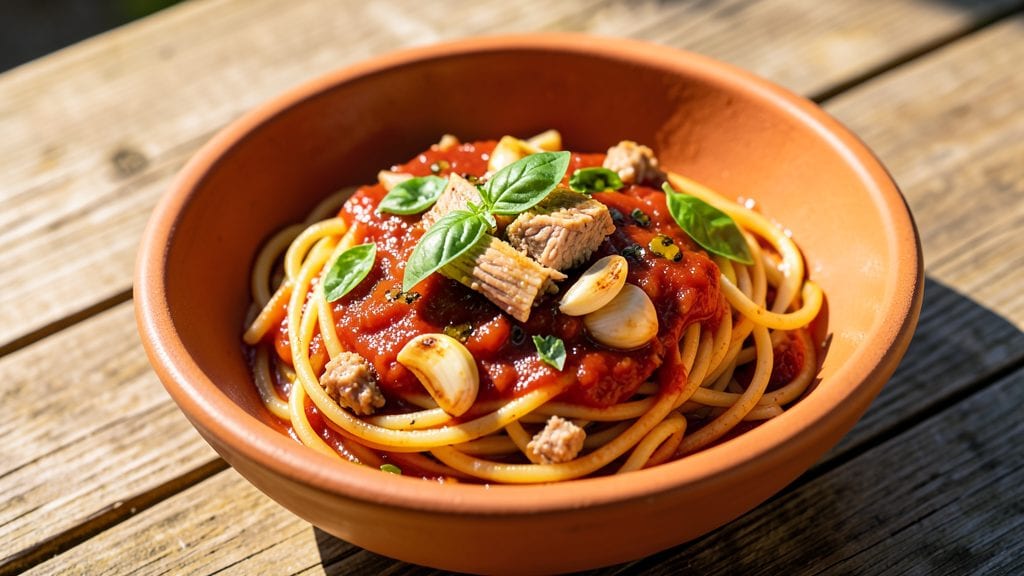
This tuna tomato sauce pasta recipe delivers a bright, umami-packed one-pot meal that combines Italian tradition with modern convenience—no separate saucepan needed.
The secret lies in simmering canned tuna directly in the tomato sauce, where it infuses flavor while staying tender, paired with al dente pasta that absorbs the rich, garlicky sauce. I developed this after testing countless variations to balance acidity, saltiness, and texture perfectly.
The beauty of this dish is its versatility: use fresh tomatoes for brightness or canned for convenience, and adjust herbs to your taste—basil for classic Italian flavor or parsley for freshness.
The sauce builds depth as it simmers, with garlic and olive oil forming the aromatic base before tomatoes and tuna join the pot. For extra richness, stir in a splash of pasta water at the end, creating a silky sauce that coats every strand.
What you’ll end up with is a restaurant-quality pasta that’s ready in under 30 minutes—crisp-tender pasta tossed with a vibrant sauce where chunks of tuna melt into flakes, releasing their briny, oceanic essence.
The dish is naturally pescatarian-friendly but easily adaptable with gluten-free pasta or extra vegetables for a heartier meal. Serve immediately for the best texture, or let it sit for 10 minutes to allow flavors to meld even deeper.
This recipe works equally well for weeknight dinners or meal prep—just store leftovers in the fridge for up to 3 days, reheating gently with a splash of water to restore the sauce’s silkiness.
Pair with a simple arugula salad or crusty bread to soak up every last drop of that bright, umami-packed sauce.
Ingredients for tuna tomato sauce pasta
Bright, umami-packed flavors start with just 12 simple ingredients—everything you need for restaurant-quality pasta.
| Ingredient | Amount | Notes |
|---|---|---|
| Pasta 🍝 | 12 oz | Spaghetti or penne preferred |
| Canned Tuna in Oil 🐟 | 2 cans | 5 oz each, drained |
| Canned Crushed Tomatoes 🍅 | 14 ½ oz | San Marzano preferred |
| Extra-Virgin Olive Oil 🫒 | ¼ cup | High quality, fruity |
| Garlic Cloves 🧄 | 4 cloves | Minced, fresh preferred |
| Fresh Basil Leaves 🌿 | ¼ cup | Chopped, stems removed |
| Red Pepper Flakes 🌶️ | ½ tsp | Adjust for heat preference |
| Dried Oregano 🍃 | ½ tsp | Italian preferred |
| Salt 🧂 | 1 ½ tsp | Kosher or sea salt |
| Black Pepper 🌶️ | ½ tsp | Freshly ground preferred |
| Pasta Water 💧 | ½ cup | Reserved from cooking |
| Grated Parmesan Cheese 🧀 | ¼ cup | Freshly grated preferred |
The tomatoes are where the magic happens. San Marzano cans have the best flavor, but any good-quality crushed tomatoes work. I always grab the Mueller's brand from the store—it's reliable and affordable. The tuna? Oil-packed is key—it adds richness that water-packed can't match. Fresh basil is ideal, but dried oregano at half the amount works in a pinch. If you're using fresh basil, grab an extra bunch—half goes in the sauce, half gets torn over the top for garnish. The garlic should be minced, not powdered—that's where the depth comes from.
No San Marzano tomatoes? Any crushed tomatoes will do, but avoid the watery kinds. Oil-packed tuna unavailable? Water-packed works, but you'll need an extra tablespoon of olive oil to compensate. Short on fresh basil? Dried basil at one-third the amount gets you close, but it won't be as vibrant. Want more heat? Add extra red pepper flakes or a pinch of cayenne. The pasta water is non-negotiable—it's what makes the sauce silky. Always reserve a cup before draining. And if you're making this ahead, add the tuna at the very end to keep it tender.
This sauce gets better with time—let it sit for 10 minutes before serving so all the flavors meld. Pasta reheats beautifully, but add a splash of water or pasta water to loosen the sauce. Keeps in the fridge for 3 days, though I rarely let it last that long. For meal prep, portion the sauce separately from the pasta and reheat together. The Parmesan keeps in the fridge for 2 weeks, but grate it fresh for the best flavor.
Why You'll Love This Recipe
- Pantry Magic: I swear by this one when my fridge is bare. Three cans and a bag of pasta—that’s it. No fancy shopping, no last-minute trips to the store. The tuna’s already flaked, the tomatoes are pre-crushed, and the garlic? Just two cloves to sizzle. Honestly, it’s the kind of meal that makes me feel like I actually cooked something.
- Umami Bomb: That first bite of the tuna melting into the tomatoes? It’s like a flavor explosion. The olive oil pulls all the richness together while the garlic adds this sharp, bright punch. Not too heavy, not too light—just perfectly balanced. I’ll be real: it’s the kind of simple sauce that makes me want to eat it straight from the pan.
- Lunchbox Hero: Here’s what sold me—this stuff reheats like a dream. Toss it in a thermos for work or pack it in containers for school lunches. The pasta stays al dente, the tuna doesn’t turn to mush, and the sauce clings just enough to keep everything cohesive. My daughter picks out the garlic (she’s weird about it), but still asks for seconds.
- Budget Win: Between us, this is my go-to when I’m trying to stretch my grocery budget. A single can of tuna and a can of tomatoes feed four people for under $8. No wasted ingredients, no leftovers going bad—just solid, reliable meals that don’t break the bank. Plus, it’s the kind of dish that makes me feel like I’m treating myself, even when I’m not.
Step-by-step instructions for tuna tomato sauce pasta
A quick, flavorful one-pot meal that delivers bright tomato sauce and tender tuna in every bite.
Cook the Pasta in Salted Water
Bring a large pot of water to a rolling boil and add the 12 oz pasta. Salt the water generously—it should taste like the sea. Cook the pasta until it's 1 minute shy of the package directions for al dente. This ensures it finishes cooking perfectly in the sauce.
While the pasta cooks, keep an eye on the water level. If it drops too much, add a little more boiling water to maintain the temperature. The pasta should be tender but still have a slight bite—it'll finish cooking in the sauce. Reserve 0.5 cup pasta water before draining, as this starchy liquid helps create a silky sauce.
Sauté Garlic in Olive Oil
In a large, deep skillet (or the same pot you used for the pasta), heat the 0.25 cup extra-virgin olive oil over medium heat. Add the 4 minced garlic cloves and cook for 30 seconds until fragrant—you'll smell that unmistakable garlic aroma. Be careful not to let it brown, or it'll turn bitter.
Here's the thing—garlic burns fast, so keep the heat moderate. If it starts to sizzle too aggressively, reduce the heat slightly. The garlic should be golden and smell amazing, not burnt. This step sets the foundation for the sauce's flavor, so don't rush it.
Add Tomatoes, Spices, and Tuna
Pour in the 14.5 oz canned crushed tomatoes, 0.5 tsp dried oregano, 0.5 tsp red pepper flakes, 1.5 tsp salt, and 0.5 tsp black pepper. Stir everything together and let it simmer for 3-4 minutes until the mixture thickens slightly. You'll notice the tomatoes start to break down and release their rich, tangy flavor.
Add the drained 2 cans canned tuna in oil, breaking up any large chunks with a fork. Stir gently to distribute the tuna evenly throughout the sauce. The tuna will warm through in just a minute or two, so don't let it sit too long—it can turn rubbery if overcooked.
Combine Pasta and Sauce
Drain the pasta and add it directly to the skillet with the sauce. Toss everything together, using a wooden spoon or tongs to coat the pasta evenly. If the sauce seems too thick, add 2-3 tablespoons of reserved pasta water at a time until it reaches a smooth, clinging consistency. The sauce should coat the back of your spoon.
Let the pasta simmer for 1-2 minutes to absorb the flavors fully. The residual heat from the pasta will help thicken the sauce just right. Taste and adjust the seasoning if needed—you might want to add a pinch more salt or red pepper flakes to suit your taste.
Finish with Basil and Parmesan
Remove the skillet from heat and stir in the 0.25 cup chopped fresh basil leaves and 0.25 cup grated parmesan cheese. The basil adds a fresh, bright note that cuts through the richness of the tuna and tomatoes. The parmesan melts slightly, giving the dish a creamy, cheesy finish.
Taste again and adjust the seasoning one last time. Serve immediately while the pasta is hot and the sauce is silky. This dish is best enjoyed fresh, straight from the pot, with a sprinkle of extra parmesan and a crack of black pepper on top.
Pro Tips For Making Tuna Tomato Sauce Pasta
- Drain pasta early: Save yourself from a watery sauce by draining the pasta just before it’s fully cooked—about 1-2 minutes early. Toss it straight into the pan with the sauce, where the residual heat will finish cooking it while soaking up the flavors. I used to wait until it was al dente, then add it to the sauce, and ended up with a sad, diluted mess every time.
- Sweat garlic low: Garlic burns faster than you think, especially in olive oil. Cook it over medium-low heat until it’s just golden—about 3-4 minutes—then remove it from the pan for 30 seconds to cool. This prevents that bitter, acrid taste that ruins the whole dish. (Yes, even if you’re impatient like me.)
- Rinse tuna in oil: Drain the tuna but don’t rinse it under water—just pat it dry with a paper towel. The oil in the can keeps it moist and adds richness to the sauce. I learned this the hard way after making tuna taste dry and bland in my first few attempts.
- Simmer crushed tomatoes: Crush the tomatoes by hand with your fingers or a fork before adding them to the pan—this breaks down the texture better than canned crushed tomatoes alone. Then, let them simmer uncovered for 5-7 minutes to thicken the sauce naturally. Skipping this step leaves you with a thin, watery base.
Troubleshooting your tuna tomato sauce pasta
Sauce Too Thin?
If your sauce feels watery after combining everything, don’t panic—this happens when tomatoes release too much liquid. Simmer uncovered for an extra 2-3 minutes to reduce. For instant fix, stir in 1 tablespoon cornstarch mixed with 1 tablespoon water and cook for 1 minute.
The starch acts like a thickener without altering flavor. 💡
Tuna Too Dry?
Overcooked tuna turns rubbery and dry. The fix? Add 1 tablespoon olive oil and 2 tablespoons pasta water to the sauce, then toss gently. The oil keeps tuna moist while the pasta water maintains sauce consistency. For extra richness, stir in 1 tablespoon heavy cream at the end.
Pasta Mushy?
Overcooked pasta is usually caused by finishing it in the sauce. To prevent this, cook pasta 1 minute less than package instructions, then drain it al dente. If it’s already too soft, mix in 1 tablespoon cold butter to firm it up slightly.
For a crisp-tender texture, shock the pasta in ice water for 30 seconds before adding to sauce.
Sauce Too Salty?
Tomato sauce often needs less salt than you think. If your dish tastes too salty, balance it with acidity: stir in 1 teaspoon lemon juice or 1 tablespoon tomato paste. The acid brightens flavors and cuts through saltiness. For a creamy fix, add 2 tablespoons heavy cream.
Garlic Too Bitter?
Burnt garlic ruins the whole dish. Next time, cook garlic over low heat. Use a thermometer. If it hits 300°F, it’s burning. For a quick fix, remove the skillet from heat, add 1 tablespoon olive oil.
Stir in ½ teaspoon sugar. This neutralizes bitterness and adds balance. 🌶️
Pasta Not Absorbing Sauce?
If pasta sits dry in the sauce, it’s likely undercooked or the sauce is too thick. First, ensure pasta is al dente. Then, add 2-3 tablespoons reserved pasta water.
Toss vigorously to coat. For extra cling, stir in 1 tablespoon cornstarch. This creates a silky, clinging sauce that clings to every strand.
Nutrition facts
Frequently asked questions
Can I use fresh tuna instead of canned in this recipe?
Fresh tuna works beautifully but requires careful handling. Use 12 oz sushi-grade tuna, seared in 1 tablespoon olive oil for 2 minutes per side until just cooked through (145°F internal temp). Add it to the sauce at the very end to prevent overcooking. Fresh tuna adds a more delicate flavor but must be handled safely—never eat raw unless properly prepared.
How do I make this recipe gluten-free?
Swap regular pasta for gluten-free spaghetti or penne made from rice or chickpea flour. Cook it in well-salted water to prevent sticking, and reserve extra pasta water since gluten-free noodles release less starch. The sauce will still cling well—just add 1 extra tablespoon cornstarch if needed for thickness. All other ingredients remain the same.
Why does my sauce separate when I add the tuna?
This happens when the sauce isn't hot enough or the tuna oil isn't properly incorporated. First, ensure your sauce is simmering gently before adding tuna. Drain the tuna thoroughly and stir it in slowly, breaking up chunks with a fork. If separation occurs, whisk in 1 tablespoon heavy cream or 2 tablespoons pasta water to re-emulsify. The key is heat and gradual mixing!
Can I make this ahead of time for meal prep?
Cook the pasta and sauce separately, then store them in airtight containers in the fridge for up to 3 days. When reheating, combine them in a skillet with 2 tablespoons pasta water and warm gently over medium-low heat for 5 minutes. For best texture, add fresh basil and Parmesan just before serving. The flavors actually improve overnight!
What's the best way to reheat leftovers?
Never microwave this dish—it turns rubbery. Instead, heat in a skillet over medium-low heat with 1-2 tablespoons pasta water until hot through (165°F). If the sauce seems dry, add a splash more water. For extra richness, stir in 1 teaspoon olive oil at the end. The gentle heat helps restore that silky sauce texture you love.