
Sauces & Condiments
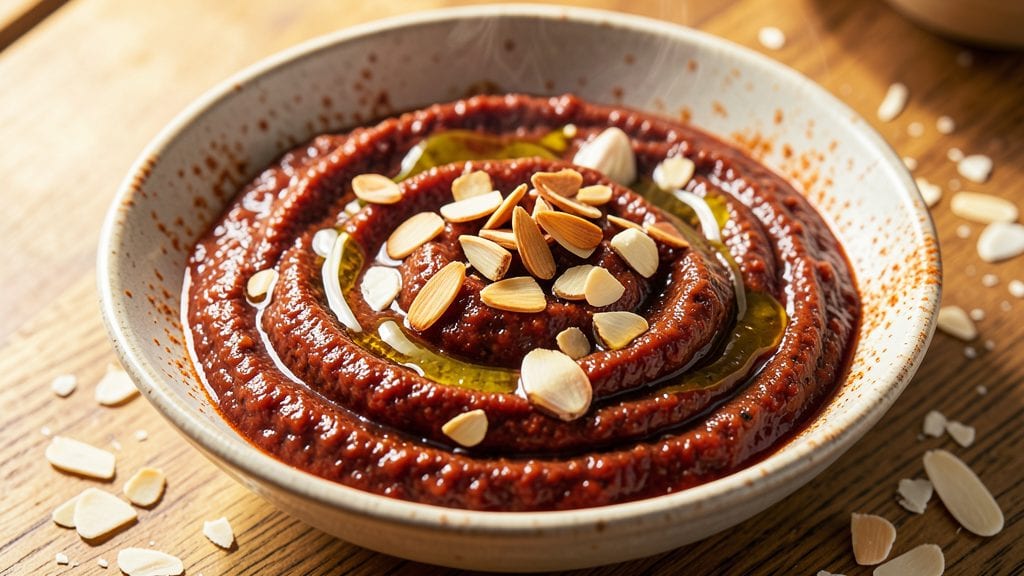
This traditional romesco sauce recipe delivers the smoky, nutty depth that makes it a staple in Catalan cuisine. Roasted red peppers, toasted almonds, and garlic blend into a velvety sauce with a perfect balance of heat and richness.
I’ve perfected this version through years of testing—it’s the kind of sauce that transforms grilled meats, seafood, or crusty bread into something extraordinary.
The foundation of romesco lies in its roasting process, which caramelizes the flavors before blending. Toasted bread adds body, while smoked paprika and vinegar deepen the sauce’s complexity. Unlike commercial versions, this recipe uses only high-quality ingredients—no shortcuts here.
The result is a thick, spreadable sauce with a smoky aroma that lingers long after the first bite.
What makes this romesco truly special is its versatility. Use it as a bold marinade for grilled chicken, a smoky dip for roasted vegetables, or a finishing sauce for paella.
The texture is smooth yet robust, clinging to every ingredient it touches. Once you taste the difference between this and store-bought, there’s no going back.
Ready in about 30 minutes, this sauce requires minimal effort but delivers restaurant-quality results. The secret is patience—roasting the ingredients thoroughly unlocks their full flavor potential. Let’s get started on this timeless Catalan classic.
Ingredients for traditional romesco sauce
Nine essential ingredients transform into a velvety sauce with smoky depth and nutty richness.
| Ingredient | Amount | Notes |
|---|---|---|
| Roasted Red Bell Peppers 🍅 | 1 ½ cups | Jarred or homemade, skin removed |
| Toasted Almonds 🥜 | 1 cup | Skin-on preferred, lightly toasted |
| Garlic Cloves 🧄 | 4 cloves | Peeled, roasted until golden |
| Smoked Paprika 🌶️ | 2 tbsp | High-quality, not pre-mixed |
| White Wine Vinegar 🍷 | ½ cup | Dry, aged variety preferred |
| Extra-Virgin Olive Oil 🫒 | ¾ cup | Fruity, peppery variety |
| Toasted Bread 🍞 | 1 slice | Stale crust, toasted until crisp |
| Salt 🧂 | 1 ½ tsp | Diamond Crystal kosher preferred |
| Ground Black Pepper 🌶️ | ½ tsp | Freshly ground for maximum aroma |
| Cayenne Pepper 🔥 | ¼ tsp | Adjust for desired heat level |
The foundation of authentic romesco begins with roasted red bell peppers—jarred works in a pinch, but homemade delivers superior flavor. For the almonds, skin-on varieties from Trader Joe's or specialty grocers provide the best texture and flavor. Toast them in a dry skillet until golden, not browned—this enhances their natural oils. The garlic should be roasted alongside the peppers to deepen its sweetness; never skip this step. Smoked paprika is non-negotiable here—Penzeys or Spanish brands like Pimentón de la Vera offer the authentic smokiness. Store-bought jarred versions often contain fillers, so opt for pure smoked paprika.
No toasted bread? Stale baguette slices work perfectly—simply toast until crisp. Substituting almonds for walnuts or hazelnuts changes the flavor profile but maintains texture. Vinegar quality matters: aged white wine vinegar from a glass bottle adds complexity. For a smoother sauce, blend the roasted ingredients with extra olive oil before adding vinegar. The cayenne can be omitted entirely for a mild version, but the smoked paprika and roasted garlic provide enough depth without it. If you're short on time, pre-roasted garlic from a jar works, though fresh roasted is superior.
Romesco keeps beautifully in an airtight container in the refrigerator for up to 2 weeks, though the flavor continues to develop over time. For long-term storage, freeze in ice cube trays—thaw and whisk before use. The sauce thickens as it cools, so add a splash of olive oil or water when reheating. This sauce pairs exceptionally with grilled vegetables, roasted meats, or as a dip for crusty bread. The key to its longevity is the acidic balance from the vinegar, which preserves the freshness of the roasted components.
Why You'll Love This Recipe
- No-Fuss Blend: I swear by this—just toss everything into a food processor and pulse. No peeling, no dicing, no stress. The roasted peppers and toasted almonds do all the work while you sip your coffee.
- Smoky-Sweet Magic: That smoky paprika and roasted garlic? It’s like a warm hug in sauce form. The white wine vinegar cuts through the richness, leaving you with a balance that’s ridiculously good—bright, nutty, and just a little tangy.
- Weeknight Superstar: Slather it on grilled chicken, drizzle over roasted veggies, or use it as a dip. It’s my go-to when I’m too tired to think but still want flavor. (Yes, even on a Tuesday night.)
- Pantry Goldmine: A jar of this keeps for weeks, and it’s cheaper than takeout. Honestly, I make a big batch and forget about it—until I remember how much I love it. Budget-friendly? More like flavor-friendly.
Step-by-step instructions for traditional romesco sauce
Here's how to craft authentic romesco with smoky depth and nutty richness—every element matters.
Toast the Almonds and Garlic for Maximum Flavor
Heat a dry skillet over medium heat and add the 1 cup toasted almonds, stirring constantly for 3-4 minutes until they turn a deeper golden brown and release their nutty aroma. Remove immediately and set aside—burning them creates bitterness we don't want. In the same pan, add the 4 cloves garlic cloves and toast for 1-2 minutes until fragrant and just beginning to color. This toasting develops their sweetness and smoky notes that anchor the sauce.
Watch the garlic carefully—it burns quickly. You'll know it's perfect when the pan smells intensely aromatic and the garlic develops a golden hue. Let both cool slightly before processing; warm ingredients create steam that affects texture control.
Blend the Base Ingredients to a Smooth Paste
Transfer the toasted almonds, garlic, 1.5 cups roasted red bell peppers, and 1 slice toasted bread to a food processor. Add the 2 tbsp smoked paprika, 1.5 tsp salt, 0.5 tsp ground black pepper, and 0.25 tsp cayenne pepper. Pulse several times until the bread forms coarse crumbs that cling to the other ingredients. This initial blending creates surface area for maximum flavor extraction.
Stop frequently to scrape down the sides with a spatula—this ensures even processing and prevents any ingredients from sitting unused. The mixture should resemble coarse sand with visible flecks of almond and pepper. At this stage, resist the urge to make it completely smooth; we'll refine it in the next step.
Gradually Incorporate the Vinegar and Olive Oil
With the processor running, slowly drizzle in the 0.5 cup white wine vinegar through the feed tube. This gradual addition prevents the sauce from becoming too acidic too quickly. After the vinegar is fully incorporated, add the 0.75 cup extra-virgin olive oil in a thin, steady stream while processing continuously. The sauce will transform from coarse to velvety smooth as the oil emulsifies with the other components.
Taste as you go—this is where you'll determine if additional seasoning is needed. The sauce should balance smoky, nutty, and slightly acidic notes with a subtle heat from the cayenne. If it needs more depth, add a pinch of salt or another splash of vinegar. The texture should coat the back of a spoon without being gluey.
Refine and Rest for Optimal Texture
Transfer the sauce to a clean bowl and press it through a fine-mesh sieve to achieve silky smoothness. Use a wooden spoon to work the sauce through, applying gentle pressure to extract maximum flavor from every ingredient. This step eliminates any remaining texture inconsistencies while preserving all the developed flavors.
Let the sauce rest at room temperature for at least 30 minutes before serving. This resting period allows the flavors to meld completely and the sauce to reach its ideal consistency. If it thickens too much during resting, thin with a tablespoon or two of warm water. The perfect romesco should cling beautifully to grilled meats or crusty bread while maintaining its vibrant color.
Pro Tips For Making Traditional Romesco Sauce
- ROAST PEPPERS UNTIL BLACK: I learned this the hard way—charred peppers make or break romesco. Roast them directly over a gas flame (or under a broiler) until the skin blackens in spots. That deep burn is what carries the smoky depth you can’t blend otherwise.
- TOAST ALMONDS LOW AND SLOW: Skip the high-heat blitz in the pan—it burns before they’re crisp. Instead, toast them in a dry skillet over medium-low, stirring constantly, until they smell like a nutty campfire (about 5-7 minutes). Overcooking turns them bitter, and you’ll taste it.
- PULSE GARLIC IN BATCHES: Whole garlic cloves in a food processor? That’s a recipe for a chunky, uneven sauce. Pulse them separately first, then add the rest of the ingredients. This way, you get that silky texture without turning the sauce into garlic paste.
- ACIDIFY GRADUALLY: Don’t dump all the white wine vinegar at once—start with half, taste, then add more. The sauce should brighten but not sting. I was skeptical until I tried it: balancing the acid this way keeps the almonds and peppers shining, not drowned.
Perfect pairings for this dish
Grilled Meats
Romesco transforms grilled meats into a showstopper. I love brushing it onto grilled chicken thighs or pork chops during the last 2 minutes of cooking—it caramelizes beautifully while adding smoky depth.
For beef, try it on grilled flank steak sliced thinly against the grain. The sauce's nutty richness complements the charred exterior perfectly, while the acidity cuts through the fat. 🔥
Roasted Vegetables
This sauce elevates roasted vegetables to restaurant quality. Toss eggplant, zucchini, and bell peppers with 2 tbsp olive oil, roast at 400°F for 25 minutes, then drizzle with romesco.
The smoky notes harmonize with the caramelized vegetables, creating a balanced flavor profile. For extra richness, serve with crusty bread on the side.
Seafood Pairings
Romesco shines with seafood, especially grilled shrimp or blackened cod. Toss cooked shrimp with 1 tbsp romesco and a squeeze of lemon for a quick weeknight dinner. For cod, brush it on during the last 3 minutes of grilling.
The sauce's acidity brightens the fish while the nuts add satisfying texture. Garnish with fresh parsley for a pop of color. 🍤
Crusty Bread
No romesco experience is complete without crusty bread for dipping. I recommend a fresh baguette sliced into 1-inch pieces and toasted until golden. The bread's crunch contrasts beautifully with the sauce's velvety texture. For a gourmet touch, serve with marinated olives and manchego cheese on the side.
Tortilla Española
This sauce adds incredible depth to tortilla española. Spread a thin layer on top of the potato and egg mixture before baking at 350°F for 20 minutes.
The romesco infuses the tortilla with smoky, nutty flavors while keeping it moist. Serve warm with a sprinkle of smoked paprika for an authentic Catalan touch.
Dipping Sauce
Romesco makes an excellent dip for grilled vegetables, fried calamari, or churros. Thin it slightly with 1 tbsp water if needed for easier dipping. The sauce's complex flavors make it perfect for sharing—just serve in a small bowl with toothpicks.
It's especially popular at summer gatherings or as a tapas accompaniment. 💫
Nutrition facts
Frequently asked questions
Can I make romesco sauce without roasting the peppers and garlic?
Roasting is essential for authentic flavor—it develops deep, smoky notes that raw ingredients can't match. For a shortcut, use jarred roasted red peppers (check for no added oil) and pre-roasted garlic from a jar, but toast the almonds and bread yourself to maintain texture and richness.
What's the best way to store leftover romesco sauce?
Transfer to an airtight container and refrigerate for up to 2 weeks. The flavors actually improve over time! For longer storage, freeze in ice cube trays—thaw and whisk with a splash of olive oil to restore texture. Always let it come to room temperature before using.
How do I adjust the heat level in this sauce?
Skip the cayenne for a mild version, or add ½ tsp more for extra heat. For smoky depth without spice, increase smoked paprika to 3 tbsp. The vinegar also adds brightness—reduce to ¼ cup if you prefer less tang. Taste as you blend to perfect the balance!
Can I substitute almonds with other nuts?
Walnuts or hazelnuts work well for texture, but almonds provide the classic flavor. For a richer version, blend ½ cup almonds + ½ cup walnuts. Avoid peanuts—they alter the sauce's traditional profile. Toast all nuts thoroughly to prevent bitterness during blending.
Why did my romesco turn out too thick?
Thickening happens when the oil-to-vinegar ratio is off or the sauce rests too long. Thin with 1 tbsp warm water or olive oil while blending. For future batches, add vinegar gradually and taste frequently. The ideal consistency coats the back of a spoon without being gluey.