
Sauces & Condiments
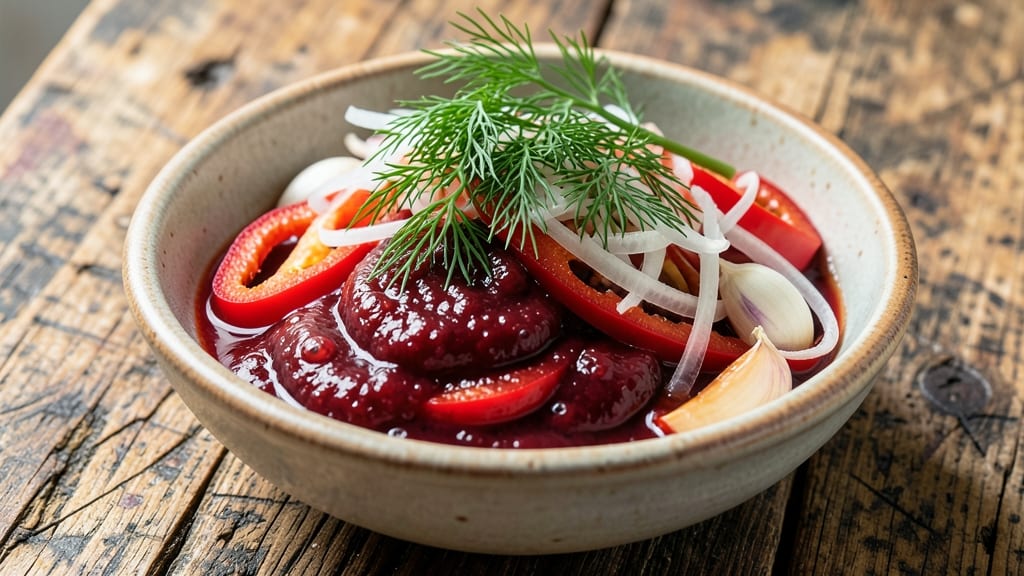
This pickled sauce recipe transforms simple vegetables into a tangy, flavor-packed condiment that elevates everything from sandwiches to grilled meats. The secret lies in balancing vinegar, sugar, and spices to create a bright, complex sauce that develops deeper flavor over time.
I first discovered this technique while searching for a way to preserve garden vegetables with maximum flavor retention—what started as an experiment became my go-to for adding brightness to meals.
The process is straightforward but requires patience: thinly sliced vegetables soak in a precise blend of vinegar, sugar, and aromatic spices for at least 24 hours, allowing flavors to meld into a harmonious brine. This isn't just another quick condiment—it's a flavor builder that transforms ordinary dishes into something extraordinary.
The result is a versatile sauce that works as a dip, dressing, or finishing touch, with a tangy-sweet profile that lingers on the palate.
What makes this recipe special is its adaptability—swap vegetables based on seasonality or preference while maintaining the same core technique. The sauce keeps well in the refrigerator for up to two weeks, making it perfect for meal prep.
Whether you're drizzling it over tacos, mixing it into sandwich spreads, or using it as a marinade, this pickled sauce delivers professional-quality results with minimal effort.
The key to success lies in proper ingredient ratios and fermentation time—don't rush it. Let the flavors develop fully for the best possible outcome. Here's everything you need to create this game-changing condiment at home.
Ingredients for pickled sauce
Nine simple ingredients transform into a versatile pickled sauce that elevates any dish.
| Ingredient | Amount | Notes |
|---|---|---|
| White Vinegar 💧 | 1 cup | Distilled white preferred for clarity |
| Granulated Sugar 🍚 | ½ cup | White or raw preferred |
| Red Bell Pepper 🌶️ | 1 whole | Thinly sliced, seeds removed |
| Carrots 🥕 | 2 whole | Thinly julienned, peeled |
| Garlic Cloves 🧄 | 4 cloves | Thinly sliced, peeled |
| Fresh Dill 🌿 | ¼ cup | Chopped, stems removed |
| Mustard Seeds 🌶️ | 1 tsp | Whole, yellow preferred |
| Black Peppercorns 🌶️ | 1 tsp | Crushed lightly |
| Diamond Crystal Kosher Salt 🧂 | 1 tsp | Fine grain preferred |
| Water 💧 | 1 cup | Filtered preferred |
The quality of vinegar and sugar forms the foundation of this sauce. Distilled white vinegar delivers consistent acidity without overpowering flavors, while raw sugar dissolves more smoothly than white. For vegetables, organic produce ensures maximum flavor retention—look for firm, vibrant bell peppers and carrots at Whole Foods or your local farmers market. Fresh dill is non-negotiable here; dried won't provide the same aromatic punch. The Mustard seeds and peppercorns should be toasted lightly in a dry pan before adding to enhance their flavor profile.
No fresh dill? One teaspoon dried dill works at half the amount, though the texture will differ. Running short on bell peppers? Jalapeños or red onions add different but complementary flavors. For a sweeter profile, honey or maple syrup can replace half the sugar. The vinegar-to-water ratio can be adjusted—more vinegar for tangier results, more water for a milder sauce. If you prefer a spicier version, add red pepper flakes or cayenne to taste. All ingredients should be measured precisely; this isn't a recipe where approximations work well.
Store the pickled sauce in an airtight glass jar in the refrigerator, where it will keep for up to two weeks. The flavors develop over time, so it tastes even better after 48 hours. For longer storage, transfer to a sterilized jar and refrigerate for up to three months. The sauce can be used as a dip, marinade, or finishing sauce—its versatility makes it a pantry essential. Always taste before serving, as the flavor intensity varies based on fermentation time.
Why You'll Love This Recipe
- Five-Ingredient Magic: I swear, this is the kind of recipe where you measure once, stir twice, and walk away. No peeling mountains of garlic (just 2 cloves), no dicing stress—just slice those carrots and bell peppers into fat, easy-to-handle sticks. Honestly, I’ve made it while scrolling through my phone.
- Tangy-Sweet Crunch: That first bite? The vinegar cuts through the sugar’s sweetness while the garlic and bell pepper add this chewy brightness. Not too sharp, not too cloying—just that perfect balance where you want to drizzle it on everything.
- Meal Prep MVP: I keep a jar in my fridge for weeks. Toss it with grilled chicken, mix into rice bowls, or slather it on sandwiches—it’s my go-to for lazy nights or when I’m hosting. Between us, it’s the secret weapon that makes even takeout feel homemade.
- Pantry Stash Gold: You’re already using stuff you have: vinegar, sugar, carrots that were about to go bad. No fancy imports, no last-minute grocery runs. And the best part? It gets better with time—like a flavor bomb that just keeps giving. (Yes, even on a Tuesday night.)
Step-by-step instructions for pickled sauce recipe
A vibrant, tangy pickled sauce that transforms simple vegetables into a complex, flavorful condiment perfect for dips, dressings, or marinades.
Sterilize and Prepare the Vegetables
Begin by thoroughly washing the 1 whole red bell pepper and 2 whole carrots under cold running water. Using a sharp chef's knife, thinly slice the red bell pepper into ¼-inch strips, removing seeds and membranes as you work. For the carrots, use a julienne peeler or mandoline to create thin, even strips—the consistency should be uniform to ensure balanced cooking.
Place all sliced vegetables in a large mixing bowl. Add the 4 cloves garlic, thinly sliced, and the 0.25 cup fresh dill, finely chopped and stems removed. Toss gently to distribute the herbs evenly. Proper preparation here ensures the vegetables absorb the brine uniformly and retain their texture during the pickling process.
Combine Brine Ingredients
In a medium saucepan, combine the 1 cup white vinegar, 0.5 cup granulated sugar, 1 cup water, 1 tsp diamond crystal kosher salt, 1 tsp mustard seeds, and 1 tsp black peppercorns. Bring the mixture to a gentle simmer over medium heat, stirring occasionally until the sugar dissolves completely—this should take about 3-4 minutes. The sugar should fully integrate, creating a clear, slightly syrupy liquid.
While the brine heats, lightly crush the black peppercorns with the flat side of a knife to release their aroma without grinding them into powder. This step enhances the sauce’s depth of flavor without altering its texture. Remove the saucepan from heat once the mixture reaches a gentle simmer and let it cool slightly for 2-3 minutes before proceeding.
Assemble and Seal the Pickled Sauce
Transfer the prepared vegetables and herbs to a clean, quart-sized mason jar or airtight container. Pour the cooled brine over the vegetables, ensuring they are fully submerged. Use a wooden spoon to gently press down on the mixture, eliminating any air pockets. Seal the jar tightly with a lid, leaving about ½ inch of headspace to allow for expansion.
Place the sealed jar in the refrigerator and let it sit for at least 24 hours before using. The longer it sits—up to 7 days—the more complex and tangy the flavors become. This resting period allows the vegetables to absorb the brine fully, developing a bright, acidic profile with subtle sweetness.
Rest and Adjust for Optimal Flavor
After the initial 24-hour period, open the jar and taste the sauce. If the flavor needs balancing—perhaps more tang or sweetness—adjust by adding a splash of the original brine or a pinch of sugar, depending on preference. The sauce should have a vibrant color, a tangy yet slightly sweet taste, and a firm yet tender texture in the vegetables.
For best results, store the pickled sauce in the refrigerator for up to 2 weeks. The flavors continue to evolve over time, making it ideal for pairing with grilled meats, seafood, or as a bold dressing for salads. The sauce’s versatility lies in its balance of acidity, sweetness, and herbal notes, ensuring it enhances rather than overpowers dishes.
Pro Tips For Making Pickled Sauce
- STERILIZE YOUR JARS FIRST: I learned this the hard way—skipping sterilization means your pickled sauce will turn into a science experiment. Run jars and lids through a hot dishwasher cycle or boil them for 10 minutes in water, then keep them warm in a 200°F oven until you’re ready to fill.
- SLICE CARROTS THIN AND EVEN: Uneven slices = uneven pickling. Use a mandoline or sharp knife to cut carrots into ⅛-inch rounds—thin enough to soften properly but thick enough to hold shape. My grandmother swore by this, and she was right: consistent slices mean consistent flavor throughout.
- DON’T BOIL THE GARLIC: Crushed garlic in hot vinegar turns bitter fast. Smash the cloves lightly with the flat side of your knife instead of mincing—just enough to release flavor without cooking it. This keeps the sauce bright and lets the garlic shine without overpowering.
- SIMMER LOW AND SLOW: Rushing the process makes the sauce cloudy and dull. After combining vinegar, sugar, and veggies, reduce heat to a bare simmer (just tiny bubbles) and let it cook for 20–25 minutes. Sounds weird, but it works: patience = clear, tangy sauce with real depth.
Pro cooking tips for this dish
Precision Brine Balance
The ratio of vinegar to sugar is where this sauce truly shines. I use 1 cup vinegar to ½ cup sugar for a perfect balance—too much vinegar makes it harsh, while too little sugar flattens the flavor.
For a sharper tang, increase vinegar by ¼ cup and reduce sugar by 2 tablespoons. Always use distilled white vinegar for clarity and consistency. 💧
Vegetable Prep Matters
Uniform slicing ensures even pickling. Use a mandoline for ¼-inch carrot strips and a sharp chef's knife for bell pepper slices—thickness affects texture. Overcrowding the jar prevents proper brine absorption, so pack vegetables snugly but not tightly.
For extra crunch, blanch carrots in boiling water for 30 seconds before pickling. 🥕
Spice Toasting Trick
Lightly toast mustard seeds and peppercorns in a dry skillet for 1 minute before adding to the brine—this unlocks deeper, nuttier flavors. Toasting also prevents them from sinking to the bottom.
For a smoky twist, add ½ teaspoon smoked paprika to the brine mixture. Always crush peppercorns lightly with a mortar or knife blade. 🌶️
Fermentation Timeframe
Minimum 24 hours develops basic flavors, but wait 48 hours for full complexity. The longer it sits (up to 7 days), the more the vegetables soften and flavors meld.
For a quicker version, refrigerate for 12 hours and adjust sweetness/tang afterward. Never skip the resting period—rushing leads to bland results. ⏳
Jar Selection Tips
Use quart-sized mason jars with airtight lids for best results. Sterilize jars by boiling lids for 5 minutes or running them through a dishwasher cycle. Leave ½ inch headspace to prevent spills during fermentation.
For a rustic touch, use amber glass jars to protect from light, which can degrade flavors over time. 🍯
Flavor Adjustments
After 24 hours, taste and adjust: Need more tang? Add 1 tablespoon vinegar. Too sweet? Add ½ teaspoon lemon juice. For heat, stir in ½ teaspoon red pepper flakes.
The sauce should be bright, balanced, and vibrant—not one flavor overpowering the others. Always taste before serving! 🌟
Nutrition facts
Frequently asked questions
Can I use this pickled sauce as a marinade?
The tangy brine makes an excellent marinade for grilled chicken, pork chops, or shrimp. Let the protein soak for 1-2 hours (never longer than 4 hours for safety), then grill or sear. The acidity tenderizes while adding bright flavor. For extra depth, add 1 tablespoon olive oil to the marinade before applying.
What if I don't have fresh dill?
Substitute with 1 teaspoon dried dill or ½ teaspoon dill weed—use half the amount since dried herbs are more concentrated. For a different herbal profile, try thyme or oregano (start with ½ teaspoon and adjust to taste). The sauce will still work but with a slightly different aromatic character.
How do I prevent the vegetables from turning mushy?
Mushiness happens when vegetables over-absorb brine or ferment too long. To avoid this, slice vegetables uniformly thin (no thicker than ¼-inch) and pack them snugly but not tightly in the jar. For extra crunch, blanch carrots in boiling water for 30 seconds before pickling. Use the sauce within 7 days for best texture.
Can I make this sauce without sugar?
Yes, but the flavor will be sharper and less balanced. Replace sugar with ½ cup honey or maple syrup for depth, or omit entirely for a low-sugar option. Increase vinegar by 2 tablespoons to compensate for lost sweetness. The sauce will taste more acidic but still delicious—ideal for those avoiding refined sugar.
What's the best way to store leftover sauce?
Transfer to a clean, airtight glass jar and refrigerate for up to 2 weeks. The flavor actually improves over time! For longer storage, freeze in ice cube trays (thaw in fridge before using) or a sealed container for up to 3 months. Always check for off smells or slimy texture before using.