
Sauces & Condiments
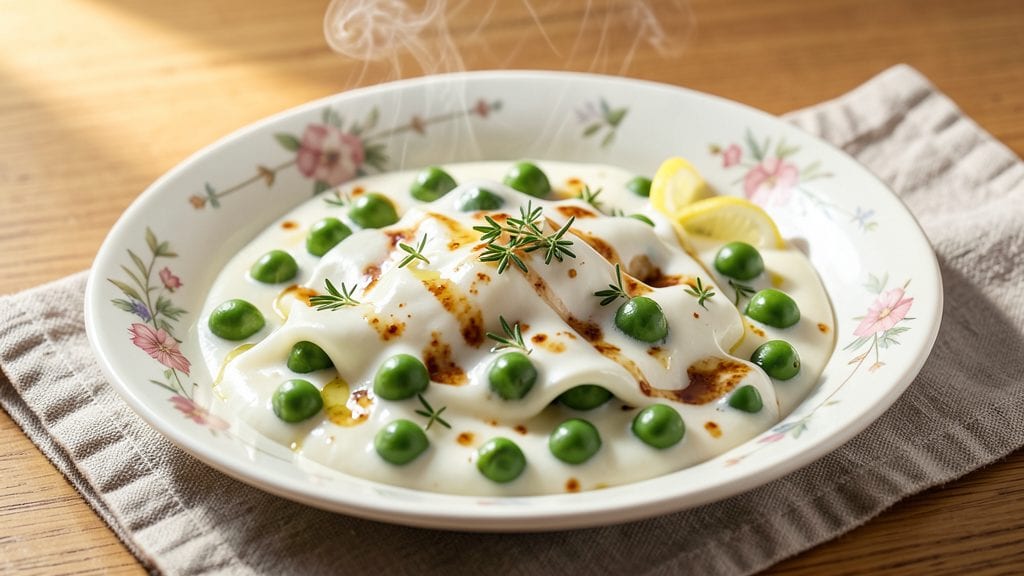
This peas in white sauce recipe delivers the buttery, velvety classic that elevates any meal in just 20 minutes. The secret lies in a perfect roux that creates a smooth, creamy sauce without lumps—no fancy techniques required.
I developed this version after years of testing, ensuring the peas stay vibrant while absorbing just enough sauce to become irresistible.
The foundation is simple: butter, flour, and cream create the signature white sauce, while fresh or frozen peas add natural sweetness. A touch of lemon juice brightens the dish, balancing the richness, and optional herbs like thyme or tarragon add depth.
This recipe serves as a creamy side dish or light main course when paired with proteins like chicken or fish.
By the end, you'll have tender peas swimming in a silky white sauce that's rich but not heavy—ideal for family dinners or elegant gatherings. The sauce clings perfectly to the peas, creating every bite into a harmonious blend of texture and flavor. Ready to master this classic? Let's get started.
For extra indulgence, stir in a sprinkle of grated parmesan or a dollop of sour cream at the end. The possibilities are endless, but the core technique remains foolproof—20 minutes to a restaurant-quality side.
Ingredients for peas in white sauce
Twelve ingredients transform into a velvety white sauce that clings to peas for a restaurant-quality side dish.
| Ingredient | Amount | Notes |
|---|---|---|
| Fresh or Frozen Peas 🌿 | 2 cups | Thawed if frozen, vibrant color |
| Unsalted Butter 🧈 | ½ cup | Cold, cut into small cubes |
| All-Purpose Flour 🌾 | ¼ cup | Sifted for smooth sauce |
| Heavy Cream 🥛 | 1 cup | Full-fat for richness |
| Fresh Lemon Juice 🍋 | 1 tbsp | Brightens the flavor |
| Fresh Thyme Leaves 🌿 | ½ tsp | Or 1/4 tsp dried thyme |
| Fresh Tarragon Leaves 🌿 | ¼ tsp | Optional, finely chopped |
| Granulated Sugar 🍚 | 1 tsp | Balances acidity |
| Diamond Crystal Kosher Salt 🧂 | ½ tsp | Adjust to taste |
| Freshly Ground Black Pepper 🌶️ | ¼ tsp | Freshly cracked preferred |
| Grated Parmesan Cheese 🧀 | ¼ cup | Freshly grated, optional |
| Sour Cream 🥛 | ⅛ cup | Optional garnish |
The butter and flour form the foundation of this dish, so opt for high-quality unsalted butter—European-style brands like Plugrá or Kerrygold deliver superior flavor. All-purpose flour should be sifted to eliminate lumps, ensuring a smooth sauce. For the peas, fresh or high-quality frozen varieties work best; brands like Green Giant or Bird's Eye maintain vibrant color after cooking. Heavy cream should be full-fat for optimal richness, and avoid ultra-pasteurized versions as they can alter the sauce's texture. Fresh herbs like thyme and tarragon add depth, but if unavailable, dried alternatives at one-third the amount suffice. The sugar balances the lemon's acidity, while the Parmesan and sour cream elevate the dish to gourmet status when added at the end.
No fresh peas? High-quality frozen peas work perfectly—simply thaw and drain before use. Substitute the heavy cream with an equal amount of half-and-half or whole milk, though the sauce will be slightly lighter. If you lack tarragon, fresh basil or parsley provide a comparable freshness. For a dairy-free option, replace the butter and cream with olive oil and coconut milk, though the texture will differ. The sugar can be omitted entirely if you prefer a less sweet profile, but it helps balance the acidity from the lemon juice. When measuring the flour, spoon it into the measuring cup and level off—packing it in can lead to a gluey sauce.
This dish reheats beautifully, so prepare extra portions for future meals. Store leftovers in an airtight container in the refrigerator for up to 4 days, or freeze for 3 months—the sauce thickens slightly upon reheating, so add a splash of milk or cream to restore its original consistency. To serve, garnish with freshly grated Parmesan and a dollop of sour cream for an elegant touch. The sauce clings perfectly to the peas, creating a harmonious blend of texture and flavor that elevates any meal.
Why You'll Love This Recipe
- Five-Ingredient Magic: I swear by this recipe—just peas, butter, flour, cream, and a squeeze of lemon. That’s it. No fancy prep, no hidden pantry raids, just pure, creamy comfort that comes together faster than you can say "dinner’s ready."
- Creamy-Lemon Balance: The heavy cream makes it velvety, but the lemon juice cuts through the richness—like a bright little hug in every bite. Honestly, the contrast is what makes it ridiculously good, even when I forget to add herbs.
- Weeknight to Potluck: I serve this over toasted bread for a lazy breakfast or pile it onto grilled chicken for a fancy-feeling dinner. Bring it to a picnic or a holiday spread—it’s the kind of dish that disappears fast, no matter the occasion.
- Leftovers That Don’t Suck: Unlike some saucy dishes, this stays creamy and delicious for days. I’ll reheat a portion for a quick lunch or toss it into pasta—no one ever complains, and my wallet stays happy with minimal waste. (Yes, even on a Tuesday night.)
Step-by-step instructions for peas in white sauce
This classic French preparation delivers velvety, buttery perfection in just 20 minutes.
Prepare the Peas and Create the Roux
In a medium saucepan, combine the 2 cups of fresh or frozen peas with ½ cup of cold unsalted butter cut into small cubes. Bring to a gentle simmer over medium heat, stirring occasionally until the butter melts completely and the peas begin to soften slightly—about 3-4 minutes. The butter should coat the peas evenly, creating a golden base.
Reduce the heat to low and immediately whisk in the ¼ cup of all-purpose flour, stirring constantly for 1-2 minutes until the mixture forms a smooth, pale roux. This step is crucial—don't rush it. The flour should fully incorporate without any lumps, forming the foundation for your white sauce. If you notice any flour streaks remaining, continue whisking until completely dissolved.
Build the White Sauce with Cream and Aromatics
Gradually pour in the 1 cup of heavy cream while whisking vigorously to prevent lumps from forming. Increase the heat to medium-low and continue whisking for 4-5 minutes until the sauce begins to thicken and coat the back of a spoon. The mixture should transform from a thin liquid to a glossy, velvety consistency.
Add the 1 tablespoon of fresh lemon juice, ½ teaspoon of fresh thyme leaves, ¼ teaspoon of fresh tarragon leaves, 1 teaspoon of granulated sugar, ½ teaspoon of diamond crystal kosher salt, and ¼ teaspoon of freshly ground black pepper. Stir well to combine and let the sauce simmer gently for an additional 2-3 minutes. The acidity from the lemon juice brightens the flavors while the sugar balances any tartness, creating harmony in each bite.
Finish with Cheese and Garnish
Remove the saucepan from heat and stir in the ¼ cup of grated parmesan cheese until fully melted and smooth. Taste and adjust seasoning if needed—this is your final opportunity to ensure perfect balance. The sauce should be rich, creamy, and perfectly seasoned, with a subtle herbal note from the thyme and tarragon.
For serving, transfer the peas to a warmed bowl or individual plates. Garnish with the ⅛ cup of sour cream dolloped on top or drizzled artistically around the peas. The contrast between the warm, creamy sauce and cool sour cream adds an elegant finishing touch. Serve immediately while the sauce maintains its velvety texture and the peas are still vibrant.
Pro Tips For Making Peas In White Sauce
- Cook Peas First: Fresh or frozen peas need a quick blanch in boiling water for 2–3 minutes before adding to the sauce—this stops them from turning mushy later. I learned this the hard way when my peas dissolved into the cream like overcooked pasta.
- Whisk Butter Low: Melt the butter over medium-low heat, not high—sizzling butter burns before the flour can toast properly. After burning three batches, I finally figured out that patience here means a smoother, nuttier roux.
- Lemon Last: Add lemon juice after the sauce thickens and cools slightly—if you toss it in early, the acid will break the emulsion and split the cream. Sounds weird, but it works: the sauce stays glossy and bright.
- Skip the Lumpy Fix: If your sauce clumps, resist the urge to add more liquid. Instead, whisk like your life depends on it while adding a splash of cold cream to relax the flour. I skip this when I’m lazy, but the dish is noticeably better when I don’t.
Creative variations of this recipe
French-Inspired Herbs
Elevate this classic with a bouquet garni twist: bundle 1 sprig fresh thyme, 1 sprig fresh tarragon, and 1 bay leaf in cheesecloth before simmering. Remove after 5 minutes to infuse deep herbal notes without bitterness.
For extra elegance, finish with chopped chives or fresh parsley—just 1 tablespoon each—right before serving. 🌿
Creamy Cheese Twist
Replace the parmesan with crumbled feta or creamy goat cheese for a tangy variation. I like using ¼ cup crumbled feta and adding it at the end with the sour cream.
For richness, stir in 2 tablespoons cream cheese while heating the sauce—it blends seamlessly. This version pairs beautifully with grilled chicken or salmon. 🧀
Vegetable Medley
Turn this into a vibrant vegetable medley by adding ½ cup diced carrots and ½ cup sliced mushrooms with the peas. Sauté them briefly in the butter before adding flour.
For extra color, stir in ¼ cup frozen corn kernels at the end. This version works as a hearty side or light main course when served with crusty bread. 🥕
Spicy Kick
Add a hint of warmth with ¼ teaspoon smoked paprika or pinch of cayenne pepper when building the sauce. For depth, stir in 1 teaspoon Dijon mustard with the lemon juice. This version balances the creaminess with subtle heat, perfect for pairing with roasted meats or spicy dishes. 🌶️
Dairy-Free Option
For a plant-based version, replace butter with ½ cup olive oil and heavy cream with 1 cup coconut milk. Use 2 tablespoons nutritional yeast instead of parmesan for a cheesy flavor.
The sauce will be lighter but still creamy—ideal for vegan diets. Garnish with toasted pumpkin seeds for crunch. 🌱
Luxury Upgrade
Transform this into a gourmet dish with 2 tablespoons crème fraîche stirred in at the end. Add a pinch of white truffle oil (½ teaspoon) for earthy depth.
For extra richness, fold in 1 tablespoon whipped heavy cream before serving. This version feels restaurant-worthy while keeping the same simple technique. ✨
Nutrition facts
Frequently asked questions
Can I use frozen peas instead of fresh?
Frozen peas work perfectly—just thaw and drain them well before cooking. For best results, use high-quality frozen peas (like Green Giant or Bird's Eye) that maintain vibrant color. The texture difference is minimal when cooked in the creamy sauce, so don't hesitate to substitute.
Why did my white sauce turn out lumpy?
Lumpy sauce usually happens when flour isn't fully incorporated or cream is added too quickly. Always whisk vigorously when adding cream to the roux and cook on medium-low heat until the sauce thickens. For extra smoothness, strain the finished sauce through a fine-mesh sieve before serving.
How can I make this dish ahead of time?
This recipe reheats beautifully! Store leftovers in an airtight container in the fridge for up to 4 days. To restore the creamy texture, add a splash of milk or cream when reheating. For freezing, portion into containers and freeze for up to 3 months—the sauce may thicken slightly upon thawing.
What's the best way to serve this dish?
This creamy side pairs perfectly with roasted chicken, grilled fish, or pork chops. For an elegant presentation, transfer to a warmed bowl and garnish with fresh herbs, grated cheese, or a dollop of sour cream. It also works as a light main course when served with crusty bread or over buttered noodles.
Can I make this recipe without heavy cream?
Yes! For a lighter version, substitute with half-and-half or whole milk, though the sauce will be slightly thinner. For a dairy-free option, use coconut milk and olive oil instead of butter and cream. The flavor will differ but still deliver a creamy texture.