Salads
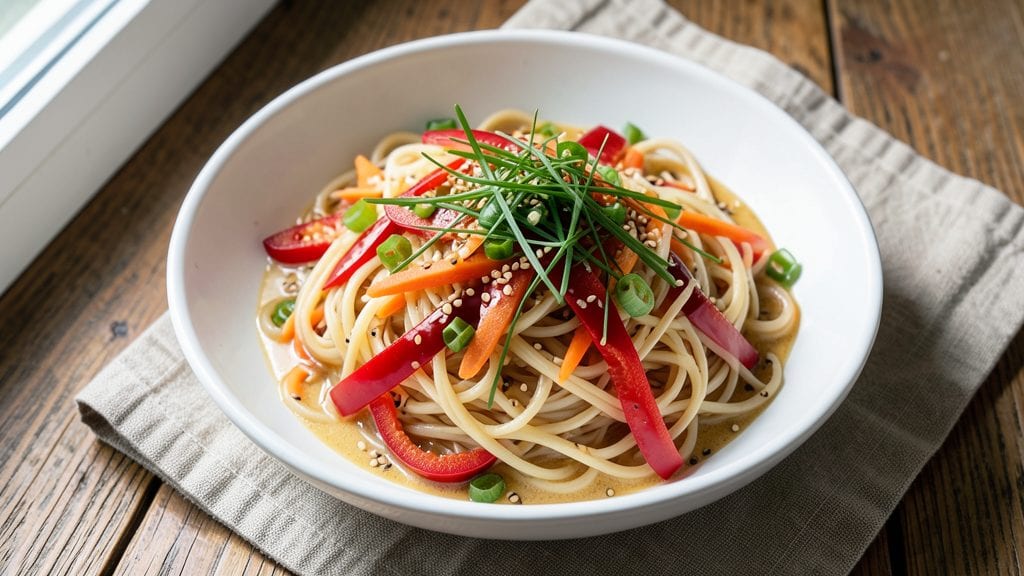
This original ramen noodle salad recipe with soy sauce transforms simple pantry staples into a restaurant-worthy dish that balances crunchy texture, chewy noodles, and bold umami flavor.
The secret lies in perfectly cooked ramen—boiled just until tender but still holding its shape—then tossed with a tangy soy-based dressing that marries sweet, salty, and savory notes.
I developed this after craving something lighter than takeout but still packed with that signature ramen depth, and it became an instant weeknight favorite.
The beauty of this salad is its versatility—it works as a standalone meal or pairs beautifully with grilled proteins. The soy sauce dressing isn’t just a flavor carrier; it’s the star, infused with sesame oil, rice vinegar, and a touch of honey to round out the complexity.
Fresh vegetables like cucumbers and carrots add crisp contrast, while optional proteins (like shredded rotisserie chicken or tofu) make it heartier. What sets this apart is how the noodles maintain their satisfying chew while absorbing the dressing without turning soggy.
By the time you’ve mixed everything together, you’ll have a salad that’s visually striking—golden noodles glistening with dressing, vibrant vegetables peeking through, and optional toppings like sesame seeds or green onions adding texture and aroma.
The soy sauce ties every element together, creating a dish that’s both comforting and refreshing. This isn’t just a salad; it’s a flavor-packed twist on a classic that proves noodles can shine in a bowl.
Ready to make it? The process is straightforward—cook the noodles, whip up the dressing, and assemble with your choice of add-ins. It’s the kind of recipe that feels restaurant-quality but comes together in under 30 minutes. Let’s get started!
Ingredients for original ramen noodle salad recipe with soy sauce
Pantry staples and fresh veggies transform into a restaurant-worthy ramen noodle salad.
| Ingredient | Amount | Notes |
|---|---|---|
| Ramen Noodles 🍜 | 8 oz | Uncooked, any flavor preferred |
| Fresh Cucumber 🥒 | 1 ½ cups | Diced, seeds removed |
| Carrots 🥕 | 1 cup | Julienned or thinly sliced |
| Red Bell Pepper 🌶️ | ½ cup | Thinly sliced, any color |
| Green Onions 🧅 | ¼ cup | Thinly sliced, white and green |
| Sesame Seeds 🥜 | 1 tbsp | Toasted for extra flavor |
| Cooked Rotisserie Chicken 🍗 | 1 ½ cups | Shredded, optional protein |
| Extra-Firm Tofu 🥬 | ½ cup | Cubed, optional protein |
| Sesame Oil 🫒 | 1 tbsp | Toasted for aroma |
| Rice Vinegar 🍶 | 2 tbsp | White or seasoned |
| Soy Sauce 🍶 | 3 tbsp | Low-sodium preferred |
| Honey 🍯 | 1 tbsp | Light or clover variety |
| Sesame Oil 🫒 | 1 tsp | For finishing |
| Salt 🧂 | ½ tsp | Diamond Crystal preferred |
| Black Pepper 🌶️ | ¼ tsp | Freshly ground |
The ramen noodles are the foundation—look for ones with a good chew, not the flimsy instant kind. Nissin or Maruchan are solid choices, but any brand with visible texture works. If you're using dried ramen, cook it just until tender—about 2 minutes less than package instructions. The dressing is where the magic happens, so don't skimp on the sesame oil. Toast it in a dry pan for 30 seconds before using—trust me, it makes all the difference. For the veggies, farmers market finds like heirloom carrots or crisp cucumbers elevate everything, but grocery store basics work too.
No rotisserie chicken? Shredded deli turkey or even hard-boiled eggs add protein. Swapping tofu for chicken? Press and pan-fry it first to get rid of excess moisture. The dressing can be made ahead—it actually tastes better after flavors meld for 30 minutes. No sesame seeds? Toasted peanuts or sunflower seeds add crunch. For extra umami, add 1 tsp fish sauce or Worcestershire to the dressing. And if you're using pre-cooked ramen, rinse it under cold water after cooking to stop the cooking process and keep those noodles firm.
This salad keeps beautifully for 4 days in the fridge, though the noodles get softer over time. Store the dressing separately if you're making it ahead—toss it with the noodles right before serving. The veggies stay crispest if you add them just before eating. For a make-ahead hack, cook the noodles, let them cool completely, then refrigerate them in a sealed container. When ready to assemble, just add the dressing and fresh toppings. The flavors only get better as they sit—perfect for meal prep!
Why You'll Love This Recipe
- Pantry Magic: I swear by this recipe when I’m staring into an empty fridge. Ramen noodles, a few crunchy veggies, and soy sauce—no fancy ingredients, just the kind of meal that saves me from takeout guilt.
- Umami Bomb: That soy sauce? It’s the MVP here. The noodles soak it up while the cucumber’s cool bite and carrot’s sweetness make every forkful ridiculously good. Honestly, the red bell pepper adds a little brightness that keeps it from tasting like plain noodles.
- Lunchbox Hero: Between us, this is my go-to for meal prep. Toss the cooled noodles and veggies in a container, and it stays fresh for days. My kids grab it for school lunches, and my husband sneaks seconds at work—no reheating required.
- Budget Win: I spent $3 on ingredients, and it feeds four. The ramen’s cheap, the veggies stretch far, and the soy sauce adds depth without breaking the bank. Not the prettiest, but the taste makes up for it every time.
Step-by-step instructions for crispy ramen noodle salad
Here's how to transform simple ramen into a vibrant, umami-rich salad with perfect texture contrast.
Cook and Rinse the Ramen Noodles
Bring a pot of water to a rolling boil and cook the 8 oz ramen noodles according to package instructions until al dente—about 3-4 minutes. The noodles should be tender but still hold their shape when drained. Immediately drain them and rinse under cold water for 30 seconds to stop the cooking process and remove excess starch.
This cooling shock prevents the noodles from becoming mushy when mixed with the dressing. Spread them on a baking sheet and let them cool completely before proceeding. I like to fan them with my hand to speed up the drying process—this ensures they maintain their chewy texture rather than turning limp.
Prepare the Vegetable Medley
In a large mixing bowl, combine the 1.5 cups diced fresh cucumber, 1 cup julienned carrots, 0.5 cup thinly sliced red bell pepper, and 0.25 cup sliced green onions. Toss them gently with your hands to distribute the juices evenly. The vegetables should be at room temperature for best flavor integration.
Here's the thing—don't skip the room temperature step. Cold vegetables can make the finished salad taste dull. If they're straight from the fridge, let them sit for 10 minutes before assembling. The cucumber will release its refreshing juices, while the carrots and bell pepper will soften slightly, creating the perfect crunch contrast with the chewy noodles.
Assemble the Protein Components
In a separate bowl, combine the 1.5 cups shredded cooked rotisserie chicken and 0.5 cup cubed extra-firm tofu. Drizzle with 1 tablespoon toasted sesame oil and toss gently to coat. Let this mixture sit for 5 minutes to absorb the oil's nutty aroma before adding to the salad.
The tofu should be pressed first if it's particularly soft—wrap it in a clean towel, place a heavy object on top, and let it drain for 15 minutes. This removes excess moisture that would otherwise dilute your dressing. The chicken and tofu together provide a satisfying protein base that balances the light vegetables.
Create the Signature Dressing
In a small bowl, whisk together the 3 tablespoons soy sauce, 2 tablespoons rice vinegar, 1 tablespoon honey, 0.5 teaspoon salt, and 0.25 teaspoon black pepper. The mixture should be smooth and glossy. Taste and adjust the balance—you want the soy sauce's umami to shine while the vinegar adds brightness and the honey rounds out the flavors.
This is where the magic happens. The soy sauce provides that essential umami depth, while the vinegar prevents the dish from becoming too heavy. The honey not only sweetens but also helps emulsify the dressing, ensuring it clings perfectly to every noodle and vegetable strand. Save 1 teaspoon sesame oil for finishing—this adds an aromatic punch at the very end.
Combine and Finish with Crunch
Add the cooled ramen noodles to the vegetable mixture and toss gently to distribute. In a separate small bowl, combine the protein mixture with the dressing, reserving 1 tablespoon of the dressing to use as a final drizzle. Fold everything together in the large bowl until evenly coated.
Sprinkle the 1 tablespoon toasted sesame seeds over the top and finish with the reserved 1 teaspoon sesame oil. The seeds add a satisfying crunch that contrasts beautifully with the chewy noodles. Let the salad sit for 5 minutes before serving to allow all the flavors to meld together. The result should be a harmonious balance of textures and tastes—crunchy, chewy, and umami-packed just as promised.
Pro Tips For Making Original Ramen Noodle Salad Recipe With Soy Sauce
- Rinse Noodles Cold: Dump the cooked ramen into ice water for 30 seconds—this stops the cooking and firms up the noodles so they don’t turn to mush in the dressing. I used to skip this and ended up with a sad, limp salad every time.
- Shave, Don’t Dice Carrots: Thinly shave carrots on a mandoline or peeler for maximum crunch and visual appeal. Cubes get soggy fast, but shaved strips hold up better and add texture without overpowering the soy sauce.
- Salt the Cucumber First: Toss sliced cucumber with ½ teaspoon salt and let it sit for 10 minutes before draining. This pulls out excess water so the salad stays crisp instead of watery—no one wants a soggy base.
- Toast the Bell Pepper: Quickly char the red bell pepper strips in a dry pan for 30 seconds—just until the edges blister. The smoky depth cuts through the soy sauce and makes the salad taste more complex than raw veg alone.
Essential equipment for this dish
Noodle Prep Tools
The right tools make all the difference when cooking ramen noodles for salad. I use a large stainless steel pot (like All-Clad Stainless) with a tight-fitting lid to boil the noodles—it maintains even heat and prevents water evaporation.
A fine-mesh strainer (I prefer OXO Good Grips) is essential for draining the noodles quickly without breaking them. For cooling, I spread them on a wire cooling rack placed over a baking sheet to prevent sogginess. 🍜
Dressing Essentials
Your dressing needs precise measurements and the right tools. A small whisk bowl (like KitchenAid 3-Piece Set) helps create a smooth emulsion. I measure ingredients using liquid measuring spoons (I love OXO Good Grips) for accuracy—especially the 1 tbsp toasted sesame oil and 3 tbsp soy sauce.
A small glass jar with a tight lid keeps the dressing fresh in the fridge for up to 5 days. For finishing, I drizzle with a fine-mist spray bottle (like SimpleHouseware) to distribute the last 1 tsp sesame oil evenly. 🫒
Veggie Prep Gear
Fresh vegetables need sharp tools for clean cuts. A Japanese mandoline (like BENRIN) makes julienning carrots and slicing bell peppers effortless and uniform. For cucumbers, I use a sharp chef’s knife (I recommend Wüsthof Ikon) with a cutting board (like Teakhaus bamboo) to prevent slipping.
A salad spinner (I use OXO Good Grips) removes excess moisture from washed veggies, keeping the salad crisp. 🥒
Protein Prep Must-Haves
If using rotisserie chicken, I shred it with a pair of kitchen shears (like Mercer Culinary) for speed and control. For tofu, a tofu press (I have the OXO Good Grips) removes moisture efficiently.
A non-stick skillet (like Calphalon) is perfect for lightly pan-frying tofu to add texture. To keep proteins separate until assembly, I use small glass ramekins (like Pyrex) to store them in the fridge. 🍗
Assembly and Serving
A large mixing bowl (I use Le Creuset Stoneware) with a silicone spatula (like OXO Good Grips) ensures even tossing of all ingredients. For garnishing, a small measuring spoon helps distribute 1 tbsp sesame seeds evenly.
To serve, I transfer the salad to individual plates or a large platter (like Stone & Beam ceramic) for a restaurant-style presentation. A small squeeze bottle (like SimpleHouseware) makes drizzling the final 1 tsp sesame oil easy and controlled. ✨
Nutrition facts
Frequently asked questions
Can I use any type of ramen noodles for this salad?
For the best texture, use dried ramen noodles with visible texture—not the flimsy instant kind. Brands like Nissin or Maruchan work well. If using pre-cooked ramen, rinse it thoroughly under cold water after cooking to stop the cooking process and maintain chewiness. Avoid seasoned packets to control the flavor balance.
How do I prevent the noodles from getting soggy?
Rinse the cooked noodles under cold water for 30 seconds to remove excess starch, then spread them on a baking sheet to cool completely. Also, add the dressing just before serving and keep the vegetables crisp by adding them last. The sesame seeds and toasted sesame oil add crunch that contrasts beautifully with the chewy noodles.
What if I don’t have rotisserie chicken or tofu?
No problem! Swap in shredded deli turkey, hard-boiled eggs, or even canned tuna for protein. For a vegetarian option, try crispy baked chickpeas or edamame. The key is to balance the salad with protein—just make sure any additions are dry to avoid diluting the dressing.
Can I make this salad ahead of time?
Store the cooked noodles, dressing, and veggies separately in the fridge for up to 4 days. When ready to serve, toss everything together and add fresh toppings like sesame seeds. The dressing can be made 3 days ahead—its flavors actually improve as they meld. For the crispiest veggies, add them just before eating.
Is there a way to make this gluten-free?
Yes! Use gluten-free ramen noodles (like Sapporo or Nongshim brands) and check that your soy sauce is tamari-based. Most other ingredients are naturally gluten-free, but always verify labels. The texture will be slightly different, but the umami-packed dressing will still shine.