
Sauces & Condiments
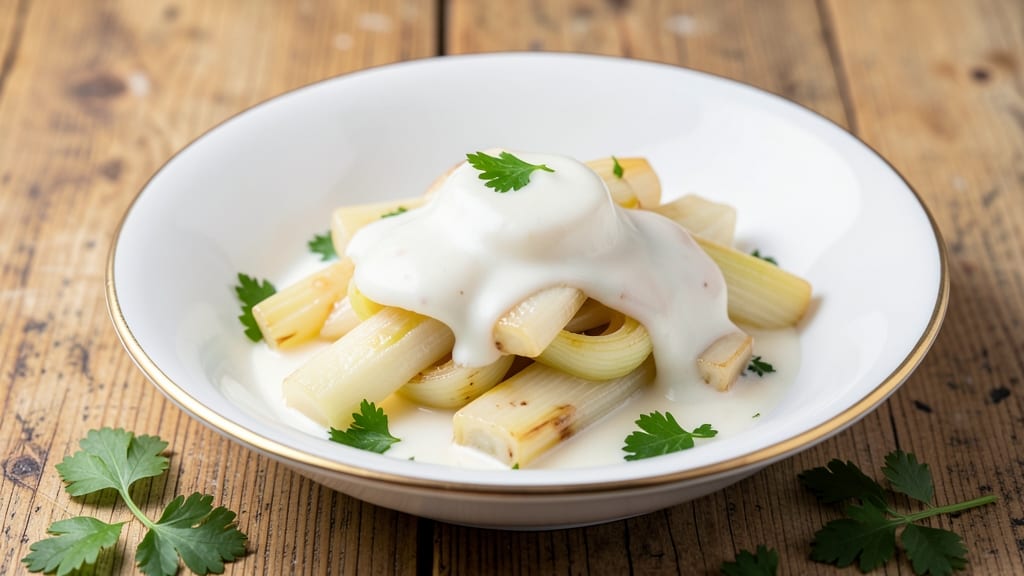
This leeks in white sauce recipe transforms humble leeks into a silky, velvety dish that rivals restaurant-quality preparations—without a single onion. The secret lies in proper leek cleaning and a well-built béchamel that coats every tender green strand in a rich, creamy embrace.
After years of perfecting this technique, I can confidently say it’s one of those dishes that elevates simple ingredients into something extraordinary.
The process begins with meticulously cleaning the leeks—removing all dirt and grit from their layers—before sautéing them until tender. A classic white sauce forms the base, where butter and flour create a smooth roux that blends seamlessly with warm milk or cream.
The result is a sauce so luxurious it feels like a special occasion, yet it comes together in a single pot with just a few key ingredients.
By the time you plate it, you’ll have a dish that’s silky, flavorful, and impossibly tender—each bite offering a perfect balance of creamy sauce and delicate leek. This recipe works beautifully as a standalone side, paired with roasted potatoes, or twirled onto buttered noodles.
The best part? It’s a foolproof method that delivers restaurant-quality results every time, even on a weeknight.
Whether you’re serving a family dinner or impressing guests, this dish delivers elegance without effort. The white sauce clings to the leeks like a second skin, creating a texture that’s both comforting and refined. Let’s get started on this timeless classic that proves simplicity can be truly luxurious.
Ingredients for leeks in white sauce
Simple ingredients that transform into restaurant-quality leeks in velvety white sauce.
| Ingredient | Amount | Notes |
|---|---|---|
| Leeks 🧅 | 2 large | Trimmed, cleaned, white and light green parts |
| Unsalted Butter 🧈 | ½ cup | Cold, cubed for roux |
| All-Purpose Flour 🌾 | ½ cup | Sifted for smooth sauce |
| Whole Milk 🥛 | 2 cups | Room temperature preferred |
| Heavy Cream 🥛 | ½ cup | Full-fat for richness |
| Salt 🧂 | 1 tsp | Kosher or sea salt |
| Ground White Pepper 🌶️ | ¼ tsp | Freshly ground preferred |
| Nutmeg 🌿 | ⅛ tsp | Freshly grated for warmth |
| Garlic Cloves 🧄 | 2 cloves | Minced for subtle depth |
| Lemon Juice 🍋 | 1 tbsp | Freshly squeezed |
| Chicken Stock 🍲 | 1 cup | Homemade or quality low-sodium |
| Fresh Parsley 🌿 | ¼ cup | Chopped for garnish |
Leeks are the star here, so choose fresh, firm stalks with crisp white and light green parts. Whole Foods or local farmers markets often carry the best quality, but any grocery store will do if you trim them properly. Remove all dirt from the layers by cutting them lengthwise and rinsing thoroughly—this step is non-negotiable for a clean, elegant dish. For the butter, European-style unsalted butter like Plugra adds richness, but any good-quality butter will work. The flour should be sifted to avoid lumps in your sauce, and whole milk ensures a creamy texture without being too heavy.
No heavy cream? Half-and-half or extra whole milk works in a pinch, though the sauce will be slightly lighter. Substitute chicken stock with vegetable broth for a vegetarian version, but reduce the salt slightly since broths vary in sodium content. Fresh nutmeg is ideal, but if you only have ground, use half the amount—it's more potent. For the garlic, minced is best, but a press works if you're short on time. The lemon juice brightens the sauce, so don't skip it—even a tablespoon makes a difference. If you're making this ahead, hold off on adding the lemon juice until reheating to preserve its freshness.
This sauce reheats beautifully—just warm it gently on the stove with a splash of milk or cream to restore its silky texture. Store leftovers in an airtight container for up to 4 days, or freeze for 3 months. For a restaurant-worthy presentation, garnish with fresh parsley and a drizzle of cream. The sauce thickens as it cools, so add a splash of milk when reheating if it's too stiff. Double the recipe if you're serving a crowd—it's that good.
Why You'll Love This Recipe
- No-Fuss Prep: I swear, the hardest part is slicing the leeks—just trim the dark greens, halve them lengthwise, and rinse under cold water. That’s it. No peeling, no dicing, no stress. The butter melts in seconds, the flour toasts in one pan, and suddenly you’ve got a velvety base without a single extra dish.
- Creamy Without Trying: Between us, this sauce is ridiculously smooth—thanks to that butter-and-flour roux and the milk-cream combo. It’s rich but not heavy, with just enough leek sweetness peeking through. (Yes, even on a Tuesday night, this tastes like you spent hours.)
- Weeknight to Dinner Party: Make a double batch on Sunday—it reheats like a dream for lunches or turns elegant with a sprinkle of parsley. My daughter’s friends think it’s "fancy" when I serve it over pasta, but honestly? It’s just leeks, butter, and love.
- Budget-Friendly Luxury: Leeks are cheaper than onions, butter stretches farther than you’d think, and this recipe feeds four for under $8. Leftovers? Even better—the sauce thickens perfectly when reheated, so it’s my go-to for lazy days or when I’m too tired to cook.
Step-by-step instructions for leeks in white sauce
Here's how to create a velvety white sauce with tender leeks—simple, foolproof, and ready in one pot.
Sauté Leeks Until Translucent and Sweet
Trim the 2 large leeks by cutting off the dark green tops and slicing off the root ends. Split them lengthwise and rinse thoroughly under cold water to remove any grit, then slice into ¼-inch rounds. Melt the 0.5 cup unsalted butter in a large saucepan over medium heat. Add the leeks and cook for 8-10 minutes, stirring occasionally, until they soften and turn translucent. You'll notice the leeks release moisture as they cook—this is normal and helps build flavor.
I like to press down gently on the leeks during the first 2 minutes to help them release their natural sugars and caramelize slightly. This creates a deeper, sweeter base for the sauce. Once the leeks are tender and their edges begin to soften, it's time to move to the next step. Don't let them brown—they should remain pale and sweet, not golden.
Create a Smooth Roux for the White Sauce
Reduce the heat to medium-low. Sprinkle the 0.5 cup all-purpose flour evenly over the leeks, stirring constantly with a wooden spoon for 1-2 minutes. This creates a roux, which will thicken the sauce. Cook the roux until it turns a pale golden color—this usually takes about 3-4 minutes. You're looking for a smooth, paste-like consistency that coats the back of a spoon.
If the roux starts to darken too quickly, reduce the heat further. A well-made roux is the foundation of a silky sauce, so take your time here. Once the roux is fully cooked, gradually whisk in the 2 cups whole milk, about ½ cup at a time, allowing each addition to fully incorporate before adding more. This slow addition prevents lumps and ensures a velvety texture.
Simmer the Sauce Until Thick and Creamy
After adding all the milk, increase the heat to medium and bring the sauce to a gentle simmer. Stir frequently to prevent the sauce from sticking to the bottom of the pan. Simmer for 8-10 minutes, stirring occasionally, until the sauce thickens enough to coat the back of a spoon. If the sauce becomes too thick before it's fully flavored, whisk in a splash of the 1 cup chicken stock to loosen it.
During this time, add the 0.5 cup heavy cream, the 1 tsp salt, the 0.25 tsp ground white pepper, and the 0.125 tsp nutmeg. Stir well to combine. The sauce should now have a rich, velvety consistency with a subtle warmth from the nutmeg and a hint of peppery depth. Taste and adjust the seasoning if needed—this is your chance to balance the flavors before adding the final ingredients.
Finish with Garlic and Lemon for Brightness
Reduce the heat to low and stir in the 2 minced garlic cloves and the 1 tbsp lemon juice. Cook for an additional 2-3 minutes, just until the garlic is fragrant but not browned. This step adds a bright, aromatic finish that cuts through the richness of the sauce. The lemon juice also balances the flavors, giving the sauce a fresh, slightly tangy note.
Finally, stir in the 1 cup chicken stock and simmer for another 3-4 minutes to ensure all the flavors meld together. The sauce should now be smooth, creamy, and perfectly seasoned. If you prefer a thicker sauce, simmer for an extra minute or two to reduce it further. Once the sauce reaches your desired consistency, remove it from the heat and stir in the 0.25 cup chopped fresh parsley. This adds a pop of color and a fresh, herbal note that complements the leeks beautifully.
Pro Tips For Making Leeks In White Sauce
- SWISH THE LEEKS CLEAN: Split each leek lengthwise and run them under cold water while swishing the layers apart—dirt hides in those tight folds. I used to just rinse them whole and still get gritty sauce; this method guarantees a smooth, clean texture that won’t make your white sauce gritty.
- MELT BUTTER SLOWLY: Heat the butter over medium-low until it’s fully melted but not foaming—high heat burns it before the flour toasts. I learned this the hard way when my sauce turned nutty and bitter; keep it steady, and you’ll get that proper roux foundation.
- WHISK CONSTANTLY AFTER FLOUR: Once you add the flour, don’t walk away—keep whisking for 2-3 minutes until it’s a pale gold, not white. That’s when the raw flour taste disappears and the sauce starts to thicken properly. Skipping this step leaves a mealy aftertaste.
- STRAIN THE SAUCE: After cooking the leeks, strain them through a fine-mesh sieve before adding the cream—it keeps the sauce silky, not fibrous. I was skeptical until I tried it; now I can’t imagine serving it any other way.
Wine and beer pairings for leeks in white sauce
Crisp White Wine
For this dish, I always reach for a dry Chardonnay with subtle oak notes—think Meursault or Puligny-Montrachet from Burgundy. The acidity and slight mineral undertones in these wines cut through the richness of the white sauce while complementing the leeks' delicate sweetness.
If you prefer something lighter, a Sancerre or Sauvignon Blanc from New Zealand offers bright citrus notes that refresh the palate between bites. 🍷
Rich Red Options
Don’t overlook reds! A Pinot Noir with its silky texture and red fruit flavors pairs surprisingly well. Look for Willamette Valley or Burgundy Pinot Noirs—they’re light enough to avoid overpowering the dish.
For something bolder, a Chianti with its acidity and cherry notes stands up to the sauce’s creaminess. I often serve this with a Chianti Classico when guests expect red wine.
Creamy Beer Pairings
If wine isn’t your thing, a Belgian-style witbier like Hoegaarden or Stella Artois brings a crisp, slightly spicy contrast to the dish. The citrusy coriander notes in these beers mirror the lemon finish in the sauce.
For a heavier option, a Belgian dubbel like Rodenbach adds a malty depth that balances the creaminess. Avoid heavy stouts—they’ll clash with the delicate flavors.
Light and Refreshing
A dry cider like Strongbow or Woodchuck works beautifully for a casual setting. The apple notes complement the leeks’ natural sweetness, while the effervescence cleanses the palate. For a non-alcoholic option, sparkling water with lemon or a ginger beer adds a zesty lift that enhances the dish’s brightness. 💫
Serving Temperature
Serve your wine or beer slightly chilled—45-50°F for whites and 55-60°F for reds. This keeps the flavors vibrant and prevents the alcohol from overwhelming the dish.
If using beer, serve it at 40-45°F to preserve its crispness. I always pour a small glass first to taste—sometimes the perfect pairing surprises you!
Nutrition facts
Frequently asked questions
Why do I need to clean leeks so thoroughly for this recipe?
Leeks trap dirt between their layers, and any grit ruins the silky texture of the white sauce. Split them lengthwise and rinse under cold water for 2-3 minutes—this ensures a clean, elegant dish with no unpleasant surprises in each bite. Skipping this step often leads to a gritty mouthfeel.
Can I make this recipe without heavy cream?
Replace the ½ cup heavy cream with ½ cup whole milk or ½ cup half-and-half—the sauce will be slightly lighter but still creamy. For extra richness, whisk in 1 tablespoon melted butter at the end. The texture won't be as velvety, but it'll still taste delicious.
How do I fix a roux that turns brown too quickly?
Lower the heat immediately and stir constantly. A brown roux will make your sauce taste bitter. If it's already darkened, start over with 1 tablespoon butter + 1 tablespoon flour and cook on the lowest heat possible. Patience is key—rush the roux, and you'll regret it later.
What's the best way to serve this dish?
This recipe shines as a standalone side, but it also pairs beautifully with buttered egg noodles, roasted potatoes, or steamed rice. For a restaurant-style presentation, drizzle with extra cream and sprinkle with toasted breadcrumbs. It's equally great warm or at room temperature.
Can I make this sauce ahead of time?
Yes! Store it in an airtight container in the fridge for up to 4 days. Reheat gently on the stove with a splash of milk or cream to restore its silky texture. For longer storage, freeze for 3 months—just thaw overnight in the fridge before reheating. Add fresh parsley and lemon juice after reheating for the best flavor.