
Sauces & Condiments
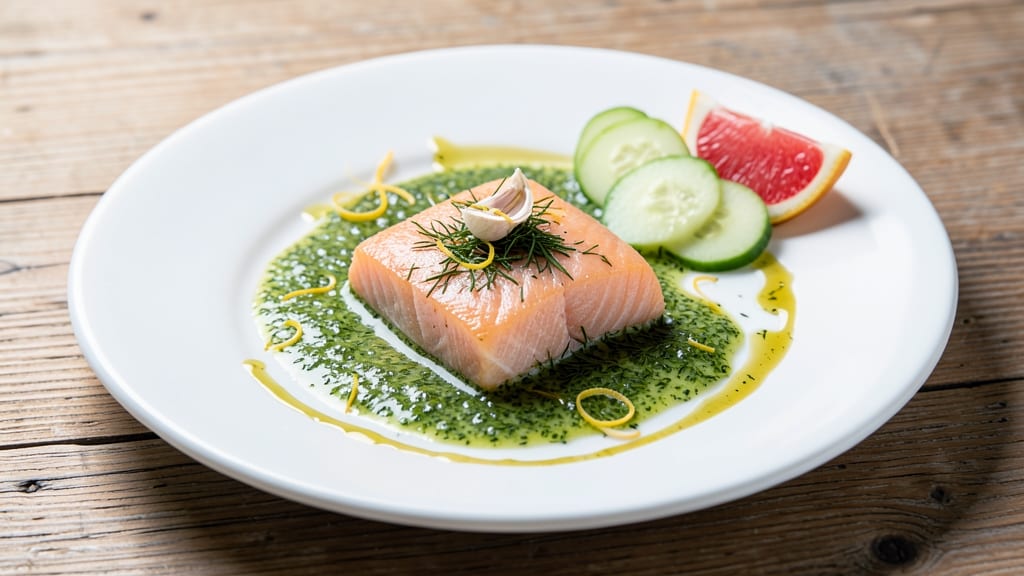
Cold poached salmon with dill sauce transforms simple ingredients into a restaurant-worthy dish that requires just 15 minutes of active time. The key lies in gently simmering salmon in a citrus-infused liquid until perfectly tender, then chilling it to develop delicate flavors.
This technique preserves moisture while creating a texture that's impossibly flaky—no dryness, no overcooking, just melt-in-your-mouth perfection.
The dill sauce elevates the dish from elegant to extraordinary, balancing the salmon's natural richness with bright, herbal notes. Made with just five ingredients, it requires no cooking—simply blending fresh dill, sour cream, lemon juice, and a touch of garlic creates a velvety sauce that clings beautifully to each slice.
The acidity cuts through the salmon's richness while the fresh herbs add a burst of garden-fresh flavor that feels like summer in every bite.
What makes this recipe truly special is how effortlessly it delivers professional results. The poaching liquid infuses the salmon with subtle citrus and aromatic herbs, while the chilling process allows flavors to meld perfectly.
When served, each slice glistens with the dill sauce, creating a visual and textural contrast that makes this dish as impressive as it is delicious. The combination of techniques ensures every element works together in harmony.
This recipe works beautifully for summer gatherings, elegant lunches, or even a special weeknight dinner. The bright flavors and clean presentation make it ideal for occasions where you want to impress without spending hours in the kitchen.
Ready to create a dish that feels like fine dining? Let's get started with this foolproof method that delivers restaurant-quality results at home.
Ingredients for cold poached salmon with dill sauce
Simple ingredients, elegant technique. Everything you need for restaurant-quality cold poached salmon.
| Ingredient | Amount | Notes |
|---|---|---|
| Center-Cut Salmon Fillets 🐟 | 1 ½ lb | Skin-on, boneless, 6-8 oz each |
| Fresh Dill 🌿 | ½ cup | Stems removed, loosely packed |
| Sour Cream 🥛 | ½ cup | Full-fat for creaminess |
| Lemon Juice 🍋 | ¼ cup | Freshly squeezed, no pulp |
| Garlic Cloves 🧄 | 2 cloves | Peeled, lightly crushed |
| Extra-Virgin Olive Oil 🫒 | ¼ cup | Light, fruity variety |
| White Wine 🍷 | 1 cup | Dry, such as Sauvignon Blanc |
| Water 💧 | 2 cups | Chilled, filtered preferred |
| Salt 🧂 | 1 ½ tsp | Diamond Crystal or kosher |
| Black Peppercorns 🌶️ | ½ tsp | Freshly cracked |
| Fresh Lemon Zest 🍋 | 1 tbsp | From 1 organic lemon |
| Fresh Parsley 🌿 | 2 tbsp | Chopped, for garnish |
The salmon is non-negotiable—center-cut fillets with skin ensure even cooking and a perfect texture. Whole Foods or specialty seafood markets carry the best quality, but most grocery stores stock it too. Look for vibrant pink color and firm flesh that springs back when pressed. If you're buying whole fillets, trim any dark edges or pin bones. For the dill, farmers markets offer the freshest bunches, but the grocery store's refrigerated section works fine if you use it within 2 days. The sour cream should be thick and full-fat—Kroger or Trader Joe's carry excellent options.
No fresh dill? Dried dill at one-third the amount works, but the flavor won't be as bright. Substitute white wine with fish stock or additional lemon juice if needed, though the wine adds depth. For the olive oil, avoid strong, peppery varieties—you want something light that won't overpower the delicate salmon flavor. The lemon juice can be bottled in a pinch, but fresh is ideal. If you're short on time, pre-peeled garlic cloves save a few minutes, though fresh always tastes better. The parsley is purely decorative but adds a fresh pop of color.
Poached salmon keeps beautifully in the fridge for 2 days if stored properly—wrap tightly in plastic wrap with a paper towel underneath to absorb any moisture. The dill sauce can be made ahead and stored for 3 days in an airtight container, though it's best used fresh. For serving, chill the salmon for at least 2 hours before slicing to ensure clean cuts. Portion into individual containers for meal prep—this dish reheats beautifully and makes great lunches for 3-4 days.
Why You'll Love This Recipe
- No-Fuss Poaching: I swear by this method—just cold water, a splash of vinegar, and 20 minutes of hands-off time. The salmon stays tender, flakes like a dream, and you won’t scorch your kitchen trying to master a fancy technique.
- Herb-Packed Brightness: That dill sauce? It’s the star. Fresh dill and sour cream cut through the richness, while the garlic and lemon juice give it a zingy, restaurant-worthy finish. Honestly, the first bite makes me question why I ever bought jarred seasoning.
- Lunchbox Legend: Between us, this is my go-to for meal prep. Slice the salmon, dollop the sauce, and pack it with crackers or greens. It holds up for days—no sad, soggy lunches here—and still tastes like you slaved over it.
- Budget-Friendly Luxury: Salmon feels fancy, but center-cut fillets stretch further than you’d think. The sauce uses pantry staples, and leftovers reheat beautifully (or eat cold—no judgment). It’s the kind of dish that makes grocery night feel like a win.
Step-by-step instructions for cold poached salmon with dill sauce
This method delivers perfectly tender salmon with a delicate, herb-infused sauce in just minutes.
Prepare the Poaching Liquid
In a large, deep skillet or saucepan, combine the 2 cups water, 1 cup white wine, 0.25 cup lemon juice, 1.5 teaspoons salt, 0.5 teaspoon black peppercorns, and the 2 peeled garlic cloves. Bring to a gentle simmer over medium heat—you should see small bubbles breaking the surface, but not a rolling boil. This precise temperature ensures the salmon poaches evenly without breaking apart.
Add the 0.25 cup extra-virgin olive oil and 1 tablespoon fresh lemon zest to the simmering liquid. Stir gently to distribute the oil and zest throughout. The liquid should look slightly cloudy with the zest suspended—this infuses the poaching liquid with bright citrus notes that complement the salmon beautifully. Keep the mixture at a steady simmer for 5 minutes to allow the flavors to meld before adding the salmon.
Poach the Salmon to Perfection
Carefully place the 1.5 lb center-cut salmon fillets, skin-side down, into the simmering liquid. The skin should face downward to protect the delicate flesh. Use a fish spatula or slotted spoon to gently lower them in—avoid disturbing the liquid too much, as this can cause the salmon to cook unevenly.
Poach for 8-10 minutes, depending on thickness, until the salmon is just opaque throughout and flakes easily with a fork. The center should still feel slightly soft to the touch—overcooking will make it dry. You’ll know it’s ready when the edges lift cleanly from the pan and the flesh separates gently. Remove the salmon with a slotted spoon and transfer to a plate lined with paper towels. Tent loosely with foil to keep warm while you prepare the sauce.
Make the Dill Sauce
Return the poaching liquid to a gentle simmer over medium-low heat. Reduce the heat to maintain a low simmer and carefully pour in the 0.5 cup sour cream, whisking constantly to prevent curdling. The sauce should thicken slightly as it incorporates, but don’t let it boil—this will break the sauce’s delicate texture.
In a separate small bowl, finely chop the 0.5 cup fresh dill and the 2 tablespoons fresh parsley. Once the sour cream is fully incorporated into the poaching liquid, remove the pan from heat and stir in the chopped herbs. Let the sauce sit for 2-3 minutes to allow the flavors to meld. The sauce should be smooth, creamy, and vibrant green from the dill—this is your signal that it’s ready to serve.
Serve with Elegance
Slice the poached salmon into ½-inch thick portions and arrange on a platter. Spoon the dill sauce generously over the top, ensuring each piece is coated. The sauce should cling beautifully to the salmon, adding a bright, herbal contrast to the delicate fish. Garnish with an additional sprinkle of chopped fresh dill and a few lemon zest strips for a pop of color and freshness.
Serve immediately while the salmon is still warm and the sauce is at its peak consistency. This dish pairs perfectly with a crisp green salad or steamed asparagus, balancing the richness of the salmon with light, fresh accompaniments. The bright, herbal notes of the dill sauce elevate the natural flavor of the salmon, making it a standout centerpiece for any meal.
Pro Tips For Making Cold Poached Salmon With Dill Sauce
- USE CENTER-CUT PRECISION: Skip the thickest part of the fillet—center-cut salmon stays perfectly even when poached cold. Thinner edges cook faster, so trim them to 1.5 inches max or they’ll turn rubbery while the middle stays underdone. (Yes, even if it means throwing away a little extra.)
- CHOP DILL LIKE HERBS: Fine chop that dill—think tiny confetti, not rough chunks. The sauce needs to coat the salmon, not just float in it. My grandmother swore by this: "If you can’t see the stems, you’re doing it right." (And skip the stems—they’re bitter, no matter how fresh the bunch.)
- SALT THE WATER LIGHT: Cold poaching water should taste like the ocean’s whisper—just 1 teaspoon salt per quart. Too much makes the salmon taste like a swimming pool. I learned this the hard way when I doubled it and ended up with fish that needed a rinse. (Your sauce will thank you too.)
- COOL THE SAUCE FAST: Dump the warm dill sauce into an ice bath for 5 minutes before serving. This stops the sour cream from breaking and keeps the texture silky. I was skeptical until I tried it—now I never skip it. (Yes, even if you’re impatient like me.)
Flavor customization for this recipe
Herb Variations
Swap out the dill for tarragon or chervil to create a French-inspired variation. Use 0.33 cup of each herb combined for a balanced flavor. Tarragon adds an anise-like sweetness that pairs beautifully with the salmon's natural richness, while chervil brings a delicate, parsley-like freshness.
For a Mediterranean twist, blend 0.25 cup dill with 0.25 cup flat-leaf parsley and a pinch of fennel pollen for an earthy depth. 🌿
Creamy Alternatives
Replace the sour cream with Greek yogurt for a lighter texture while maintaining creaminess. Use 0.5 cup full-fat Greek yogurt and add 1 tablespoon lemon juice to balance the tang.
For a vegan option, blend 0.5 cup silken tofu with 1 tablespoon apple cider vinegar and 1 tablespoon olive oil to mimic the sauce's velvety consistency. Both alternatives work beautifully while catering to dietary preferences.
Spicy Kick
Add heat by mixing 1 teaspoon hot sauce (like Tabasco) or ½ teaspoon cayenne pepper into the dill sauce. For a smoky twist, stir in ½ teaspoon smoked paprika along with the herbs.
If you love fresh chili, finely dice 1 small jalapeño and blend it into the sauce for a bright, spicy contrast. Always taste before serving—adjust to your preferred heat level. 🌶️
Citrus Brightness
Enhance the sauce’s zing by adding 1 tablespoon orange zest or 1 tablespoon lime juice alongside the lemon. The orange zest introduces a subtle sweetness that complements the dill beautifully, while lime juice adds a sharper tang.
For a tropical variation, blend in 1 tablespoon finely chopped mint and a splash of lime juice to create a refreshing, summery profile.
Smoky Depth
Infuse the poaching liquid with 1 teaspoon liquid smoke or a ½-inch strip of smoked salt (like Morton Kosher Smoked Salt) to add a subtle smokiness to the salmon. This works especially well if you’re serving the dish with a charred bread crust or grilled vegetables.
The smoky notes carry through to the sauce, creating a rich, complex flavor that feels hearty yet elegant. 🔥
Sweet Contrast
Balance the herby sauce with a touch of sweetness by adding 1 teaspoon honey or 1 teaspoon maple syrup to the sauce. This subtle sweetness enhances the lemon’s acidity and rounds out the flavors beautifully.
For a more pronounced contrast, drizzle the plated salmon with a light honey reduction (simmer 1 tablespoon honey with 1 tablespoon water for 2 minutes) before adding the dill sauce.
Nutrition facts
Frequently asked questions
Why does the salmon need to be chilled before slicing?
Chilling the salmon for at least 2 hours before slicing creates a clean, professional cut that flakes beautifully. Cold temperatures firm up the proteins, making them easier to slice without tearing. This also helps the flavors meld perfectly throughout the fillet for maximum tenderness.
Can I use frozen salmon for this recipe?
Yes, but thaw it completely first in the refrigerator for 24 hours or use the quick thaw method: seal the salmon in a bag and submerge in cold water for 30 minutes. Never thaw at room temperature, as this promotes bacterial growth. Pat dry thoroughly before poaching to ensure even cooking.
What's the best way to reheat leftovers?
Reheat gently in a 350°F oven for 8-10 minutes on a baking sheet with a splash of water to maintain moisture. Avoid microwaving as it can make the salmon dry. The dill sauce reheats beautifully in the microwave for 20-30 seconds—just stir until warmed through. For best results, serve within 2 days of cooking.
How can I make this dish ahead of time?
Poach the salmon and make the sauce 1 day ahead, then store separately in airtight containers. Chill the salmon in the fridge and keep the sauce at room temperature. Assemble just before serving by slicing the salmon and spooning on the sauce. This method preserves all the fresh flavors and textures perfectly.
What if my dill sauce curdles when adding sour cream?
This happens when the sauce gets too hot—always add the sour cream to the simmering (not boiling) poaching liquid while whisking constantly. If it curdles, strain through a fine-mesh sieve to remove lumps, then whisk in 1 teaspoon cold water to restore smoothness. For prevention, temper the sour cream first by mixing it with 1 tablespoon cold poaching liquid before adding to the pan.